Sunday, March 2, 2025

Film of the Week: A Complete Unknown


In last week's review of Better Man (shout-out all the new readers, hope some of ya'll stuck around), I talked about the unusual approach of being a music biopic willing to criticize it's subject, looking past a traditional "rise, fall, and comeback" narrative to more seriously debate the motivations of the artist. A Complete Unknown, James Mangold's Bob Dylan biopic, takes a shockingly similar stance, willing to showcase the rise of Dylan with warts and all as it discusses the man vs the music and the idea of creating art for one's self vs creating art for a supposed "greater good". It makes for interesting viewing, something a tad more thought provoking than the usual fare from this genre, 

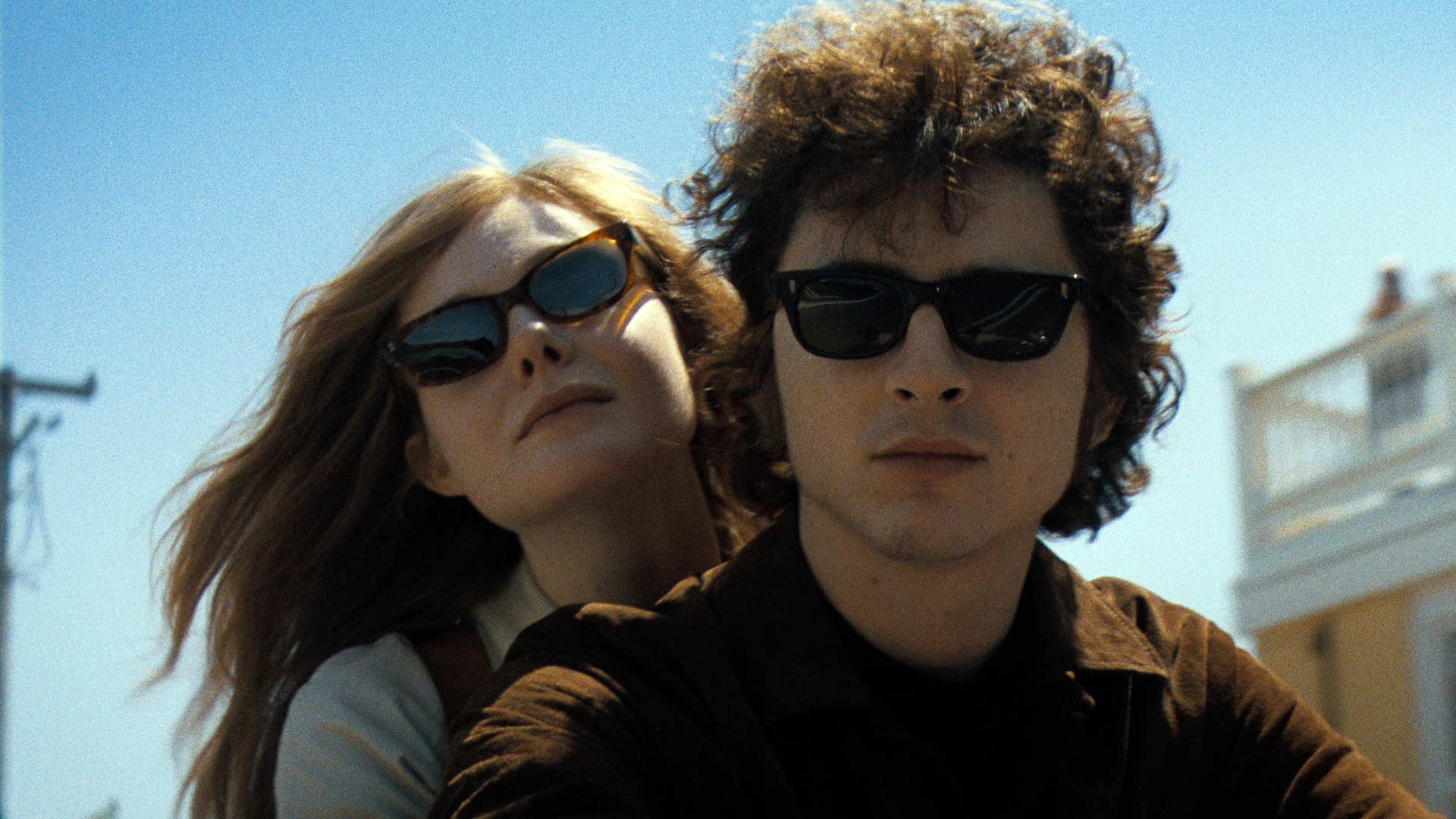
A Complete Unknown, obviously, refers to Dylan himself (Timothee Chalamet), an aloof, brilliant musician who arrives from parts unknown, initially in hopes of meeting Woody Guthrie (Scoot McNairy) before pursuing a career in folk music. Chalamet is great as Dylan, playing his often detached, sardonic eccentricity as both charming and off-putting. Dylan is an engima, a walking mystery that multiple people attempt to either solve or at least point in the right direction only to largely fall short. "I barely know you," bemoans Sylvie (Elle Fanning), his put-upon girlfriend as he continues to refuse to open up to her. Despite this, Dylan is still a clear person, a talented artist who refuses to conform to the ideologies or opinions of others, and for better or worse, he's damn good at what he does. 

An enigmatic protagonist gives the supporting cast time to shine, and there isn't a single weak performer of the bunch. Pete Seeger (Edward Norton) and Joan Baez (Monica Barbaro) represent the ideological idea of folk music, songs about humans struggle and standing together against the powerful, while Sylvie is the human side, a chance for Dylan to be vulnerable and bare his emotions, even if his emotions aren't always good for everyone. Norton is, unsurprisingly, very strong, playing Seeger with a gentle charm and mentorly affection, a desire to fight for what's right even if the rest of the world begins to pass him by, and his interactions with Dylan, which go from an attempt to nurture the next generation only to cling to it as his own movement fades into history, carry an air of bittersweetness. Barbaro is fiery and headstrong as Baez, a well-deserved Oscar nominee as the lover/musical partner of Dylan who represents a more kindred spirit than the stable Sylvie. This love triangle (of sorts) makes up much of the film's conflict, as Dylan bounces between the normalcy of Sylvie and the artistry of Baez, somehow managing to lose both as he forges a path for himself, with Dylan and Baez's performance of "It Ain't Me" in front of an increasingly heartbroken Sylvie serving as the standout scene of the film. (And the year, if I'm being honest.)

I would also be foolish not to mention the delightful Boyd Holbrook as Johnny Cash, perpetual shit-stirrer with demons of his own, that basically steals every scene he's in and left me with a deep desire to rewatch Mangold's similarly great Walk the Line. 

James Mangold, one of the few remaining mid-budget journeymen out there in Hollywood, very wisely frames the film as one about a person at the exact right time of a crucial point in history. Dylan's rise is framed through the Cuban Missile Crisis (handled in another excellent sequence of Joan trying to find Dylan amidst a chaotic, terrified New York populace), the Civil Rights movement, and the Kennedy Assassination, with the film's other conflict being the role Dylan wants to play in history. "Two hundred people in that room, and each wants me to be something else," he laments about a waiting crowd. "They should just let me be." The American folk movements of the 30s, heralded by legends like Guthrie and Seeger, is fading, the realization that their moment in the sun may be over unless they can find new heirs in the form of Baez and Dylan, but while Baez happily carries the banner, Dylan struggles with the idea of it, both as a means of keeping with tradition and a discomfort at the idea of being the face of a movement. 

The film's strongest choice is leaving whether Dylan's ultimate choice, to eschew the movement by literally and figuratively leaving it behind by going electric for a final festival performance before riding off into the sunset, is the right one up to the viewer. There's an undeniable feeling of sadness, that Dylan is leaving a movement that needs his star power, but also one of liberation, of Dylan recognizing that he needs to be his own man and, in a way, stand for something, fighting for his right as an artist to make the art he wants to make. The loss of both Sylvie and Joan, in a way, represents the understanding that one cannot dance between two lines. Eventually, you gotta pick one, and whether Bob made the right decision is up to you. 

Sunday, February 23, 2025

Film of the Week: Better Man


Early on in Better Man, Michael Gracey's Robbie Williams biopic starring a CGI ape (not a monkey, as the marketing and memes claimed), a young Robbie Williams (played by the man himself) listens to his father (Steve Pemberton) discuss celebrity and what it takes to make it. "You either have "it"," explains the older Williams, a deadbeat wannabe comedian as he ruffles the young ape's hair, "-or you're nobody." While a crucial moment in the psyche of Williams, a normal biopic would've treated this moment as the obstacle for the hero to overcome, showing everyone that he's not a nobody, but Better Man makes this Williams's drive, his defining belief that (for better or worse) steers his entire career. Better Man is a story of someone desperately chasing the spotlight, doing whatever it takes to stay in it even as it completely eats him alive. Does Williams have "it", the inherent talent to succeed, or is he just desperate enough, just charming enough, to fake it and force his way there? The film largely leaves this up to you, but even when one strips away the fascinating quandary at the heart of the story, it is an undeniably entertaining experience. 

Better Man is fascinating in that it's a biopic that largely does away with the "inspirational great man rises from nothing" narrative that makes up so much of the genre. Williams gets lucky again and again, impressing the right person at the right time, and he's often so desperate to stay in the spotlight that he's willing to do effectively anything. "Robbie" is the character, a mask that "Robert Williams" can hide behind in his pursuit of fame and fortune. It becomes increasingly clear that Robbie is both a stage persona and a means for Robert to bury his pain, demeaning himself for a cheap audience laugh. Be it turning a pratfall on stage into a comedic spot as a child or jokingly stealing a melon to hide the suicidal rage and grief at being fired from Take That, the boy band where he got his start, "Robbie" is Williams refusing to be genuine, a chance to turn his pain into a laugh and keep up the persona of the arrogant hotshot pretty boy. It even reflects in his art, as he chooses to make throwaway, impersonal pop in hopes of drawing the largest audience, ignoring that it's only when he gets genuine that he's truly able to live up to his own potential. 

It's often said that musical numbers are characters singing to express the feelings that words simply could not. In Better Man, there's a similar sentiment, each song representing the moments where the "Robbie" persona melts away and he speaks how he really feels. From the jubilation of success in "Rock DJ" to the soaring love and crashing heartbreak of "She's The One", each track is a narrative unto itself, depicting the highs and lows of stardom. They're also incredibly well-directed, Gracey masterfully and creatively makes each song feel like witnessing a dream, larger than life and bursting with color and creativity. "Rock DJ" is a creative oner, cleverly playing into Take That's destructive tendencies through the people hurt and stolen from over the course of the ostensibly celebratory song, while "Let Me Entertain You" is an honest to god battle sequence, a literal slaying of demons that becomes so overwhelming and thunderous that Williams's final victory feels less like a triumph and more like just barely regaining your breath. 

Of course, we have to talk about the singing chimpanzee in the room. "All my life," explains Williams at the start of the film. "I've always felt less evolved than other people." The ape is, effectively, a literal representation of that inferiority, that crushing desire to be liked that overwhelms all else. In Williams mind, he's nothing more than a singing monkey, a novelty act that people will get bored of if he doesn't do whatever it takes to keep their attention. The actual effects of the ape, painstakingly brought to life by WETA, are largely seamless, acting and moving alongside regular humans in a variety of environments without the effect ever being jarring. You never quite forget he's an ape, but the large, expressive face and matted fur makes Williams struggle that much more effecting. Of course, you can also see how excited the artists are to flex their creation, showcasing the ape from a child to a fully grown "man" in a variety of outfits inspired by the various looks of Williams careers. (Particular favorites are the skinless ape, an homage to Williams's inexplicably disturbing "Rock DJ" music video and an albino ape as representation of Williams bleaching hir hair.) 

Better Man is a fascinating biopic, one willing to let the star confront the numerous flaws and shortcomings with an earnest honesty, never sugarcoating their mistakes. It's also easily the best musical of the year, gorgeous and ambitious in it's design. I'll doubt we'll ever see another biopic like it, but, hey, let's not worry about that. Let's just sit back and enjoy the show. 

Sunday, February 9, 2025

Film of the Week: 28 Days Later


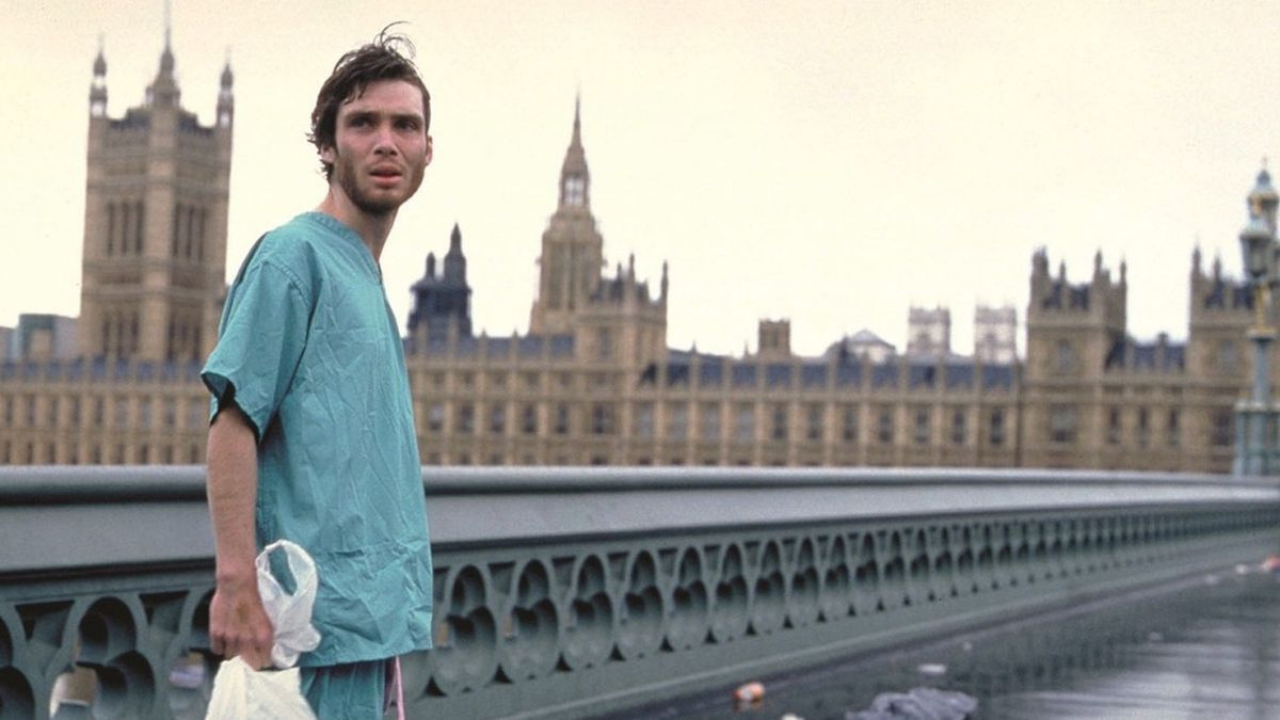
For much of the beginning act of 28 Days Later, Danny Boyle's highly influential zombie film, we primarily follow Jim (Cillian Murphy), a bike courier who awakes from a coma to find himself in a seemingly abandoned London. It's a haunting sequence, watching Jim stumble through the empty streets, gathering food and money with no knowledge of the danger that could be behind any corner. It is, admittedly, undercut by the music (we'll talk on that in a bit) but it's a scene that immediately establishes exactly why 28 Days (not to be confused with the Sandra Bullock film) stood out so well from the glut of zombie media that overwhelmed everyone in the 2000s. Boyle directs with a resounding patience, letting tension rise naturally as we wait for somebody, anybody, to break Jim's solitude. It's moody, almost dreamlike in the unnerving quality of the empty streets, and a film a lot more willing to sit and let you sweat on things a little bit. 

Of course, the film never loses this momentum as other survivors enter the fray, and it settles into something a bit more familiar, a story of a group of unlikely people forced together in the face of horrific conditions. There's an easygoing chemistry between the group, comprised of Jim, fiery Selena (Naomi Harris), fatherly Frank (Brendon Gleeson, always a delight), and his daughter Hanna (Megan Burns), and the film becomes something of a road movie as the quartet make their way to an apparent safe haven. Boyle's patience is a virtue here, allowing us to sit with the characters and really feel for them, getting to know them without necessarily overexplaining who they are. In one particularly great sequence, doomed Mark (Noah Huntley) talks about losing his family to a zombie horde, giving a bit character genuine pathos that makes his (in hindsight) quick demise even more shocking and injects a sense of real tension to every interaction. We want these people make it, and the fact that the infected (not zombies!) could be lurking around every corner makes for incredible tension. 

Boyle, one of cinema's most creative and versatile directors, milks this tension for all it's worth, with standouts being the group attempting to fix a tire as a rabid horde pursues them through a tunnel and a genuinely striking shot of a soldier moving from a window to reveal an infected staring at them. Even the loss of Frank, a single drop of infected blood leaking into his eye, feels like a natural endpoint of a world so inherently dangerous, and a way to bring an end to the heartfelt middle act into something a lot more terse. 

There's some debate over the film's third act, whether Boyle's reverence for the Romero-esque "humanity are the true monsters" dragged it's effective pace to a halt or gave the film a more tangible antagonist. I find myself in the latter category, both out of a general fondness for seeing Christopher Eccleston in things and also because the film never loses the intensity that makes it so strong. From the moment we meet Major West (Christopher Eccleston) and his men, there is an immediate sense that something is wrong. Glances held too long, jokes with just an undercurrent of intimidation underneath them, all things that Boyle and writer Alex Garland use to establish that the safe haven. The classic morality play of "what do you do once the rules don't matter" come into play, as does the film's spectacularly violent, tense third act, a bloodbath that sees Jim become just as feral as the infected. It works well enough, and I'm even a fan of the film's shockingly upbeat ending, one that Boyle and Garland had to be dragged into making. 

If there's anything of the film I don't love, it's the score, maybe the epitome of early 2000s musical scores in that it's comprised largely of thudding guitar riffs. It's certainly not terrible, but in a film built so heavily off of long stretches of silence being shattered by surprise attacks or scares, it undercuts the tension. (Much like the ending, this was added because test audiences found the film too nerve-wracking without it. Sometimes test audiences don't know what they're talking about!) 

Minor quibbles aside, it's easy to see the influence on 28 Days on so many modern works, and after watching it, I can't really blame anyone inspired by it. It's a grungy, dreamlike thrill ride, a standout in the very strong career of one of our modern auteurs, and I'm certain that it's sequel will happily carry the torch. 

NOTE: The reviewer has not watched 28 Weeks Later.

Sunday, January 26, 2025

Best Films of 2024, Part 2


Best films of the year, babyyyy. You all know the drill so let's hop to it. 

5. Hit Man

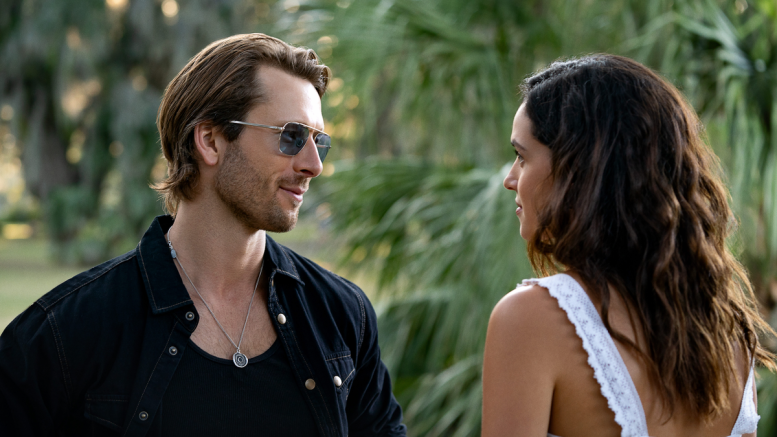
A very funny, very hot dark comedy, Hit Man feels like a throwback to the smash hits of the 90s and 2000s, high-premise vehicles coasting off the power of their charismatic stars for a delightful time. Richard Linklater lends his eye for natural realism to make the larger-than-life true story of Gary Johnson (Glen Powell), professor turned fake hitman for hire, into something just as fascinating as it's subject matter, cleverly playing with the dubious morality of the operation at the center of the story to leave us second guessing the characters every step of the way. It helps that Powell, Tom Cruise's heir apparent, gives one of the best performances of the year as Gary, a man of many faces who slowly begins to merge them together as he gets more and more entangled with the person he's meant to be leading into a trap, fiery, gorgeous Madison (Adria Arjona). Powell effortlessly switches from persona to persona as needed, the small facets of each personality mixing and clashing in the little details, leaving you just as charmed as the targets. 

4. Look Back

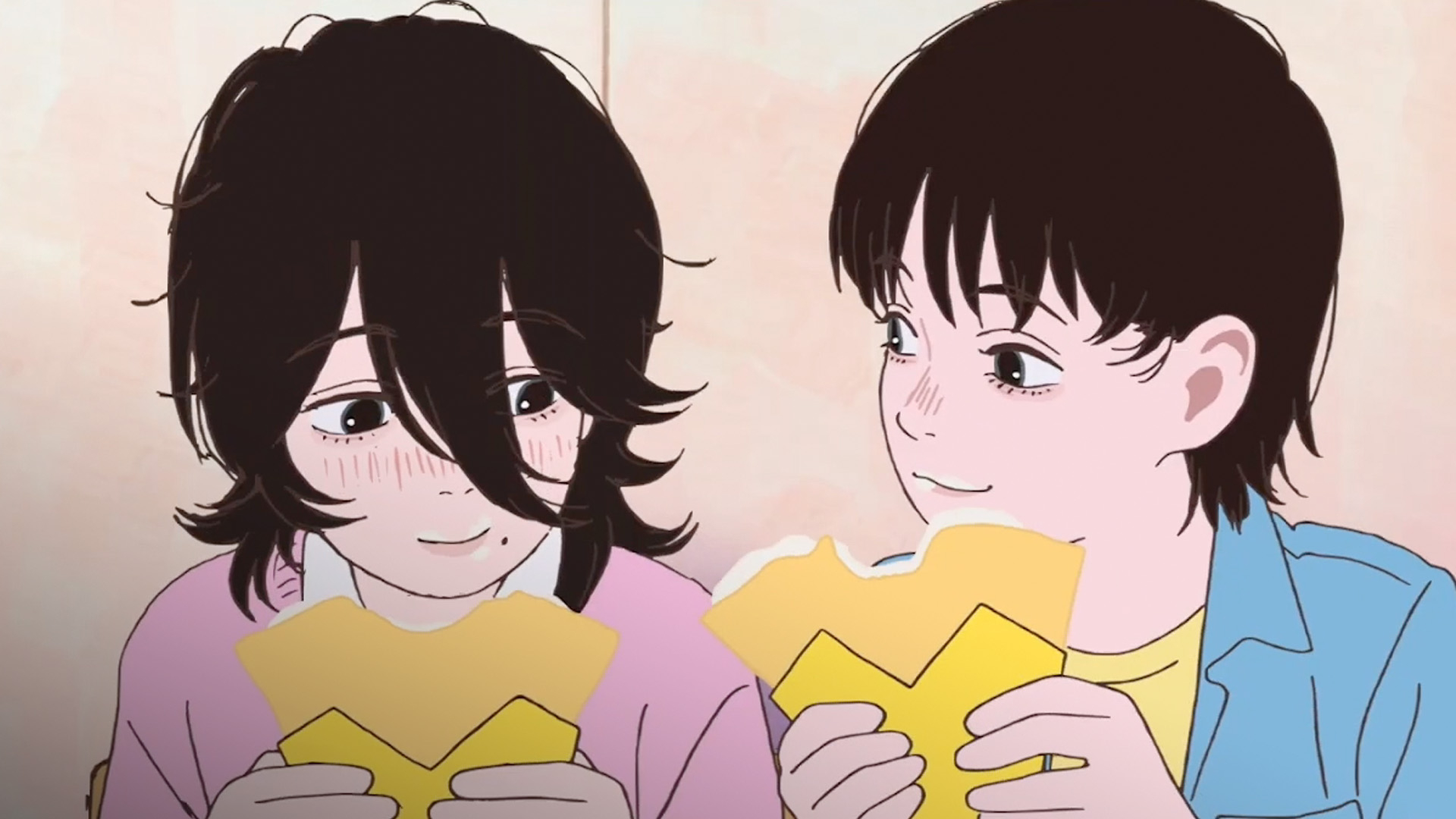
Look Back, much like Tatsuki Fujmoto's smash hit Chainsaw Man, is about a lot of things. The creative process, the idea of creating art for mass consumptions vs creating for one's self, and the role art often plays in the bonds we form are all quietly discussed in the story of a budding friendship between two young artists brought together, then driven apart, by their differing methods. All of Fujimoto's tricks are on display here, from his penchant for easygoing dialogue, fondness for complicated characters, and views on grief and loss all mingling together. Animated beautifully, the film quietly envelops you in it's story before pulling the rug in a devastating fashion, leaving you quietly breathless as it's short runtime comes to a close. A perfectly paced, thought-provoking punch to the gut. 

3. Hundreds of Beavers

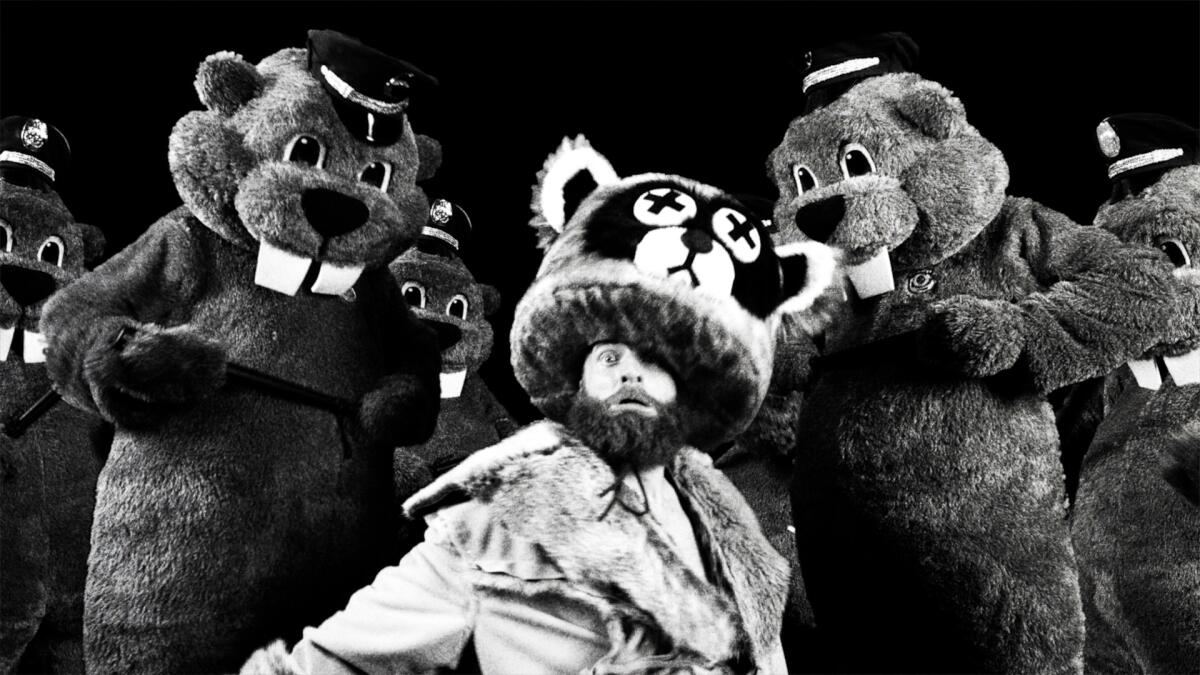
Every once in a while a film comes along that leaves you so astounded with it's creativity that you can't help but scratch your head and just wonder how exactly they made it. Hundreds of Beavers, a match between Looney Tunes and 30s slapstick films, is one such film. From the minute it starts, the film brims with creativity, using it's limited budget so effectively that it still feels enormous in scale. There are, in fact, hundreds of beavers in this movie, alongside a variety of other wildlife made real through a mixture of puppetry, animation, and good ol' suits, and by the end you find yourself fully believing in the insane cartoon world they inhabit. It is also the funniest film of the year, brimming with gags that are so rapid fire it begs for repeat viewing, so fully committed to the bit that it becomes thrilling to watch just to see what they do next with it. One of the year's biggest surprises, it's got a little something for everyone. 

2. Challengers

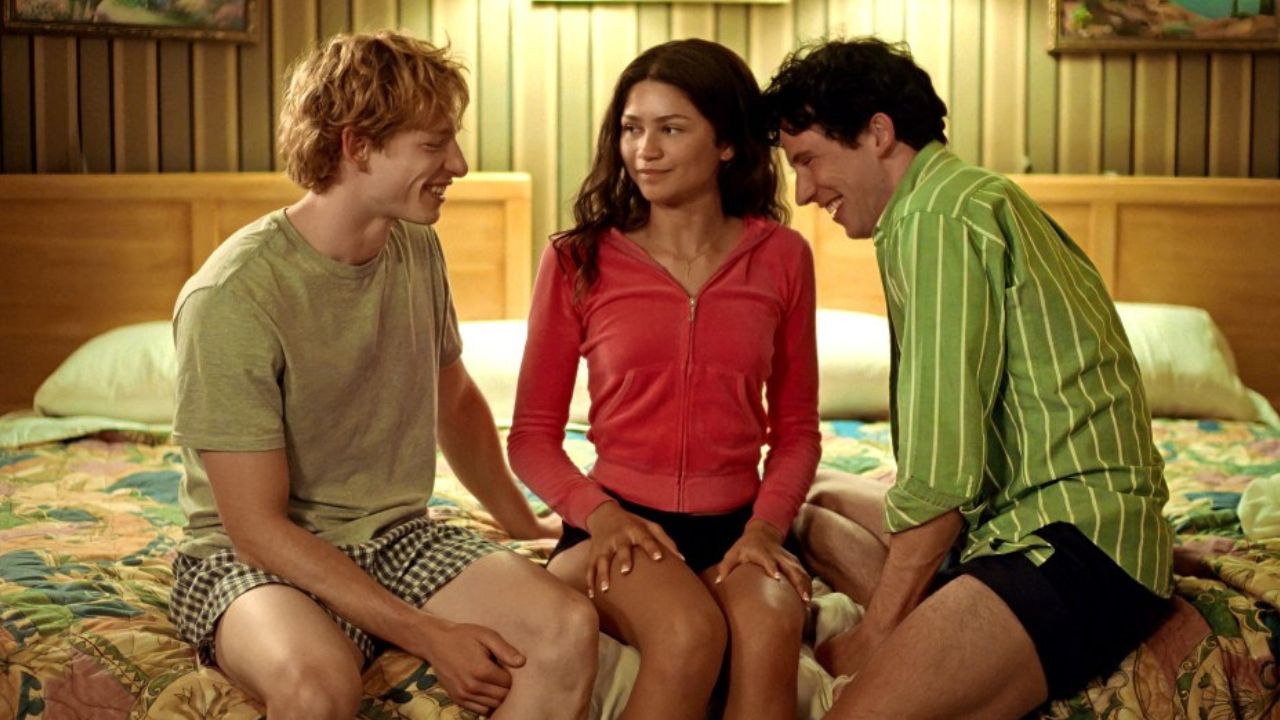
Part electrifying sports drama, part passionate portrayal of a slightly toxic throuple in the making, Challengers is the best film of Luca Guadagnino's career, taking his penchant for shifting time to portray the various stages of relationships, both (seemingly) platonic and romantic, and interweaving it with a ferocious depiction of competition and the mindset of the athlete. It's anchored by three great performances, each breathing life into the fascinating characters and the deeply messy relationships at the heart of the story, but it's also just a damn fine sports film, firing on all technical cylinders to make it's tennis matches feel like thrilling duels. It's a film where all elements work together to complete a masterful whole, simmering and thrilling at the same time. 

1. I Saw the TV Glow

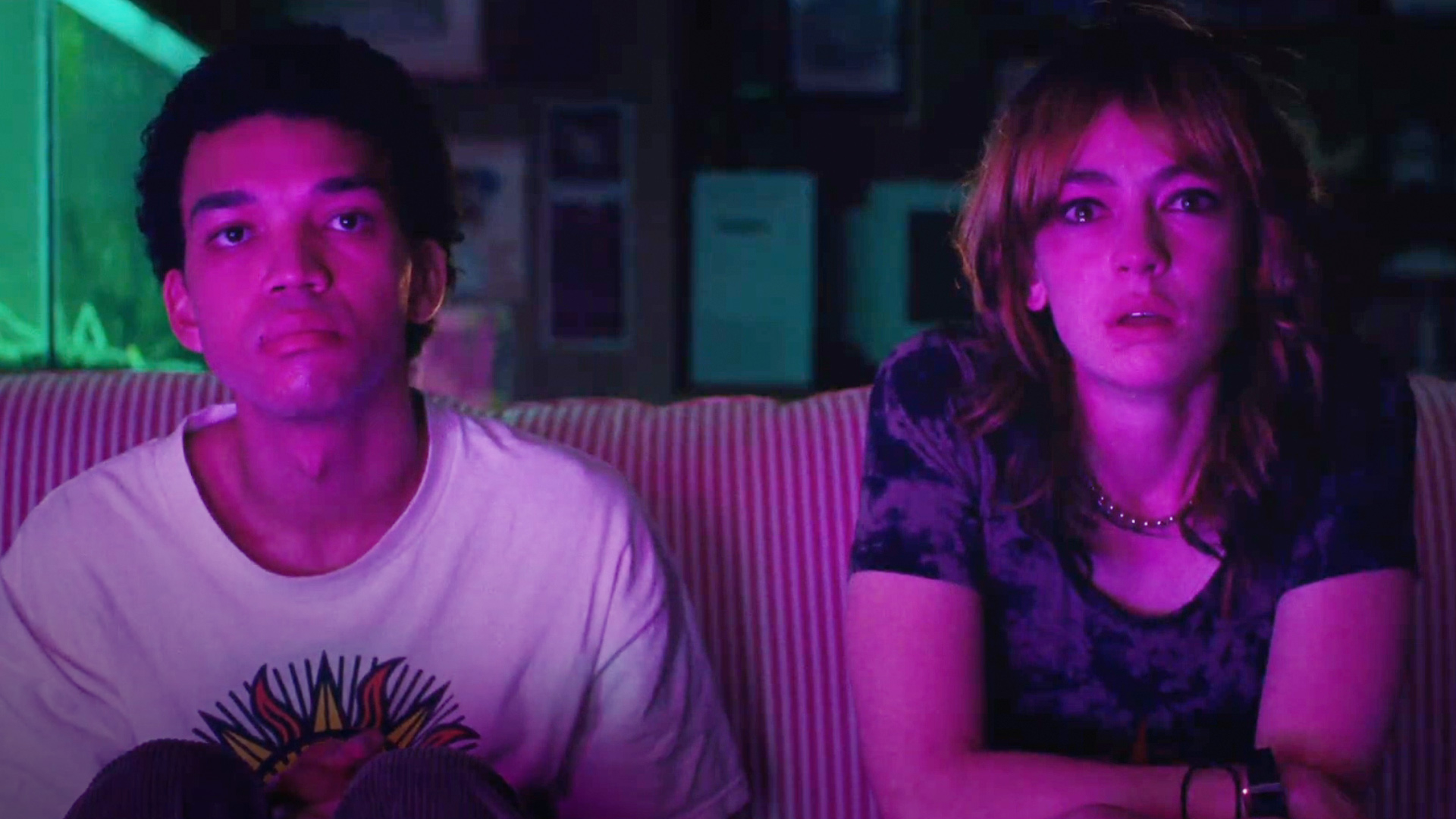
Less scary and more absolutely heartbreaking, I Saw the TV Glow feels like an existential crisis made flesh, a reckoning with a life spent lying to one's self about your true feelings. It's a film of a generation raised by television that now finds itself forced into an adulthood, looking around the world and going, "Is this it?" With a striking visual palette that resembles the melancholy tone at it's center, the film moves like a bad dream, drifting scene by scene in a devastating slow walk. Justice Smith, a perpetual favorite whenever he shows up, is heartbreaking here, vulnerability radiating off of every little movement, every averted gaze and mumbled apology, and his final panicked cry for help as the nature of the world becomes clear is one of the year's most agonizing scenes. In a world increasingly dominated by nostalgia, a yearning for yesteryear by generations that refuse to step aside, I Saw the TV Glow is one of the first earnest attempts to reckon with that, a cry to throw the old restraints aside and live in a new truth. Maybe, just maybe, there is still time. 

Sunday, January 19, 2025

Best Films of 2024, Part 1

This has been an exceptional years, in spite of the generally horrific vibes of the rest of the year. At the risk of sounding too cliche, there was a fair bit of something for everyone. Breathtaking sci-fi, existential horror, white-hot romance, it was a real "the movies are back" type of year, and while I haven't seen everything, I'm confident enough in my tastes to run through my top ten. So, let's begin!

10. Furiosa: A Mad Max Saga

Rather than attempt to recapture the lightning in a bottle adrenaline rush that is Mad Max: Fury Road, George Miller made Furiosa something a lot more intimate and character-focused, willing to sit with it's strange collection of oddballs and outcasts and let us truly witness their rise and fall. That's not to say this isn't an exciting movie, as Miller directs the hell out of exhilarating set-pieces that vary from a chaotic ambush to a desperate shootout/escape that made me audibly exhale when it ended, but it's more focused on the psychology of the wasteland. Anchored by great performances from Anya Taylor-Joy (stepping into the shoes of Charlize Theron with a remarkable confidence and often stunning grace) and Chris Hemsworth (delightfully unhinged in one of the best villainous performances of the year), Furiosa is a tragic, suitably epic origin story for it's iconic heroine. If it really is the final film in the series, it's a fitting end. 

9. Dune: Part Two

Denis Villeneuve's stunning second part of his adaptation of the borderline unfilmable magnum opus of Frank Herbert is stunning in it's ambition and willingness to truly lean into the strangeness of the original material. It truly throws everything at the wall and leaves you astounded as, somehow, it all manages to stick. One moment it stuns you with a monochrome duel in a gladiatorial arena, the next it has the confidence to let you sit with a quiet, beautifully understated love story between Paul (Timothee Chalamet, a genuine force of nature) and Channi (Zendaya, in what is a banner year for her). It's a film overflowing with treats for the eye and mind, sweeping you in it's narrative with gorgeous designs and powerhouse performances that by the time the true tragedy of the imperial power struggle rears it's head, it leaves you with an ugly sinking feeling and the realization that there's no heroes here. 

8. Cuckoo
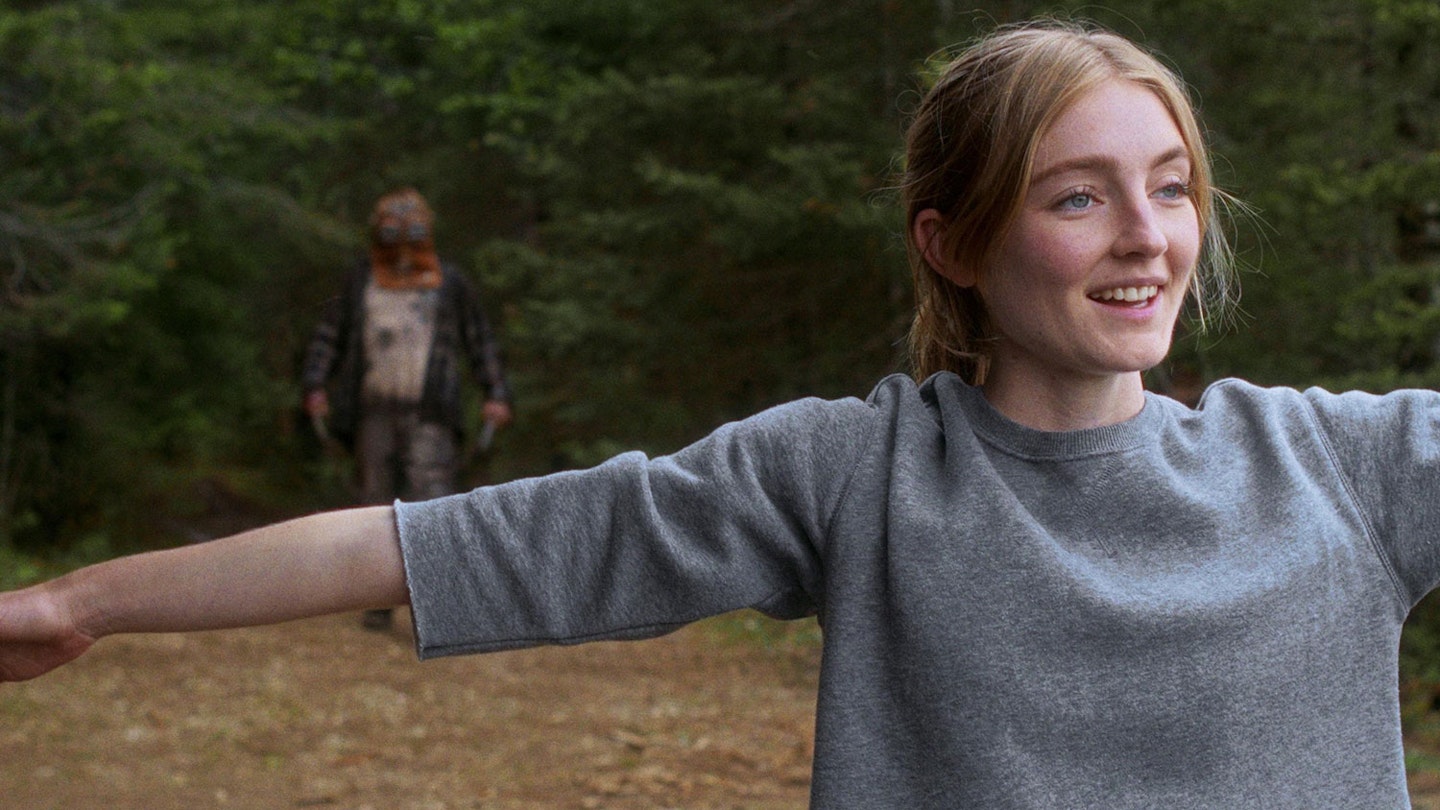
Part disturbing mystery story, part harrowing fight for survival, and part coming of age tale, Cuckoo is a delightfully bonkers creature feature, playing with the idea of both physical and mental isolation in the face of overwhelming, mysterious terror and carefully dropping bits and pieces of information without giving the game away too quickly. Hunter Schafer is a scrappy, emotionally compelling scream queen, making you root for her against the seemingly endless challenges thrown at her, while Dan Stevens, perpetual favorite of mine, steals the show as slimy, manipulative mad scientist Herr Konig. Atmospheric, intriguing, but with an undeniable heart at it's core, Cuckoo is one of the strongest horror films in a year overflowing with them. 

7. Civil War
Upon the release of Alex Garland's Civil War, I felt the film was unfairly maligned, criticized for it's lack of a firm political stance in favor of something closer to the likes of speculative fiction. Those willing to look past the (largely untrue) accusations of apoliticism will find one of the year's most thrilling films, a gorgeously shot road movie that owes more to the likes of Garland's 28 Years Later or The Last of Us than any traditional political thriller. By largely stripping away any traditional commentary, Garland is able to hyperfocus on the film's human element, reveling in analyzing the way humans hurt (and help) one another when they think there's no rules and the addictive nature of willingly putting yourself so close to violence. This leaves a near suffocating sense of tension behind every interaction, the perpetual threat of violent escalation hanging heavy on the minds of both the viewer and the characters. It makes for unbelievably nerve-wracking viewing, the kind that doesn't leave you feeling safe until the credits roll. 

6. Nosferatu
Robert Eggers lends his intricate, detail-driven to one of the classic horror stories, successfully modernizing it to weave a tail of abuse and love, both toxic and redeeming, and the desperate struggle of women to claim their own agency in the face of a world that increasingly cares little for them beyond possession. One of our great modern auteurs, Eggers brings together an astounding cast and, like with 2022's similarly excellent The Northman, manages to bring his style to the mainstream without sacrificing any of it's appeal. Nosferatu is bleak, suitably nasty in it's presentation and execution, and yet deeply earnest, an ode to the bonds of love in the face of cruelty and just what we're willing to do for those we care about. Lily Rose-Depp is a revelation as Ellen, tortured by both the monstrous Orlok and her own desires, while Willem Dafoe is an unsurprising scene stealer, projecting a strange warmth and safety underneath the eccentricity. It's a film firing on all creative cylinders and a worthy remake of the iconic original. 

Sunday, December 15, 2024

Film of the Week: Mad Max


Upon a rewatch, as I had not seen this film since I was 13 years old, there's a lot of unexpected elements to Mad Max. While George Miller's later entries in the franchise fully leaned into the post-apocalyptic setting, the first in the series, made for a meager budget of $350,000, goes for more of a world on the brink of disaster. Society, for the most part, still exists, with police, businesses, and a general rule of law, but there is an undeniable feeling of dread. Brought about by the collapse of natural resources and the ecosystem, the end of the world in Mad Max is a slow, whimpering one, as austerity cuts into budgets and an increasing cynicism and cruelty overtakes the world. Everyone knows the end is coming, it's just a matter of when. It makes for interesting viewing, and while I'll always be a fervent believer in Fury Road, Mad Max may end up being the most interesting one of these to rewatch. 

For much of it's runtime, Mad Max is closer to that of a buddy cop revenge flick, a mix of the likes of Dirty Harry and Death Wish, as we see Max (Mel Gibson, unfortunately reminding me that he is very charismatic and talented when he's not beating women or spouting antisemitism) and his partner Goose (Steve Bisley) as they reckon with the vicious road gang of Toecutter (Hugh Keays-Burne). Goose, a fast-talking, snarky lech with a heart of gold, serves as the film's moral center for much of it's runtime, and his dynamic with the silent, thuggish Max is fun to watch. There's a strange sense of tenderness to much of this, both in Max and Goose's attempts to reckon with the wanton cruelty and death that unfolds before them and Max's quiet moments with his wife Jessie (Joanne Samuel). The latter scenes could easily have been cliched, a proto-example of the now classic "dead wife" trope that tends to fuel films of this kind, but Gibson and Samuel play it with a gentle familiarity. This is a couple that know each other better than anyone else, able to communicate with just simple looks and gestures, and Jessie is given enough to do on her own that she feels like a character in her own right. 

This, of course, augments the inevitable tragedy as Toecutter's gang gets their revenge against the only ones willing to stand up to them, brutally torching Goose and running down Jessie while she holds Max's infant son. The revenge plot truly kicks off here, and it's genuinely exhilarating to watch Miller begin to hone his eye for action setpieces that would Fury Road and Furiosa some of the most thrilling genre fare of all time. The action sequences in Mad Max blend the line between a visceral "how did they do that and live?' realism and a more absurd, borderline slapstick in homage to the works of Buster Keaton. Vehicles move with a disorienting sense of motion, hurtling forward in the film's various chase scenes, and actors/stunt doubles are flung with reckless abandon from every impact. (As if to make the influences most clear, Toecutter's eyes bulge out of his skull moments before his car impacts a truck.) It's peak pulpy action, a perfect mix of making the hits hurt while still being willing to go larger than life in your actual execution. 

Mad Max was something of a pleasant surprise upon rewatch. While hardly expecting it to be bad, I'd always treated this one as an odd duck in the series (alongside Beyond Thunderdome...but we'll get to that later probably). But there's a lot to love in this scrappy little revenge flick, from it's quiet worldbuilding to it's unexpectedly tender, grieving moments, and it's an undeniably excellent debut for a cinema legend. 

Sunday, November 24, 2024

Film of the Week: Brick


In high school, everything feels like the most important thing in the world. No matter the stakes in the greater scheme of things, every fight feels monumental, every breakup an agonizing heartbreak, and social circle navigation feels like life and death. In a way, this is absurd, of course, a natural consequence of a hormone-addled mind grappling with the awkward middle ground of childhood and adulthood, but Brick, the directorial debut of Rian Johnson, uses this idea as a staging ground for a brutally effective neo-noir story of loss and pain that closely walks the line between serious and absurd without ever giving up the game. The melodrama blends beautifully with the noir tone, making the violent escalation of the story feel like a devastating punch to the gut. 

For some, the selling point of Brick is it's heavily noir-inspired presentation, owing more to the works of Raymond Chandler and Lynch's Blue Velvet than any traditional high school drama. Protagonist Brendan Frye (Joseph Gordon-Levitt) talks like a 40s gumshoe, fast-witted and bitter, while femme fatales attempt to work their wiles on him, the vice principal functions as a "Da Chief" style figure, and a shadowy criminal conspiracy lurks from the shadows. What makes Brick work so well is the blending of traditional noir storytelling with it's high school setting. The drug ring that makes up the film's antagonists is comprised entirely of high schoolers, and in one deeply amusing scene, kingpin "the Pin" (Lukas Haas) attempts to make a deal with Brendan over milk and cookies served by his mother. 

While there is undoubtably a sense of stakes, dealing with Brendan's attempt to solve the murder of his ex-girlfriend, the cast and their manner of speaking gives the film something of a tongue-in-cheek presentation. It's clever, disarming the audiences so when the real violence and drama hits you feel every piece of the impact. These are kids acting as adults, and you're often jarringly reminded of that. Brendan's breakdown after days of both physical and mental abuse in the name of revenge is heartbreaking, and when gang enforcer Tug (Noah Fleiss) suddenly pulls a gun to execute an apparent rat, it's shocking. As soon as the gunshot fades, the characters are left to look at the very real consequences of the action, and you actively feel the film ramp up as any sense of normalcy is destroyed. 

Johnson's talents as a director are already blooming here, and he and cinematographer Steven Yedlin frame the rundown suburbia of the film's setting as something strangely beautiful and dreamlike, playing with light and shadow. It plays well to the surreal setting, and some of the film's most effective moments are just the characters framed by their surroundings. Brendan looking down the hallway of the Pin's basement, staring into the shadows in anxious paranoia as the silence exaggerates every creak of the old house, is a wonderfully tense moment, as is a very clever tracking shot showing the immediate escalation of a gang war a floor above Brendan, Tug, and the Pin. His talents as a writer, similarly, are very apparent, as he applies his now trademark subversive eye to the film's story by peeling away at the emotional layers of the characters. Brendan's relationship with Emily is revealed as a deeply toxic one, a controlling person so unable to let go of the only thing that made him feel normal that he ends up practically suffocating her, while a quiet conversation about Tolkien between him and the Pin exposes the formerly intimidating mob boss as a quietly lonely person just looking for some sense of connection. These are kids, trying so hard to figure out their way in the world that they fall headfirst into deadly consequences. 

Brick is one of my favorite directorial debuts of all time, resembling it's femme fatale Laura (Nora Zehtetner, so criminally good in this that it's a shame she didn't hit Levitt's level of mainstream success) in that it's a tragedy masquerading as something sillier to trick you into letting your guard down. Immensely creative and an ambitious start to a very strong body of work. 

Sunday, November 17, 2024

Film of the Week: Banned from Broadcast: Saiko! The Large Family/The Cursed Large Family


The true trick with experimental filmmaking is committing to the bit. In order for your gimmick to work, you have to really be willing to go all the way on it, trusting the audience to "get it" rather than dumbing down the work or overexplaining it. If some don't get it, oh well. Banned From Broadcast's Large Family duology is a very good example of this ethos at place. On the surface, these are somewhat dry family drama mockumentaries, a peek into a slice of life of a troubled family unit doing their best to stay together. They're sweet, a bit dry, and at times a tad troubling. But those willing to scratch beyond the surface will find something a lot darker and compelling. They're films that reward patience, and those willing to approach with an open mind will find something worth discussing. 

Anyone familiar with the endless glut of TLC family content may find some initial familiarity in the premise of these. A documentary crew spends some time with an unusually large Japanese family, documenting their lives and discussing the upbringings of the various children against the backdrop of an apparent "curse". The "curse" torments the family in a variety of accidents, from an injury that prevents the original patriarch from working to claiming the lives of one of the family's children in a tragic drowning. All of it seemingly owes to a cursed photograph, obtained by the father, that curses anyone who looks upon it. From a j-horror perspective, it's certainly plausible, no different from the cursed tape from The Ring or the home of Kayako from The Grudge, and the film to some degree banks on that familiarity. It works in layers, a seemingly mundane family drama with elements of supernatural horror underneath it, but for the eagle-eyed viewer, the layers keep going. 

When I say the films commit to the bit, I really do mean it, with the often quiet, relaxed nature of the day to day activities of the family contrasted by harsh, jarring moments of tension. Ringo (Sayaka Fukita) is viciously dragged to another room and beaten for the crime of sleeping in, while in the sequel, matriarch Sumio cryptically barks at her smaller children that she doesn't care if they go missing, an oddly specific threat for a woman supposedly mourning her lost husband to say. The family's stepfather, a kind man seemingly largely out of the loop, is similarly beaten by teenager Riei, whose out of nowhere explosions of rage come off as deeply surprising, suggesting some sort of mistrust or abuse that we aren't privy to. It, along with the idea of the curse, effectively functions as a sleight of hand trick, drawing your eye (and thus, your mind) so heavily to these moments that you miss the smaller clues that paint a greater picture. The strange drawings of the youngest children, the quiet glances between the teenagers when they think the adults aren't watching, the way mother quietly looms in the background at crucial moments of the second film, all clues towards the real goings on. It expects the viewer to ask questions, but it very smartly also leaves us to puzzle out the answers. 

The focus on day to day life does make for somewhat dry viewing, very much relying on your investment in speculating the greater mystery, but there is a quiet, undeniable heart to the film's proceedings. The siblings dote on one another, and in the second film's most affecting moment, the stepfather stands up for Ringo when she is caught in the crossfire of one of Riei's outbursts, then tracks down the younger girl when she flees from home. "Why are you so kind to us?" asks Riei, a lifetime of abuse and fear pouring out of her as she's confronted with someone finally willing to treat her as a person even as she attempts to drive him from her home. This moment, unsurprisingly, proves to be a crucial one, a vital key to the film's apparently abrupt ending and an example of the duology's general philosophy. On the one hand, it's a sweet moment between family, but on the other, it reveals the quiet pain underneath all of the proceedings. 

Saiko! isn't going to be viewing for everyone. It's dry, understated storytelling that raises more questions than answers, but, strangely, it reminds of Kyle Edward Ball's Skinamarink. If you can meet the film at it's wavelength, it gives you something to chew on and think over, reaching your own conclusion and actively encouraging revisiting. It's an experiment, sure, but it's a damn fascinating one. 

Sunday, October 27, 2024

Film of the Week: Cuckoo


There's few things in cinema quite as satisfying as a good creature feature. When done well, it gives particularly confident, creative filmmakers a chance to shine and introduce all manner of unique horrors on the audience. Cuckoo, the sophomore effort of Tilman Singer, is an excellent example of a good creature feature. While it hardly attempts to reinvent the wheel, one can see the blending of influences to create something unique, an eerie and disturbingly intriguing mystery box that unravels piece by piece, but never kills it's mystique by overexplaining itself. It's also a lot of fun! Hunter Schafer is endlessly battered on a quest for answers, the monsters are cool, and the GOAT Dan Stevens plays an endlessly slimy quasi-Nazi. What's not to love? 

Cuckoo's central idea is all about the idea of the "other", the outsider trapped in a situation they simply don't belong in. On the one hand, this represents Gretchen (Hunter Schafer), a queer teenager reeling from the death of her mother and forced to live in a remote German resort with her father's family, but it speaks just as much for the monsters of the film: a brood parasite-esque offshoot of humans that place their females amongst humans to raise until they come of age. Much of Cuckoo is as much about Gretchen's struggle in this environment as it her uncovering the central mystery of the resort. She is isolated, bitter, and looking desperately for a connection of any kind to anchor her through the terrifying circumstances in display, be it through a (potentially ill-advised) relationship with aloof French musician Ed (Astrid Berges-Frisbey) or her tenuous alliance with undercover cop Henry (Jan Bluthardt). This fumbling for connection in the face of deeply painful loss makes up the true heart of the film, anchoring it for very real, very earned emotional beats as the film heads into it's climax. 

Schafer, unsurprisingly, is very good at selling this struggle and desperation. She mixes both the idea of the scream queen with that of a very real, grieving person with aplomb, her expressive eyes and agonized physicality as she finds herself beaten and battered again and again. You don't just want her to succeed, you feel every single hit for yourself. Opposite her is the always delightful Dan Stevens as Herr Konig, resort owner/mad scientist, who contrasts Gretchen's scrappy, aloof reality with a restrained sense of menace and cruelty. He's quiet, polite, but dripping with condescension, carrying himself as someone who feels in power at all times. It's all in how he carries himself, imposing himself in the space of others while remaining upbeat, just as likely to smile while describing a hotel clerk job as he is while witnessing one of the creatures attempt to force itself on Gretchen. It's affable cruelty, an uncaring face on a violence that brims with both social and psychosexual commentary. Every scene between the two feels increasingly like a game of cat and mouse, Konig hoping to crush Gretchen under his boot without a second thought while Gretchen to survive. 

And like I mentioned prior, Cuckoo, despite it's grim subject matter, never presents itself as a downer. It's a lot of creepy fun, full of spooks and tense moments, slowly uncovering the central mystery of the resort, and Singer has a really excellent visual eye, framing the gorgeous locale of the German countryside as something deeply menacing and isolated while playing with the shadows to create an endless feeling of paranoia. In one particularly fun sequence, Gretchen's bike ride home from work is interrupted by an attack by the creature, it's shadow growing closer and closer behind her while she rides along, completely unaware. The creatures themselves benefit from a similarly impeccable presentation, their largely humanoid features but animalistic, snarling body language pushing them into the uncanny valley. Their screeches, used as form of hypnosis and communication, are piercing and ethereal, and the depiction of the hypnosis, a time loop the victims recognize but are agonizingly unable to escape from, is a unique presentation that plays well into the ongoing mystery, while the death of the "mother" is quietly sad, a gurgling, undignified end of a creature that simply didn't know any better. 

It's the quiet moments of emotion like that which make Cuckoo such a strong film. There's an undeniable, quiet heart to the film's quieter moments, be it Gretchen listening to half-sister Alma's (Mila Lieu) message to her deceased mom or her outpouring of grief with the similarly mourning Henry, and the film's climax is ultimately settled not with an outburst of violence, but of love and ingenuity, as Gretchen finally accepts Alma as family and works with her to escape. It's a cathartic, unexpectedly sweet finish, and it makes the ending feel like the exhale of a breath you didn't know you were holding. Tense and scary without being grim and overbearing, this tonal balance makes Cuckoo one of the strongest of this year's considerable bounty of horror efforts. 

Sunday, October 13, 2024

Film of the Week: Terrifier 3


What a fascinating indie success story the Terrifier franchise is. Damian Leone's ultra-gory slasher franchise, anchored by the now iconic Art the Clown (David Howard Thornton in the role of a lifetime), once struggled to find a distributor and had to resort to indie crowdfunding campaigns to get made, and now it's outgrossing the sequel to Joker at the box office. The screening I went to (the only one within about 100 miles, if you're curious about the state of film in Maine) was completely packed with a mixed crowd of people of all ages, including a distressing amount of young people. It's truly been the little indie franchise that could, and what makes it's success even more fascinating is that hasn't come at the cost of Leone's creativity. The latest in the franchise, Terrifier 3 is, for the most part, the movie Leone set out to make, a largely uncompromised, delightfully nasty thriller that shows a clear growth in the craft from it's creator. 

Terrifier 3 manages to walk an effective tight-rope between the lean and mean structure of the first film and the more long-form, story-focused structure of the second. The film has neither the paper-thin characters of the first, nor does it suffer as much from the sluggish exposition and set-up of the second, allowing it to hit the ground running very effectively. The film's opening scene, a perfectly grindhouse-style short film in and of itself, sets the tone very effectively as we witness a family befall the unfortunate fate of catching Art's attention. As a disguised Art takes his time working through the house, Leone wields tension like a knife, taking care to ensure we never see the clown's face until the terror has already started, and the violence is surprisingly restrained until it fully erupts in an explosion of non-stop carnage. Limbs are severed, chests are caved in with an axe, and blood flies like a sprinkler before we even get the opening title. It's shocking and mean-spirited, but the message: Art is back, baby, and not a soul is safe. 

This sense of tension hangs over every scene with the clown, and Thornton continues to be fantastic in the role. Never so much as making a sound, Art looms over everything, his childish, excitable demeanor contrasting his endless cruelty, Thornton exaggerating his motions to make everything feel like he's simply playing a game as he haplessly slaughters his way through the film's runtime. In one of the film's best moments, he listens in on a conversation between a couple, blissfully unaware of the monster looming around the corner, and goes through a rollercoaster of intrigue to joy to genuine anger, the gears turning in his head as he plots his next step, while the biggest laugh in the movie is his overjoyed reaction to seeing a mall Santa sitting in a bar. The insistence on silence feeds into the ambiguity of the character. Is Art truly childlike, a monster playing with the world like toys? Is he playing us for fools as he lures his targets into a false sense of security? It's a fascinatingly physical performance, one that immediately helps one understand the character's explosion in popularity. 

Of course, one of the strong points of Terrifier 2 is giving the franchise a proper protagonist in the form of Sienna (Lauren LaVera), and this film does the character justice once more. Freshly out of a mental hospital after Art's previous rampage, Sienna is a ball of barely contained trauma and rage, trying her best to keep things together as she finds herself settling in with her aunt's family. LaVera, a near immediate Scream Queen after her work in the last film, is very good, playing Sienna's emotional state very genuinely without losing the ferocious spark that makes the character worth fighting for, and the film does well to examine her trauma before she's forced into conflict with Art without just making it feel like padding in between the kills. Like the second film, Terrifier 3 also leans into the greater idea of a deeper mythology behind Art, set up largely by the presence of the demonic presence responsible for his resurrection. Rather than it simply being an implied force, the demon takes on a voice of it's own through Victoria (Samantha Scaffidi), the sole survivor of the first film. Scaffidi has a lot of fun playing into the demonic presence, a cruel, boisterous force in contrast to the silent Art, and they make for a fun pairing in the times where the movie lets them play together. 

The peeks into the mythology, hints of some sort of cosmic war between good and evil with Sienna and Art as the respective pieces, are fascinating, and one of the film's most striking moments is Sienna witnessing the apparent forging of the magic blade that can kill Art seemingly for good. An Uruk-Hai-like demon, hunched over an anvil while a living statue of the Virgin Mary clutches a chain around it's neck, works away at the forge, and Sienna snaps back to the present before we can learn anymore. This, combined with the suitably grim ending, sets the stage for an epic conclusion in the franchise's fourth entry, and the set-up never feels like a forced pitch for a sequel. It intrigues the audience rather than demands their attention. 

Unfortunately, the ending is where the "for the most part" from the start of this review rears it's head. Leone has admitted to cutting about 20-30 minutes of the film to make it an easier theatrical experience, with the film's climax showing the most obvious sign of this. The climactic, terrifying reunion of Sienna and Art simply happens with little build-up, while two prominent characters suffer gruesome deaths entirely off-screen, a drastic departure from the series style. Another plot thread, a Christmas party attended by Sienna's brother Jonathan (Elliot Fullam), is set up with no pay-off, while Sienna digging up the sword is handled off-screen. It creates an uneven experience, a feeling that decisions were reluctantly made behind the scenes for the sake of pacing, and while it doesn't drag the film down massively, it still feels disorienting, feeling as though we're seeing an incomplete story. 

Even with it's minor pacing bumps, Terrifier 3 is a blast, standing among the strongest horror offerings in a strong year for horror already. It's kills are suitably nasty, it's inspired visuals evoke the sleazy slashers of the 70s and 80s, and while this sort of thing is obviously of an acquired taste, I'm all on board the Art train. Make way for the real Clown Prince of Crime. 

Sunday, October 6, 2024

Film of the Week: Ghostwatch


Found footage is, despite being fairly cheap and relatively easy for anyone to create, a fairly difficult style to pull off effectively. On top of needing actors that are convincing (and often obscure) enough to pass as seemingly real people, it requires an often very precise control over tone and pacing. If you introduce the scares too soon, it can become comical to watch our protagonists (still inexplicably carrying the camera) flee from whatever off-budget horror they've caught the eye of. Introduce it too late, you leave the audience feeling creatively blue-balled. The best found footage films are ones that effectively use a concept that can give them a better handle on their own pacing, allowing the horror to bleed into the mundane until it becomes an invasive, overwhelming force. If you can't tell from the title of this review, I think the very cream of the crop when it comes to using this concept is none other than Ghostwatch.

One of the most notorious horror films ever made (it has never been re-broadcast in it's entirety and can be directly attributed for the suicide of a teenager shortly after airing), Ghostwatch fully commits to it's premise, a special Halloween episode of a British broadcast attempting to investigate the apparent haunting of a struggling family on Foxhill Drive. The program uses exclusively real broadcasters, such as Sarah Greene as the reporter on the ground and Michael Parkinson as the show's skeptical host, and save for the initial opening titles, presents itself as a very real piece of reporting, shooting on a real BBC studio while providing a phone number for fans to call in and provide stories or report sightings. While it can be debated as to how ethical this approach was to a public very unused to the idea (I personally deeply miss the era where a thing like this could have been possible), Ghostwatch handles this with a near masterful sense of aplomb, taking it's time to let us meet the various news crew members and their subjects and get a feel for their personality. It's a varied collection of characters, full of skeptics and believers, and as someone who works in broadcast news, there's a sense of realness in how they operate. Characters bicker and prank each other, personalities clash, and Sarah especially finds herself growing friendly with her subjects: exasperated, often frightened single mother Pamela Early and her daughters Suzanne and Kim. 

The hauntings of the Early family showcase the film's "slow drip" style, giving us long stretches of the family simply hanging out with Sarah and her crew as they wait for evidence of supernatural happenings to happen while the hosts in the studio discuss the history of the paranormal with a respected researcher and a noted skeptic. They bob for apples, they play board games, we get peeks into the strained relationships at play while strange things seem to occur out of the corner of our eye. A strange face in a window, a brief silhouette behind a paranormal researcher, phone calls that seem to go dead just as they try to share crucial information. Even the supposed ghost, Pipes, is vague, never seen directly while their backstory hints initially at the origins of the disturbing entity taking root before swerving into something far older and more sinister without ever giving us the real answer. The film feels like peeling away at something newly rotten, getting worse and worse as the film careens into it's climax. 

What truly puts Ghostwatch into terrifyingly special heights is the way in which it chooses to play with it's medium. As Pipes finally forces themselves into the forefront, outright terrorizing the Early family and seemingly driving them from the house, the broadcast itself falls under their sway. "Jesus, Mike," bemoans paranormal expert Lin Pascoe as the studio itself begins to break apart in a whirlwind of electrical failures and crashing monitors, "-We've created a national seance." The reveal that the entire film is effectively an entity, older than anyone could've anticipated, staging a coup on our very screens, effectively ripping through the fourth wall, escalates the events of it well past a simple haunting, dragging us as viewers into the story against our will. For a brief moment, Pipes stares us in the face, as if to brag of how thoroughly we've been gotten. 

From beginning to end, Ghoswatch is a masterclass in pacing, creating tension and letting us spot the scares without ever forcing on them. There's no cheap jump scares, no surprise outburst of gore, and no true reveal of what's really going on. It's a film that leaves the audience to draw their own conclusions, drawing them closer and closer until they realize too late that they're part of the show too. 

Sunday, September 29, 2024

Film of the Week: The Life Aquatic with Steve Zissou


If there's one recurring idea that permeates throughout the work of Wes Anderson, it's grief and the endless struggle of learning to live with it. There's always a sense of bittersweetness to his best work, which is consistently very good, and in how it approaches this struggle. More than any filmmaker, I think, Anderson's filmography is fun to go through because you watch his view on this idea grow and mature, becoming more nuanced but no less heartfelt in his unique, subtle ways. It's also fun to watch through because as he grows in maturity, he also grows in confidence and ambition, his work becoming bigger, more elaborate and with an increasingly talented ensemble in tow. The Life Aquatic with Steve Zissou, his fourth film and the last work of his to be distributed by Disney until their buy-out of 20th Century Fox, represents Anderson's growth into one of Hollywood's most visually fascinating directors without losing the quietly sentimental spark that made him so unique. 

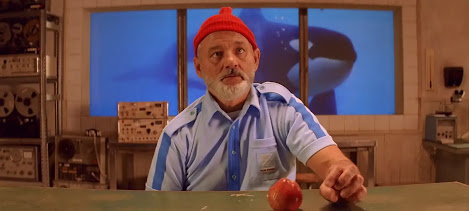
A send-up of both the late oceanographer Jacques Costeau and of pulpy adventure stories like 20,000 Leagues Under the Seas and Moby Dick, Life Aquatic is often incredibly pleasing to look at. The film's primary setting, the Belafonte, is an elaborately designed set masquerading as the ship of the titular Steve Zissou (Bill Murray, who has honed his talent for playing morose sad sacks with a heart of gold to science at this point), and Anderson expertly introduces us to it with a loving pan through the cramped confines of the ship. We see every room, every detail, from the side, giving us an immediate sense of scale and where, exactly, everything and everyone is. Many of the film's fantastical creatures, witnessed in Steve's expeditions, are rendered through claymation, which contributes to the fantastical feel of the film. It's quickly clear that this is something bigger, a more heightened reality than Anderson's prior work, which makes the very real emotions at play hit that much harder. 

At it's heart, Life Aquatic is a story about loss and learning to live with it, and that no amount of control or micro-management can do a thing about the random cruelties that life can dish out. Steve, an eccentric if charismatic oceanographer, begins the film on a quest for vengeance, hunting the rare jaguar shark that, by Steve's own words, "devoured" his lifelong best friend Esteban. While nowhere near Captain Ahab's level of fanaticism, it becomes clear that Steve's obsession with hunting the creature, potentially the only one of it's kind, is a greater attempt to lash out at the world for taking his friend from him, as he crudely announces his intention to blow up the shark with dynamite. Much like Ahab, however, Zissou drags along a crew heavily devoted to him, from the affection-starved, childishly petty first mate Klaus (Willem Dafoe) to the quiet, musically talented safety expert Pele (Seu Jeorge, who provides a series of beautiful David Bowie covers) to snarky, rarely clothed script supervisor Anne-Marie Sakowitz (Robyn Cohen), and several newcomers, like Steve's apparent son Ned Plimpton (Owen Wilson, very quietly reminding me of his underrated talents as a leading man) and hard-hitting, pregnant reporter Jane Winslett-Richardsson (Cate Blanchett), who quickly becomes an object of mutual affection for the coarse Steve and the more gentle Ned. 

The film is a proper adventure romp, if a more subversive one than the traditional fare, depicting the struggles of it's eccentric, deeply dysfunctional crew in a series of mishaps. A clash with pirates is portrayed as less a tense hostage situation and more of an exasperating road bump as two equally incompetent crews run afoul of each other, while Steve's recurring rivalry with the wealthier, more suave Alistair Hennessey (Jeff Goldblum, because who else?) serves as host to a series of great set-pieces (the impromptu heist of a Hennessey laboratory got a good laugh out of me with the spiteful bluntness of it while the crew's rescue of Hennessey from the pirates makes for a surprisingly tense action sequence) with a strong emotional pay-off as the two bond over a shared experience. The cast, a mix of Anderson's usual actors and newer players who would become bigger figures down the line, have a very lived-in chemistry. They bicker, they grow closer, and the various personalities clash in both expected and unexpected ways, feeling like a very genuine found family by the film's end. 

Of course, the good times can never last, and it's not a Wes Anderson film without a suitably brutal gut punch. In this case, it's Steve's pursuit of revenge for his best friend claiming the life of another loved one, as his reckless attitude and poor care for equipment causes an accident that kills Ned. It's a devastating moment, and the film's decision to first raise our hopes (Steve finds Ned floating amidst the wreckage) before crushing them (Anderson brilliantly bobbing the camera above and below the water as it gets more and more red) and then ultimately letting us sit in our grief speaks to the very real feelings that we've found ourselves developing for this larger than life characters. The message is clear: Esteban is gone, and Steve's refusal to admit that he can't bring him back has claimed Ned as well. It's in this moment that Steve, like many of Anderson's best protagonists, lets go of his grief, letting those he's lost live in heart by choosing to embrace life. 

This is represented by the quietly profound encounter with the jaguar shark itself, a beautifully designed creature that swims around the submersible the crew is packed into. Face to face with the beast he's hated, Steve half-heartedly admits to being out of dynamite, and simply washes it circle them before vanishing into the depths. Eyes brimming with tears, he whispers, "I wonder if it remembers me?" While we get no answer, the point is clear: change is impersonal, uncaring as to whether or not you're "important", and while tragedy is destined to strike everyone, what matters is how you choose to live in the aftermath of it. 

Sunday, September 8, 2024

Film of the Week: Milk and Serial


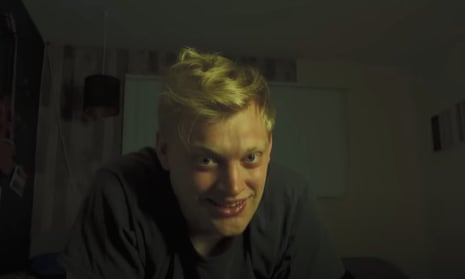
It's hard to remember the last time I watched something as agonizingly mean-spirited and skin-crawling as Milk and Serial, the hour-long, $800 found footage horror movie from director Curry Barker, who also plays the titular "Milk". Playing out over the course of a few days and amidst the rapidly crumbling relationship of two prank Youtubers, Milk and Seven (Cooper Tomlinson), the film excellently uses it's format, often implicating it's audience in the film's horrific occurrences and using dramatic irony to hang tension over our heads like a guillotine about to drop. It's a film that looks you deep in the eye and shows you a portrait of a deeply unwell person lashing out at others for increasingly petty reasons, sticking with you long after it's done. 

It's hard to talk about Milk and Serial without giving away a lot of what the film is trying to keep hidden, so for the interest of writing a review, I'll ask that those who haven't seen it stop about here and experience it for themselves. (Long story short: it's good! I recommend it.) The film, initially depicting a loud house party prank that seemingly catches the attention of a frightening, clearly mentally ill stranger (Jonathan Cripple), starts as something cliched, a group of hapless friends meddling with someone they shouldn't, all the while recording for no clear reason beyond Milk's insistence that they do so. It feels trite, predictable, and it isn't until Seven is forced to kill the stranger in self-defense after he drags the two to the desert that it takes a turn. Milk, claiming that the kidnapping was a prank but that Seven's killing was an accident, suddenly turns to the camera, saying it's time to explain how "the real prank" worked. The turn is jarring, working in the film's favor as we see Milk, revealed to be a psychotic serial killer who has claimed at least six victims, retraces his steps, showing us the secret steps that occurred in the background of the film's first third. 

Barker is very good as Milk, his boyish grin dripping with cruelty and self-referential smugness, a perpetual "I know something you don't" as he gaslights and terrorizes a guilt-ridden Seven. There's a casualness to his cruelty, from the way he makes casual conversation with a helpless victim to the ease with which he spins unnecessary lies just to wear down his hapless partner. Unlike American Psycho or Dexter, which gives their serial killers something of a charm, Milk is just nasty for nastiness sake. His explanation, a boiled over resentment of the more creative Seven, feels petty, more of an excuse for his behavior, while there's a clumsiness to his plans that both sews tension and robs of catharsis. His manipulation of Seven is simply abuse, his hastily-slapped together lies to lure in both the stranger (revealed to be a struggling actor looking for a gig) and his son clumsy and holding up just long enough for him to get away, and the moments where his mask slips showcase the bitter manchild underneath it all. 

Even the film's usage of found footage feels very justified, effectively operating as a video diary of every step of Milk's plan to wear down Seven and convince him to kill himself, an effort that will supposedly make him the greatest serial killer of all time. While the film does stray from this, cutting to their other roommates in an effort to move the rest of the story along, it makes the rest feel intimate. We're effectively Milk's accomplice, stuck with him and helpless to do anything for Seven as the situation devolves. The film's ending even plays to this idea, as the movie is over the moment Milk and Seven's situation hits it's end. We're finally free, but any real resolution is simply out of our grasp. 

The ending similarly plays to the film's nasty spirit, as Seven overhears Milk talking into the camera of his true agenda and finally snaps, killing his abuser and then himself. There's no dramatic reveal, no bold last word or secret extra step, just a quiet, "Oh," and then both men are dead. Roll credits. It robs us of both resolution and satisfaction, as Milk dies largely vindicated but is completely unable to celebrate the fame he desperately wanted. We don't even know if he becomes the celebrity he so badly wanted to be. It simply...ends. It's a bold ending, but one that suits the story being told here. We, like Seven and his hapless friends, saw what Milk wanted to be seen. Anything else just weighs down the content. 

Sunday, September 1, 2024

Film of the Week: Duel


Steven Spielberg is one of those filmmakers that, despite being a multi-Academy Award winner whose helmed some of the most successful and critically acclaimed films of all time, I feel can be genuinely underappreciated for the sheer talent and inspiration behind the camera. For all the criticisms that he's a sentimental director, in love with Americana and old-school style, Spielberg is also a deeply creative, often brilliant director, so good at it that he often makes it look easy, as James Mangold found out the hard way in making Indiana Jones and the Dial of Destiny, a film I generally liked but was a far cry from the original trilogy. This was very evident to me in the making of Duel, his directorial debut from when he was a mere 25 years old. A low-budget tv movie, shot at breakneck speeds and cut together a mere matter of days before it's premiere, Duel is a fascinating peek into the early days of one of cinema's greats, tense and surprisingly character-driven in it's depiction of road rage gone bad.

Shot on a low budget of $450,000, Duel is considerably minimalist, shot almost entirely on the highways and deserts of California. There's only one physical location, a diner that David Mann (Dennis Weaver) crashes outside of and spends a fair amount of time contemplating the next move in his battle of wits with a seemingly psychotic, unseen truck driver. This adds to the film's constant sense of paranoia and isolation, as Mann, a stressed businessman on a last-minute trip out of Los Angeles, is completely alone, unsure of who to trust and where he can even go to avoid the wrath of the driver. Weaver, chosen by Spielberg due to his role in Touch of Evil, is excellent as Mann, an embattled everyman whose frustration and resentment boils over as he feels the walls close in around him, while Spielberg's decision to leave the driver as a faceless entity pays off very well. We as an audience are left to decipher the exact motives of the driver, who goes from chasing down Mann at 90 MPH one moment to helping a bus full of kids the next. Is it casual cruelty that drives the pursuit? Misplaced vengeance at a driver who cut him off? It's up to us. 

The true antagonist, in a way, is the driver's truck, a worn-down Peterbilt 281 tanker hauling some form of hazardous material. The Peterbilt, a rusted, roadworn tanker with a set of license plates across it's front like a Predator's belt of skulls, serves as a looming threat, it's mere appearance (even when parked) signaling very clear danger, and it's final, dinosaur-like roar as it's destroyed makes the "vehicle as monster" message very clear. Making this a battle against a faceless threat lets us sit with Mann, his internal monologues and frantic, anxious expressions telling much of the story without saying much at all. 

And of course, Spielberg's direction goes a long way. The truck is presented as death on wheels, hurtling across the road while looming large in every shot it's in, and in a particularly tense set-piece, it appears almost out of thin air from off-frame to try and run over Mann as he attempts to call for help in the only phone booth for miles. Duel often feels claustrophobic, the miles of open road lonely and hostile rather than particularly freeing, and even when Mann is around other people, it's little comfort as he attempts to surmise the identity of his unknown attacker, the camera at one point closing in on his face as he scans the room, looking for any clues that could help him. The tension becomes suffocating at points, and the final shot, a lonely Mann sitting on a hillside as the sun sets, gives little comfort as we realize just how exhausting this fight for survival, forced on him just because he was in the wrong place at the right time, has been. 

Duel is a fascinating piece of cinema history and just a damn good movie overall. Spielberg would go on to do bigger and better things, but it's easy to see why this is one he often revisits. Without it, one of cinema's great auteurs might not have ever been able to explode on the scene. It's like watching the expert planting of seeds: in time, something beautiful will grow from it. 

Sunday, August 11, 2024

Film of the Week: In A Violent Nature


In A Violent Nature is a film often incredibly content to sit in it's silence, leaving you with little but your thoughts as we watch Johnny (Ry Barrett) trudge from kill to kill, watching from afar as the tried and true cliche of hapless attractive young people go about their business. Shot in the Algoma district of Ontario, it's often gorgeous to look at as Johnny trudges through the locales, but it's a lot like it's killer in that it has frustratingly little to say. The film flirts with a meta narrative without neccessarily committing to it, leaving a fairly entertaining slasher that doesn't quite live up to its premise while still leaving gore hounds like myself fairly satisfied.

It's not to say there isn't fun to be had here. Johnny's continued abuse of a corpse as a means of opening doors and windows is genuinely hilarious, while the film's most interesting concept is the quiet reveal that it's a sequel to a previous rampage of Johnny's, as a grizzled park ranger (Reece Presley) explains to two of our survivors. The film often works best when it's committed to the idea of showing us the things that horror movies decide not to show. Johnny's treks, a deliberate subversion of the idea of a slasher simply teleporting to the next place, through the wilderness are strangely peaceful, as director Chris Nash and cinematographer Pierce Derks are content to just let us soak in the gorgeous views while playing with lighting just well enough to make the film's nighttime scenes pop out. 

And, of course, if you come to this looking for a slasher film, you'll have a fun time. The film's various kills are suitably gory and fairly entertaining in their execution, while Nash wisely commits to a more mundane tone as a contrast. There's nothing in the way of music as Johnny tears his way through the cast, nor are there cheap jumpscares as we see it from the killer's perspective. They're simply brutal and to the point, then on to the next trek. None of it feels personal or particularly passionate, just Johnny eliminating an annoyance on his journey for his late mother's necklace. A particular favorite is Johnny's violent killing of the aforementioned ranger, a slow affair as Johnny cripples the man, drags his body to a wood shed, then slowly but surely dismembers him with a log splitter. Of all the film's kills, it's the one most fitting of its premise, and the often jarring contrast between the general serenity of much of the film and the comical absurdity of its deaths is a lot of fun to behold.

As a slasher, it's entertaining, but for a film that loudly prides itself on playing with perspective, it doesn't do too much with it. The shift in perspective, theoretically, should subvert our expectations and sympathies, but we learn frustratingly little about Johnny over the course of his adventure. A single flashback that establishes the importance of his mother's necklace is our only real hint to his motivation, while a scene of him playing quietly with a toy car is suitably interesting, but the "why" of him is left up to us with little in the way of clues to put together. The film suggests some sort of explanation near the end in the form of a long-winded story told by a good samaritan (Lauren Taylor) about how the isolating effect of nature can make anyone feral, but it's hardly a full rationalization of the various killing sprees. Without a properly subversive answer, Johnny is little different from the slashers he serves as a parody of, and his brutal, dreamlike murders lack a proper impact without a "why.".

In A Violent Nature is an interesting experiment—a slasher from its killer's perspective—that doesn't quite hit the heights that its premise could. There is, undeniably, a real talent on display here, as Nash frames events beautifully and comes very close to selling the idea in its wonderfully brutal kills, but it's something that maybe needed a little more to go from "good" to "great". A sequel has been announced that I will happily be seated for, so perhaps the second (or third, if we stick to continuity) time will be a charm.

Saturday, July 20, 2024

Film of the Week: The Raid: Redemption

There's a lot of beauty to be found in simplicity. As fun as it is to watch a filmmaker approach a complicated concept or idea and pull it off, it can be equally entertaining to watch a filmmaker approach a simple premise and absolutely knock it out of the park, using the simplicity to really hone the craft into something special. The Raid: Redemption, Gareth Evans's 2012 genre-redefining action film, is a perfect example of this philosophy. It's premise, a botched raid leads to a group of cops trapped in an apartment complex full of murderous criminals, is on the paper fairly simple, it's characters often boiled down to basic traits and motivations, and, save for a compelling emotional hook, it's story hums along with a quiet, unsurprising efficiency. But, we're not here for the story beats, we're here for the bone-breaking, beautifully choreographed action and impressive feats of tension of which very few films since have managed to match. 

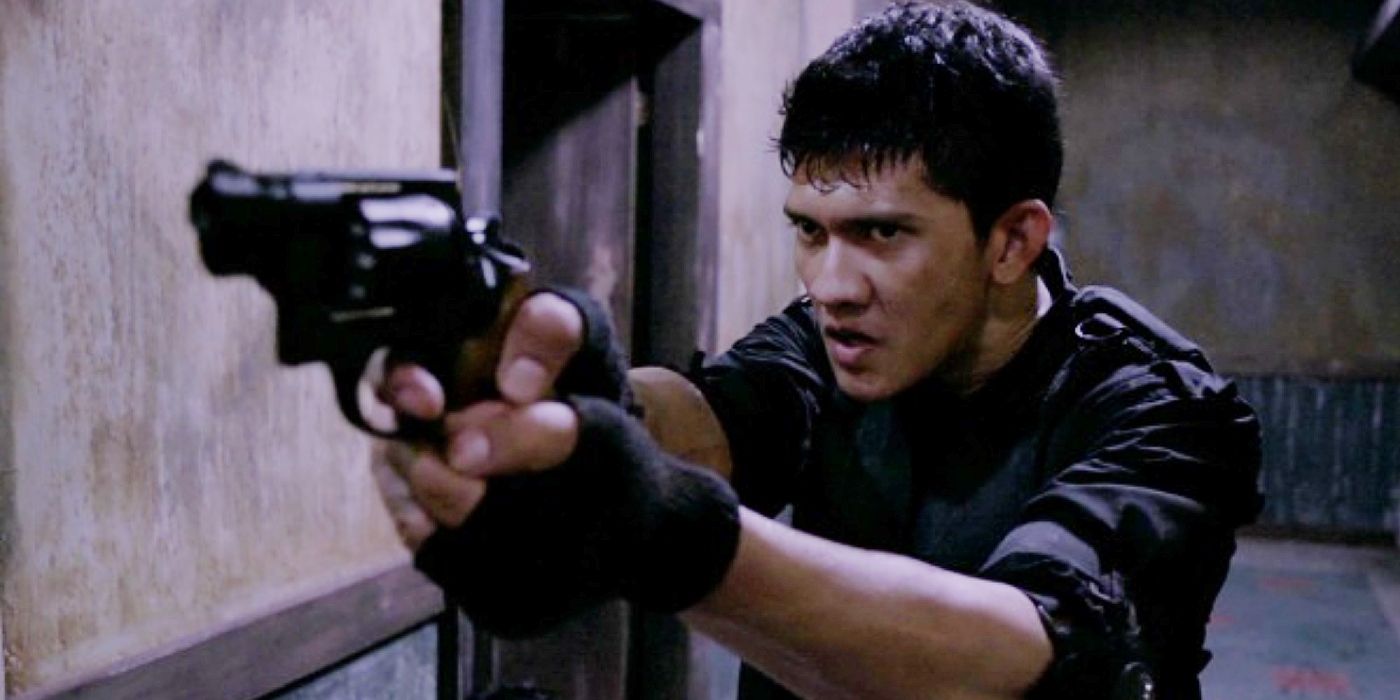
From it's opening moments, The Raid feels lived in, delightfully grimy and worn-down in it's establishing moments of the complex that makes up nearly the entirety of the film's runtime. Cracks in the unpainted walls, dried blood still on the concrete, and visible signs of decay litter every scene, and even the streets outside are barren and abandoned, giving the film a near-dystopian quality. It truly feels like the raid team, a collection of supposedly elite police officers, are walking into completely hostile territory, and the brief moments of characterization we get with the team, like the quiet, dedicated Rama (Iko Uwais) to the fiery Bowo (Tegar Satrya) to the ambitious, sleazy Wahyu, call to mind the introduction of the Colonial Marines in Aliens. In their simple interactions, from the efficient elimination of a guard or Rama's heated debate with Bowo over what to do with a civilian trying to get back to his wife, we're given enough of an idea of the personalities and dynamics of the roster that the near-immediate collapse of the plan hits with a suitable amount of impact. 

And what an impact it is. Famously talked about as the very best of modern action fare, The Raid's action scenes are brutal and chaotic, brawls and shootouts with real impact where the hits hurt and every victory feels agonizingly earned. Evans, alongside excellent work from choreographers like Uwais, films these with a real weight behind them. Rooms are destroyed, wounds are inflicted and play major roles in fights, and the knock-down, drag-out fights often end with everyone involved winded and limping away. It's a film that, every time I revisit, I tend to come away from with a new favorite fight scene. While the initial ambush, an overwhelming fighting retreat that sees our protagonists literally tearing apart the rooms of the complex to escape a seemingly endless horde, is brilliant in it's flow, the duel between Jaka (Joe Taslim) and Mad Dog (Yayan Ruhian, playing one of the all time great movie henchmen) always stands out, a vicious struggle that tells a story entirely in it's physicality as Mad Dog, an adrenaline junkie sadist, breaks down the defiant, stoic Jaka, culminating in a sad, futile struggle against a neck snap that leaves you feeling like the adrenaline got sucked from your body. 

While the action is exceptional, this would be a worse film overall should the rest of the film just feel like a loading screen between them, and it's the quieter moments that really sell those set-pieces. From the instant the initial ambush is over, we find our heroes in a much scrappier position, forced to hide and flee from the overwhelming numbers of the enemy. In one stellar moment, Rama and Bowo hide in the crawl space of the aforementioned civilians wall. Evans plays up the claustrophobia for all it's wall, practically shoving the camera into the wall as we see Rama strain himself, groaning in pain, just to turn his body a few inches. The tension escalates again and again, from Bowo fighting the pain of a missing ear to Rama having to gently wipe blood from a machete as it pierces the wall and slashes his cheek. There's a perpetual undercurrent of violence and danger in these quieter moments, that pursuers could burst in at any moment and force a losing fight, and when they do, it's often cathartic and punishing for everyone involved. 

Even the film's emotional beats, which the late, great Roger Ebert criticized as mindless and cheap as a great example of how even our best can miss from time to time, work in conveying exactly how much information is needed for us to care. What exactly drove crime lieutenant Andi (Donny Alamsyah) away from his family and into a life of crime, forcing his brother Rama to try and rescue him from the complex? It doesn't really matter, because all we need is that connection, played by Iwais, tragically squandered by Hollywood again and again, and Alamsyah in a mixture of bitterness and quiet affection. The connection feels real and sad, two men fighting over whether or not they can reconnect after finding themselves at a crossroad, and the emotional catharsis of them reuniting in a two on one brawl against Mad Dog makes for an incredibly effective, suitably gnarly climax. 

It's honestly difficult to find ways to praise The Raid that don't just feel like retreading old ground. It is, after all, a film that's influence can be found on everything from Daredevil to John Wick to Mission Impossible, effectively turning the page on the way a lot of modern action cinema presents itself. But, even with all that, it still stands head and shoulders above it's imitators as a triumph of the genre. It's a nonstop rush, scrappy and nasty but with an undeniable heart, and now with a glorious 4K remaster, you have no excuse to check it out if you somehow haven't.