
Showing posts with label Video Games. Show all posts
Showing posts with label Video Games. Show all posts
Monday, February 2, 2015

Tuesday, January 13, 2015
Guest Review: Watch_Dogs (PS4 Version)

(This review was guest written by Bioware enthusiast and Australia Day celebrator Ryan Mains)

Story
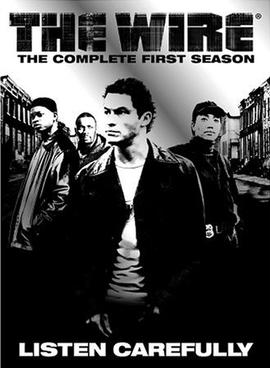 |
| Seriously, the DVD costs 12 dollars. You have no excuse. |
so hard to write realistic black characters in a world where The Wire exists?)
On that note, that lets me talk about a major pet peeve of mine that is in every Ubisoft game. Essentially, the game introduces a big bad for one mission, then has them vanish for much of the plot in favor of their top enforcer, who actually drives the plot forward. For instance, Woodes Rogers to Governor Torres in AssCreed4, Cesare Borgia to The Spainard in AssCreed: Brotherhood, Vaas Montengro to Hoyt Volker in Far Cry 3, and yes, Iraq to Lucky Quinn in Watch_Doge. Why do we
introduce major villains only for them to play hardly any role in the actual plot? While I get it builds suspense for the villian's actual appearance, it also leaves me disappointed. I got my big climactic battle with the enforcer and crushed his army after killing him, why should I care about you, useless old man hiding behind a wall?
The only other major issue story-wise is that the supporting cast is kinda sorta way more interesting than Aiden, who is kind of a bland, generic anti-hero. I get his motivations, but his only real emotions are anger, sadness, and this vague look that can be described as that feeling you get when you have other work to do, but you have to sit through a boring lecture in class. Every member of Aiden's team deserves a DLC pack dedicated to them. Heck, T-Bone already got his. Where's Jordi's epic Hitman-esque DLC pack? That'd be great. Watch_Doge also semi-remedies the whole "weaksauce Big Bad needs plot-driving enforcer" cliche by giving us Damien Brenks, Aiden's hacking mentor and the true final villain of the game. Damien carries himself with such a chummy, smug bravado that he dominates every scene he's in, and the final confrontation with him is one of the most memorable endgames since the battle of Denerim in Dragon Age: Origins.
Anyway, Watch_Doge plot is a pretty strong revenge thriller/tech noir with an interesting cast of side characters, traditional Ubisoft cliches aside.
Overall Story Score: 4 out of 5
Gameplay
Watch_Doge shooting gameplay is solid, if somewhat infuriating, as the sheer amount of enemies for gunfights tends to cause the game to devolve into bullethell, with frustrating deaths ensured. The stealth gameplay, in which the player uses hacking, darkness, and a whacking stick to their advantage, is much more enjoyable thanks to the ever broken silenced Colt M1911 that works as Aiden's main weapon and renders the majority of guns useless because of how it's much easier to slow time and land headshots than it is to spray and pray. There's a certain thrill to distracting an enemy, clubbing him over the head, then darting into cover just as a sniper spots you.
Of course, when the enemy inevitably flees, you have to get in a car chase. And that's where the driving system rears its ugly head. Essentially, cars turn into ice skates as soon as you go a little too fast, trucks are useless and slow, and motorcycles are fun, if absurdly dangerous. The driving system doesn't feel quite as realistic as it should, as you hurtle irreparably out of control down the street, try to turn, and slide into a wall that immediately breaks as soon as you hit it. This is especially annoying in car chases, when the enemy apparently has telekinesis and can keep his goddamn truck in line while my sports car flies off a cliff because I'm trying to make a left turn.
Another notable thing not mentioned in promotions is the Digital Trips, in which Aiden stops to take a hallucinogenic drug that causes apparently awesome minigames. The best one of the four is Spider Tank, in which the player controls Aiden as he falls in love with an immortal woman, grows old, and dies as Queen's "Who Wants To Live Forever?" plays in the background. Just kidding, it's totally about Aiden rampaging around in a spider tank. The game has just the right amount of destructive mayhem to be enjoyable and never get old. The second best minigames is Psychedelic, in which Aiden bounces around on flowers, laughing and smiling like an actual character, as music straight out of the Great Gatsby plays. The minigames has a certain comedic quality that makes me love it so much. Of course, Madness, a driving game is enjoyable, because it's narrated by Damien, and Watch_Doge driving controls are not garbage just for a little bit. And then there's Alone, a bizarre Alan Wake-esque stealth experience, that is supposed to represent Aiden's guilt by having him...get
haunted by lighthouse monsters? Of course, people will disagree with me over the best and worst minigames, because that's just how minigames work.
haunted by lighthouse monsters? Of course, people will disagree with me over the best and worst minigames, because that's just how minigames work.
Anyway, the side missions in Watch_Doge are enjoyable, even if each one ends in a comically bad anti-climax. My favorite was Missing Persons, in which Aiden hunts a serial killer who poses his victims in strange fashions and leaves audio messages in which he describes a mysterious godlike voice urging him to kill people, which is either clever satire mocking bloodthirsty gamers or an awkward attempt to reference the cosmic horror elements of AssCreed.
 |
| There's only room for one cosmic horror detective story in my life. |
Well, I suppose that's all the major gameplay features, and on a scale of 1 to 5, I'd give this a-OHRIGHTTHEHACKING. The hacking is by far the most interesting twist Ubisoft brings to Watch_Doge. Aiden can often use it to turn combat in his favor or offer interesting twists to missions, like following an enemy through a building with cameras or directing allies to safety. It can also be used to lose enemies in car chases, thought the rubber band AI makes it less about losing them and more about evading them long enough to hide. Chase sequences got less annoying when I figured that out.
Another cool feature of the hacking is hacking phones. Normally, you use this to steal money from people, but since the game's missions gives you all the guns and cars for free, I use it to listen in on people's conversations. These conversations can range from funny (a man describes accidentally joining a technology-free cult) to crass and misogynistic (a guy justifies hitting his girlfriend, while another describes cheating on her with her sister) to downright sad (a man dying of cancer receives a phone call from his son). The conversations breath a surprisingly large amount of life into the city of Chicago, and can actually make you pause before you pull the trigger on an enemy.
Overall, Watch_Doge gameplay is solid, with the hacking adding a neat twist, despite disappointing mission structure.
Overall Gameplay Score: 4 out of 5
Graphics
I suppose I should get this out of the way. Watch_Doge's graphics are nowhere near the quality of the original demo shown at E3 2012, which is disappointing because Ubisoft's exact explanation for this is "Well, tough cookies." All in all, the graphics are pretty good, though nowhere near Skyrim or Assassins Creed levels of quality.
Overall Graphics Score: 3 out of 5
Music
The licensed music tracks are rather hit-and-miss, as for every Break It Down or I Shall Not Be Moved, there is a Dangerous Tonight to drag it down. The game's background music is, however, fantastic, giving the game an excellent technoire feel.
Overall Music Score: 4 out of 5
Final Grades
All in all, it's rather tragic that Watch_Doge never turned out the way it should have been. It could have been a masterpiece, but delays set it back. I almost don't want to give it a rating, because Ubisoft tried so hard and I can see the obvious effort here and there. But rate it, I shall. Ultimately, Watch_Doge is an ambitious game that simply couldn't live up to its own hype, but managed to be an enjoyable game nonetheless.
Overall: 15 out of 20
Score: 75%
Notes
>Turns out there's actually a trope for the whole "enforcer is much more dangerous than the big bad" cliche: http://tvtropes.org/pmwiki/pmwiki.php/Main/DragonInChief
>A lot of the music I liked was hardcore rap, strangely. *insert Pretty Fly for a White Guy joke*
>I really hope that they make a Jordi DLC, seeing as how T-Bone got one.
Tuesday, November 25, 2014
Assassin's Creed Rogue: Everything the Franchise Has Built Towards

Assassin’s Creed Rogue
It’s Assassin’s Creed season yet again! Thank god too, because I had an itch that I needed to scratch. Seriously, the yearly dose of stabbing that the Assassin’s Creed franchise gives has become such a constant force in my life that if the series ever dies, I won’t know what to do with myself.
Assassin’s Creed Rogue is the sister game to Assassin’s Creed Unity. Rogue was released on passed-gen, while Unity is on current-gen. I originally suspected that Ubisoft was going to slack off on Rogue, but I was pleasantly surprised with Rogue’s overall quality and amount of content.
Note: I have played every AC game, and am a huge fan of the series. That said, I will try to write this review with as little bias as possible.
Gameplay
If you played Assassin’s Creed IV: Black Flag, you have essentially played Rogue. All the mechanics (aside from some minor weapon changes and ship combat additions) are cut and pasted from Black Flag. Still the games feel very different.
Black Flag was, at heart, a pirate game. Rogue, on the other hand, is an Assassin’s Creed game. This is a bit ironic, seeing as you play most of the game as a Templar, but nevertheless, Rogue combines all of the qualities of the older games in the series with the sailing in Black Flag perfectly.
Since the game takes place in the Northern Atlantic and New York, all of the buildings on land are much taller. I felt like a true Assassin running across rooftops in New York City, as well as when I was exploring the landscapes in the River Valley and North Atlantic.
There have been some minor changes in combat, like the additions of a silent air rifle and a not-so-silent grenade launcher. The most significant change to the game is probably the variety of enemies. Since Shay is hunting Assassins, you will face enemies equipped with all the skills and tools as you.
Using the hunting mechanic from Black Flag’s multiplayer, players must track down and take out lurking assassins before being spotted. If you give them the chance, the assassins will do everything in their power to attack you, and their attacks deal a lot of damage.
Rogue does not stand out because of it’s normal gameplay. It is the locations and expansive map that make the game a great experience.
Note: Rogue also offers some great set pieces and alternate areas in places such as Lisbon, Portugal, Paris, France, and the Arctic Ocean. These moments in the story are fantastic. In fact, the Lisbon mission is one of my favorites in the entire franchise.
Story
There are two separate storylines: one in modern day, and one in the animus. I will do a separate section for each.
Modern Story
The modern storyline is very similar to Black Flag’s. You once again play as a faceless worker at Abstergo Entertainment. After a virus hits the building, you are the only one left in the building to restart the servers.
After being enlisted by a modern Templar Knight, you go into the Animus to record Shay’s memories, occasionally coming out to reboot servers so that you can go back into the Animus and record more memories.
This storyline doesn’t really go anywhere, but it does give the player to go Easter Egg hunting by hacking computers around the Abstergo office building. Yay.
Animus Story
(the interesting one)
Rogue is the first installment in the franchise where the player can play as a Templar, the enemies of the Assassins. You play as Shay Patrick Cormack, a former Assassin who after serving the creed for years, decides he doesn't agree with what the Assassins are doing, and leaves his brothers to become a Templar and do what he thinks is right.
I knew going into the game that Ubisoft was going to have a hard time making the player prefer the Templar side after having them be enemies thus far in the series, but I thought the issue was handled well. By the end of the game I really felt like all the decisions made by the Shay were reasonable and that he was doing what he thought was right.
Speaking of the end of the game, I beat the main campaign in about 16 hours. This is pretty short for an AC game, but it places it at the approximate length of Assassin’s Creed Revelations. It just so happens that Revelations is/was my favorite AC game, so maybe the series is better off with shorter games.
The amount of collectibles and unlockables in the game is unreal. This game was built for 100 percenters. Here lies my only problem with the game. The story is so short that I didn’t visit a lot of the locations in the game. I bet I have seen about ⅓ of the entire game, even though my save slot says I’m 60% through the game.
Decide what you want about the story (or lack thereof). The massive map certainly provides for some replayability, but I wish the story had taken me to those location so I had a reason to go there besides to get collectables.
I should mention that Rogue’s story ties into Unity’s in such a awesome and significant way that I don’t want to spoil any of it. Let’s just say that the ending of Rogue and the realization of who your final target is is fantastic.
Controls
If you’ve played an AC game before, then you know what to expect. Controlling Shay feels clunky and imprecise. You WILL run up poles and fall off ledges unintentionally.
At this point, the inaccuracy of AC controls might as well be a trademark of the series. There is nothing new or gamebreaking here. Just another AC game and more falling off ledges. No big deal.
Graphics
Rogue looks just as good, if not better, than Black Flag. The sceneries and textures are impressive, especially for passed-gen. There are some pretty noticeable framerate drops when large groups of enemies are on screen. Sometimes is got so bad that I could not even fight because my frame-rate was somewhere in the vicinity of 2. Still, these moments are scarce, and the rest of the game runs very smoothly.
Award Time!
Best New Character: Shay Cormack
Best Returning Character: Achilles Davenport
Best Mission: The Lisbon Mission
Best Voice Actor: Whoever voiced First Mate Christopher Gist; his voice is absolutely ridiculous. Seriously, he sounds like a British guy doing a rich, white, american impression.
Conclusion
There is no doubt that Rogue is a game meant for fans of the series. Still, I think Ubisoft outdid themselves and sent a great last hurrah to all those playing on past-gen. I give Assassin’s Creed Rogue a 9/10. I even liked it better than Black Flag.
At this moment, I have not played Unity. That said, Rogue is probably my favorite AC game since Revelations. Everything the franchise has built towards during the last generation is compiled in this one game. As Unity leads the AC voyage on next-gen, Rogue wraps all that the series has worked towards in one neat package.
But rent it. $60 isn’t enough for a short game with no multiplayer.

Tuesday, September 9, 2014
Godus (iOS) Review: Like Civilization But Worse
Godus
School started up recently, and with it I received my official “educational” IPad! Since I returned the IPad at the end of last school year, I have not played many mobile games (smart phones are too small for my tastes). However, upon receiving my IPad, I promptly installed several games that I had heard good things about. One of these games was Godus.
Gameplay
Godus is what Wikipedia classifies as a “god game,” which I guess is an established genre now. Anywho, you play as a/the god with the goal of leading your followers to victory and helping them survive.
If you read my Forge of Empires review, then you know that I am a big fan of Sid Meier’s Civilization. Imagine my excitement when Godus actually performed very similarly to Civ. The game is somewhat open-world, and although you as God can order your subjects and shape the earth, you can not build and structures.
Gameplay revolves around shaping the land so your followers can navigate and build on it. As you gain more followers, you unlock more powers and can explore more areas of the world.
Before I continue, I just read that this game was designed by Peter Molyneux. A gaming genius and legend.
Anyway, Godus also has a level-by-level portion of the game in which you lead groups of settlers past obstacles within a certain amount of time. These side quests are great for passing time and provide the player with rewards and resources.
The thing I found wrong with Godus’ gameplay was actually something I hate about the game. The controls absolutely suck. They are very inaccurate, and when you are quickly trying to make adjustments to land, the game can become very frustrating. Despite this downside, Godus’ game mechanics are imaginative and fun to play around with.
If only we could rotate the camera!!
Story
Like other games in the “genre,” Godus is all about expansion. There is a side plot about the strange natives of the island you are living on, but the main outcome of that conflict does not become clear until VERY late in the game.
More insightful players may find it interesting how Godus handles the belief system. The more amazing acts you commit and citizens you own, the more belief you generate. Belief is expended on shifting the world and controlling your slave people. The less belief you have, the less you can do. Godus has an underlying message. God’s are nothing without their followers.
Graphics/Sound
The graphics of Godus are stereotypically “indie,” full of color and filled with blocky shapes with thin outlining. The game looks great on iOS.
It seems Godus borrowed more than just its gameplay from Civilization. The sounds and music of Godus are incredibly similar to those in the legendary RTS game. The sounds aren’t complete knock-offs though: Little details, such as your peasants whistling tunes (albeit, one especially annoying tune) while they walk and work is where Godus stretches the wings of creativity.
Appeal/Replayability
Godus is really fun to get into. Setting up and expanding your small town of minions is exciting. That said, Godus quickly gets into the part of the game where all the player can do is wait for structures to be finished before moving forward. It are gimmicks like these that I just don’t understand.
Why would a game make you wait to play it? Sure, you could spend REAL money to rush the building. Or, you could just wait 3 hours and then play game designed to be free for FREE!
But I digress.
Alas, I soon realized that I was playing Godus because I felt obligated to, not because I wanted to. I suppose that means the game does its job well, making me grow attached to my slaves like a reverse case of Stockholm's Syndrome. Still, I quickly deleted the game and went back to playing QuizUp, a game I love.
Award Time!
Best Designer: Peter Molyneux
Note: I only included this award to mention Molyneux’s name again. I may have an obsession.
Conclusion
I enjoyed my time with Godus, but I just couldn’t sacrifice myself to the game. I couldn’t devote myself. I lost faith. I’m running out of God puns. Godus borrows many ideas from other games, as well as putting its own creative spin on things. I give Godus a 7.5/10 for at least having the sense to copy a good game. Well.
Unlike Forge of Empires which copies a good game (and by copy, I mean a charcoal rubbing) and then runs that copy through a shredder until absolutely nothing is recognizable and everything is bad.
Rant complete.
Don't forget to like, share and subscribe if you liked the review. I just reached 1000 pageviews of all time, so a celebration Critically Compared will premiere soon.
Stay tuned!

Subscribe to:
Posts (Atom)