10. Legends of Tomorrow

At one point the weakest of the CW's superhero offerings, Legends of Tomorrow really hit it's stride in it's second and third seasons by throwing aside cumbersome romance sideplots and boring characters (see ya, the Hawks) and embracing the inherent goofiness of it's source material. This left a series totally unafraid of careening through various genres and throwing everything at the wall. Normally, this kind of strategy would leave an awkward mishmash, but Legends is so sincere that you'll find yourselves caught up with the characters.
Best Episode: There's so many to choose from, but "Gumball", a Spielberg-inspired 80's romp starring a young Ray Palmer is a favorite for both giving Ray, the show's idealistic chewtoy, a rare win, and packing humor, horror, and heart into a mere 40 minutes.
9. American Gods
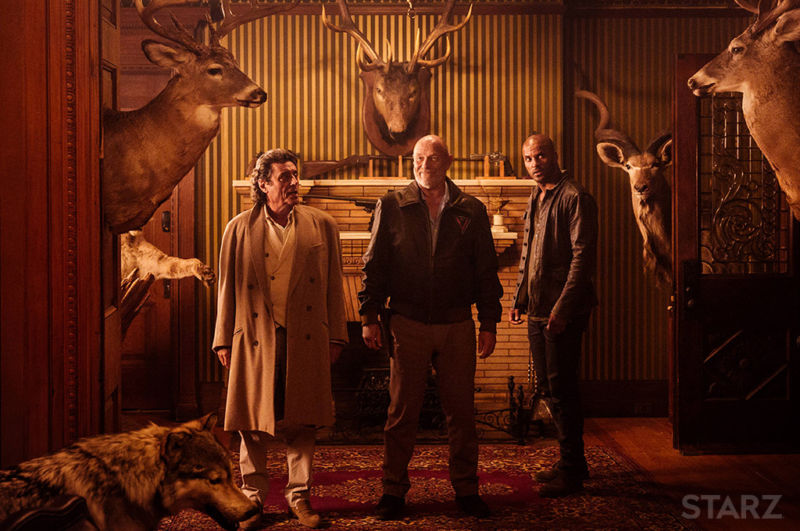
Neil Gaiman's work is supposedly unfilmable due to it's surreal, dreamlike nature, meaning that this was basically a perfect fit for Bryan Fuller after the end of Hannibal. American Gods is not just visually stunning, but also deeply intriguing, using it's everyman protagonist to slowly immerse the audience in the world and various deities that inhabit it. It's the rare adaptation that expands upon the source without souring it, and actually strengthens it at several points.
Best Episode: "A Murder of Gods" is probably the series's most fascinating take on the modernization of religion, largely due to it's portrayal of Vulcan as a profiteer off of America's gun culture, and honestly feels like it has the most to say without becoming preachy.
8. American Vandal

7. The Punisher
/cdn.vox-cdn.com/uploads/chorus_image/image/57582001/MV5BZWRlZGU1NmMtYmU0ZS00ZjEzLTk1MDItYmJmMmM3ODZlY2NlXkEyXkFqcGdeQXVyNzEzNzY1Nzc_._V1_.0.jpg)
6. This Is Us
Best Episode: "Memphis", in which Randall takes his father to his home city, was a tour-de-force for both actors and ends with what the series had been building to all season, bringing the arc to an end with a heartbreaking final speech.
5. BoJack Horseman

After the end of the third season, it was uncertain as to where exactly Bojack could take it's self-destructive protagonist, who had seemingly been pushed to rock bottom. As it turns out, the only way was up. Season 4 often felt like a redemption story, with Bojack returning to right his wrongs and try to just do something, anything positive to prove that he's a better man than the one who fled Hollywoo a year ago. His relationship with his apparent daughter Hollyhock was a softer side of the character, giving him a rare opportunity to develop alongside the rest of the cast, who continued to grow without him in unforseen directions. (As it turns out, running for Governor wasn't the biggest thing to happen to Mr. Peanutbutter this season.) For once, you'll actually walk away from this show on a hopeful note, and that alone deserves endless acclaim.
Best Episode: "Time's Arrow" casts a light on the tragic life of BoJack's mother, Beatrice, and beautifully turns the idea of a flashback episode on it's head by putting it through the warped and troubled mind of a near-senile old woman.
4. Rick and Morty

After an excruciatingly long wait, Rick and Morty returned and immediately reestablished as one of the most brilliant shows on television. Besides the usual sci-fi sendups, the show continued to develop it's characters, showing a more sensitive side to Rick while giving his daughter Beth a much-needed story of her own. And of course, each episode was as wildly original and refreshing as the one before it, flying from a John Wick-esque action thriller (starring a pickle) to superheroes put through a deathtrap to Mad Max romp turned revenge thriller. In spite of what it's increasingly toxic fanbase claims, Rick and Morty isn't a work of genius. It's just a good show.
Best Episode: "The Ricklantis Mixup" sets up the idea of an Atlantis adventure, only to abandon it's main characters a few minutes in to tell the story of the various Ricks and Mortys scattered across the Citadel. Unexpected and totally haunting.
3. Legion


Best Episode: "A Murder of Gods" is probably the series's most fascinating take on the modernization of religion, largely due to it's portrayal of Vulcan as a profiteer off of America's gun culture, and honestly feels like it has the most to say without becoming preachy.
8. American Vandal
American Vandal started with a simple premise: it's a parody of the true-crime documentaries overwhelming the market at the moment. This would've been enough to entertain, but Vandal goes in a bold direction by choosing to not only take itself entirely seriously, but also discuss the often-ignored consequences of shows such as this. It's characters are very much people who don't enjoy being exploited and reduced to one-note interviews and side characters, and this is played for all it's worth until a tragic and unexpected conclusion.
Best Episode: "Clean-Up", the season finale, is where everything really comes home, showcasing the emotional effect this documentary has had, and builds to a deeply sad ending that almost makes me not want another season. Almost.
As a lifelong Punisher fan, I was deeply excited to see more of Jon Bernthal's Frank Castle, as he was often the highlight of the otherwise disappointing second season of Daredevil. Suffice to say, my expectations were met and exceeded by the brutal, surprisingly thoughtful solo series. Showrunner Steve Lightfoot takes the character of Frank and successfully modernizes him and his entire supporting cast, using them to tell a conspiracy thriller with a lot to say politically. Unafraid to discuss ideas like gun control, mental health, and the role of the veteran in society, Punisher was bold in ways I didn't believe Marvel could be.
Best Episode: "Memento Mori" pits Frank against frenemy Billy Russo in a nightmarish final battle, tearing him down both physically and mentally, before ending on a deeply cathartic note that leaves the entire character arc of the Punisher on an uncertain note.
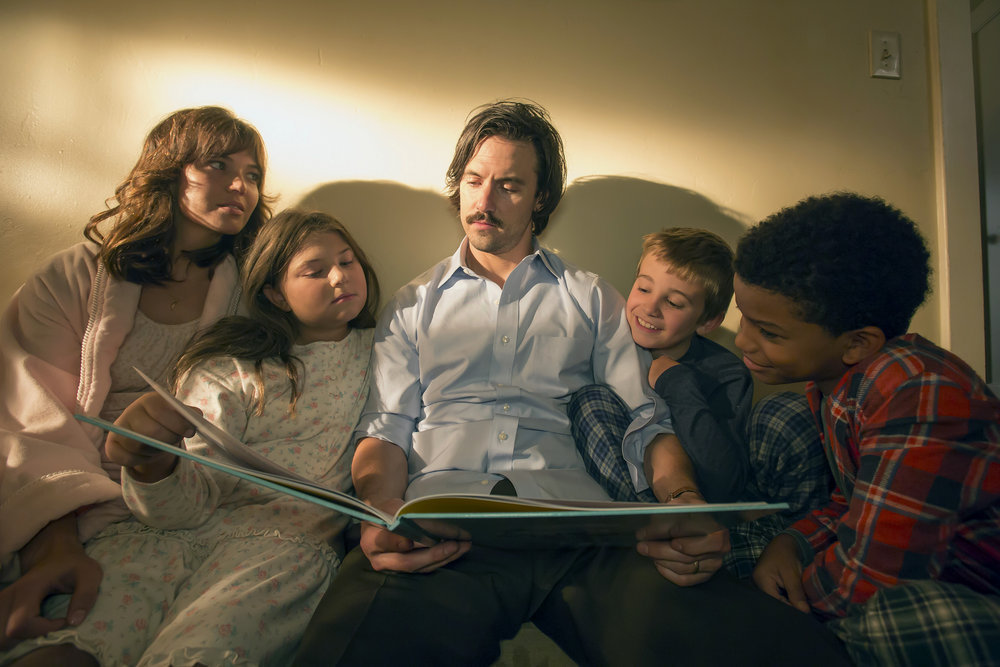
Sometimes you needed a show that was a simple palate cleanser, and that's where This Is Us came in. It's sweet, funny, and often unafraid to tug at the heartstrings as hard as it possible, particularly with the story of Randal Pearson, the adopted son of the family who struggles with meeting his real father and adopting a daughter of his own. Is it all cliched? Sure. But has it reduced me to a weeping wreck regardless? Maybe.
Best Episode: "Memphis", in which Randall takes his father to his home city, was a tour-de-force for both actors and ends with what the series had been building to all season, bringing the arc to an end with a heartbreaking final speech.
5. BoJack Horseman
After the end of the third season, it was uncertain as to where exactly Bojack could take it's self-destructive protagonist, who had seemingly been pushed to rock bottom. As it turns out, the only way was up. Season 4 often felt like a redemption story, with Bojack returning to right his wrongs and try to just do something, anything positive to prove that he's a better man than the one who fled Hollywoo a year ago. His relationship with his apparent daughter Hollyhock was a softer side of the character, giving him a rare opportunity to develop alongside the rest of the cast, who continued to grow without him in unforseen directions. (As it turns out, running for Governor wasn't the biggest thing to happen to Mr. Peanutbutter this season.) For once, you'll actually walk away from this show on a hopeful note, and that alone deserves endless acclaim.
Best Episode: "Time's Arrow" casts a light on the tragic life of BoJack's mother, Beatrice, and beautifully turns the idea of a flashback episode on it's head by putting it through the warped and troubled mind of a near-senile old woman.
4. Rick and Morty
After an excruciatingly long wait, Rick and Morty returned and immediately reestablished as one of the most brilliant shows on television. Besides the usual sci-fi sendups, the show continued to develop it's characters, showing a more sensitive side to Rick while giving his daughter Beth a much-needed story of her own. And of course, each episode was as wildly original and refreshing as the one before it, flying from a John Wick-esque action thriller (starring a pickle) to superheroes put through a deathtrap to Mad Max romp turned revenge thriller. In spite of what it's increasingly toxic fanbase claims, Rick and Morty isn't a work of genius. It's just a good show.
Best Episode: "The Ricklantis Mixup" sets up the idea of an Atlantis adventure, only to abandon it's main characters a few minutes in to tell the story of the various Ricks and Mortys scattered across the Citadel. Unexpected and totally haunting.
3. Legion
Noah Hawley worked on two shows this year, and while Fargo was something of a letdown, Legion more than makes up for it. Legion, the first major X-Men television series, flew entirely under-the-radar before arriving in a burst of color and fun, which is a surprise given "colorful" and "fun" are very rarely used in connection with the X-Men franchise. Legion's dreamlike aesthetic pulled the audience into a side of the universe that rarely gets a light shone on it, where not every superpower is inherently useful in a fight and some mutants are simply seen as mentally ill. In spite of this, the vibrant, funny, dark, and tragic Legion felt the most like reading a comic out of any comic show this year.
Best Episode: "Chapter 7", in which David gets some much needed answers, was visually stunning, segueing through animation and silent films as a battle rages through our heroes minds.
2. Samurai Jack
After years of development hell, one of the greatest sagas in the history of animation came to a close. Samurai Jack returned and fully embraced it's Adult Swim rating by taking the formerly noble Jack and breaking him down before piecing him back together in a touching journey. Every frame of the show drips with Genndy Tartakovsky's passion for color and scale, and he even proves his strengths of a storyteller as he tells the redemption story of Jack and his unexpected ally before bringing it to a close in one of the greatest finales in television history.
Best Episode: "XCIII", which pits Jack against the supposed Daughters of Aku in a brutal, chaotic brawl through the woods and a nearby temple. While the initial carnage is great, it's when Jack is forced to flee and hide that the episode becomes truly thrilling, leaving you on the edge of your seat as Jack grows increasingly desperate to not get caught.
1. Stranger Things 2

Just when Stranger Things backlash was starting to form, with many ready to dismiss it, as overly nostalgic, it returned with a vengeance and immediately shattered said criticisms. For it's second outing, the show goes bigger in scale but never fails to bring the emotional moments that made the first season work so well. More characters are introduced, but the returning favorites still get their chances in the spotlight. (Special shout-out for developing Steve Harrington from jerk boyfriend to selfless babysitter.) While there's so many fantastic thrills in this season, it's often the more quiet, character-driven moments that continue to stick with me, and for expanding without losing it's emotional heart, Stranger Things gets my pick as show of the year.
Best Episode: "The Lost Sister" was obviously the season's stand-out.
Kidding! It's actually "The Spy", which focuses primarily on the Will and Dustin/Steve plots to weave a mix of chilling horror story and buddy comedy before ending in a fantastic cliffhanger.