Tuesday, April 17, 2018

Review: "A Quiet Place" Is A Solid Horror Debut


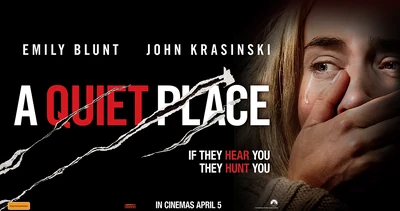
A Quiet Place is the third film from John Krasinski, and easily his most ambitious. A sci-fi horror film largely devoid of dialogue and reliant on natural sounds and tension, it had every chance to fail, but instead lands as a mostly solid horror flick with a strong emphasis on family and survival.

The film's cast is largely minimal, consisting of only four major characters: Lee (John Krasinski), Evelyn (Emily Blunt), Marcus (Christopher Jupe), and Regan (Millicent Simmonds). As such, the film would likely fail if any one of these performances was weak, making it a nice surprise that each member of the cast is fairly strong.

Krasinski and Blunt, as a real-life couple, have a natural chemistry, really selling themselves as both a couple and as parents. Krasinki carries himself with a gruff exterior, with his usage of ASL coming off as to the point, while Blunt is much loving and affectionate in her delivery. Simmonds handles a role that could've been irritating with aplomb, selling adolescent frustration and guilt with a sensitivity. Jupe is probably the weakest link, but it's largely because his character is rarely anything other than frightened in his scenes. Of the four, Krasinski is easily the strongest, using the lack of dialogue to convey so much emotion through body language and facial expressions. Desperate, angry, joyful, he pulls it all off without really trying.
The film handles it's setting, a world ravaged following an invasion by creatures that prey on sound, fairly well, focusing largely on allowing the audience to learn details through things like newspaper clippings or writing in notebooks. The film is fairly tightly-plotted, with set-up elements paying off throughout the film and building towards a satisfying climax, but it struggles like many horror films do with characters making dumb decisions. The biggest victim of this is Lee, the supposedly grizzled survivor, who, in the film's third act, makes a series of inexplicably dumb decisions in rapid succession with no real explanation as to why beyond that the plot needed to progress in this fashion.
Where the film truly surprises is selling the relationships between the various family members. These characters feel like a real family, and you want them to survive this tense situation. Several interactions carried real emotional weight, and I actually found myself with a lump in my throat at a few points.
The film never really pushes the limit in terms of shot designs or framing, but it never feels overly chaotic either. There are several moments where I wished Krasinski had pushed the envelope more, largely in terms of the film's reliance on jump scares in the first half over the long sequences of creeping tension where it really excelled. The scares felt especially forced, especially since the film used silence so well that pretty much any noise came as a jolt.
Another point of annoyance was the lack of originality behind the monster's designs. The monsters looked like a larger, slimier mix of the Demigorgon from Stranger Things and the monster from Cloverfield (which plays into the possible Cloverfield connection that was nearly forced on us). This was more of a personal gripe, but in an era where directors like Guillermo Del Toro can create visually stunning monsters for the same amount of money, it's something of a letdown.
Ultimately, A Quiet Place has it's flaws, but it's short runtime and excellent cast really prevent the film from ever overstaying it's welcome. It's inventive, scary, and leaves you with just enough questions that you'll find yourself thinking about long after the credits have rolled.

Thursday, April 12, 2018

"Thanos Wins" Comes to A Satisfying Conclusion


A couple weeks back, I wrote about Donny Cates and Geoff Shaw's run on Thanos, which is probably the best book of their respective careers and the strongest Marvel Cosmic book since the end of Abnett and Lanning's run on Guardians of the Galaxy. So I had fairly lofty expectations going into the final issue of the "Thanos Wins" story. And, naturally, they were met exceptionally well. 

#18 of Thanos's run opens with the two Thanos's victorious, having slain their foe, and now are apparently the last two beings in the entire universe. With their beloved Lady Death standing before them, the duo come to the realization that in order for them to be with Death, one of them must die. 


What ensues is a nearly issue-long fight scene, with almost no dialogue save for the opening narration, between the two Thanos's (Thanii? Thaneese?) as they engage in one final, knock-down, drag-out fight. Unlike the numerous other fights throughout the run, this one lacks the over-the-top visuals, which should've crippled it, but Shaw gives the fight an intensely personal feel. Every blow feels so visceral, it's hard not to wince at some of the more brutal hits. The entire fight feels resigned, destined to happen whether the two wanted it or not. 

These spills out into the narration as well, as Cates brings Thanos's arc full-circle. A frequent criticism of the series was that it lacked the character development most takes on the character had given him, but this issue makes it clear that the comic is all about Thanos's personal struggle, not just with the universe as a whole, but with himself. The final fight takes it to the literal extreme, but it ends on a poignant note for the character, who admits a seething self-hatred for himself that will hopefully be picked up on in Infinity Countdown, a Marvel Cosmic event that Cates ends the issue urging people to read if they want more of the Mad Titan.

Thanos was fairly brief, but it's such promising work from both Cates and Shaw they they've quickly become creators I'll read anything from. It's funny, creative, tragic, and most of all, fun. With one more Annual, where the Cosmic Ghost Rider narrates some of Thanos's most notable adventures, to go, there should be no reason why you aren't reading this. In fact, there's no reason why you haven't pre-ordered the upcoming Cosmic Ghost Rider book too, while you're at it. 

Wednesday, April 11, 2018

Who (Or What) Is the Upcoming Threat In Legion?


Legion's second episode certainly put a lot of my uncertainty about the first to rest, but it also raised a few more questions. Namely, who (or what) is coming that could be such a threat that David needs to actively assist the parasite that's been dead-set on ruining his life? 

For those who don't quite understand the question, please watch the show, because there's going to be some spoilers and it's also very good. 

Basically, we discovered at the end of last week's season premiere that the mysterious orb that took David was built by Syd and, if a musing by Cary in this week is anything to go by, Cary in some not-too-distant future. In the orb, Syd wordlessly explained to David that he needs to help the Shadow King locate his body before dropping him in a nightclub in France. This week, David is able to communicate with Future-Syd in a proper conversation, and she warns that David will kill the Shadow King a week from now (whether that means next episode or further down the line remains to be seen) and it will leave a power vacuum filled by some "thing" that in turn kills David, alongside most of the planet. When David tries to get more answers, Future-Syd severs their communication, leaving him uncertain and eager to seek out the Shadow King for answers. 

As for the greater threat, I'm certain we'll get to the answer of that before the end of this season, but for now I've got a prediction: En Sabah Nur, better known as Apocalypse. 


For those unfamiliar with Apocalypse, he's the first ever mutant in the main timeline of Earth-616 and a frequent foe of the X-Men. Apocalypse is a figure that inspires massive cults of worship wherever he goes, and he's likely the most powerful enemy the X-Men have done battle with. In one particular case, his unchecked rise to power led to the Age of Apocalypse event, which was brought about by David accidentally killing a younger version of his father before he could form the X-Men, leading to a dystopia in which Apocalypse has wiped out most of the human race. 

When the idea of the threat being Apocalypse first came into my mind, it initially stemmed from Syd mentioning that it killed most of the world, David included. Outside of the Pheonix Force (which is likely off limits due to the upcoming Dark Pheonix movie), I can't imagine any other unchecked threat that the show could be playing towards, especially given how heavily the show is tying into the concept of delusions and planting ideas through Jon Hamm's mysterious Narrator. 

A major part of Apocalypse's story is that he believes himself to be a god and mutantkind's greatest hope, regardless of whether his behavior matches his motifs. In fact, a major element of Rick Remender's Uncanny X-Force run was whether or not a young reincarnation of Apocalypse could be taught to be benevolent and kind. So, perhaps Hamm's Narrator is actually a major player in the series, his speeches (coupled with the scene of a Shadow King-possessed Oliver teaching a young child false information) foreshadowing the rise of a mutant tyrant who can't be stopped unless someone like the Shadow King is there to stop him. 

It's hard to predict or entirely be sure at this point, but after the utter letdown that was the portrayal of Apocalypse in 2016's X-Men: Apocalypse, perhaps a take from Noah Hawley, a man famed for writing compelling villains, could give the character the mainstream portrayal he deserves. 

Wednesday, April 4, 2018

"Legion" is Back, But Is It Just a Fluke?


So, Legion came back, and it was unsurprisingly great, but there was moments where my least favorite aspect of the show's first season reared it's head. That issue, at least for me, was the show's occasional tendency to be weird with no real explanation or payoff and hope that it was visually interesting enough for you not to wonder what the heck that previous stuff was about. It's fun to witness, but often lacks focus and distracts from the real story. My problem with it stems largely from the fear that the show may become more reliant on it's visuals and go the way of, say, Heroes, which climbed thoroughly up it's ass after the first season. 

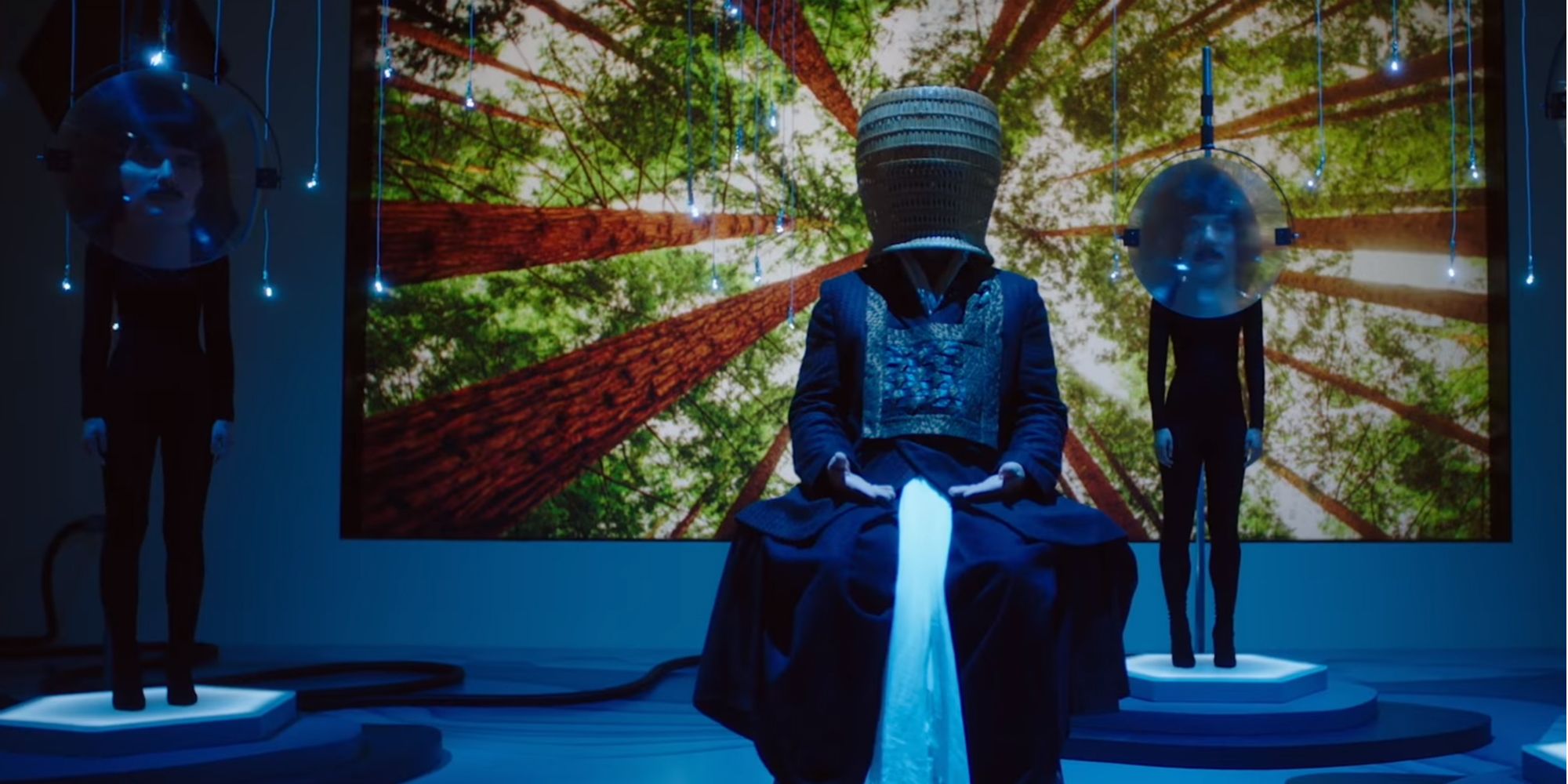
One of the two biggest perpetrators of this in the first episode was Admiral Fukuyama, the shadowy head of Division 3, who wears a giant basket on his head and communicates through mustachioed women with Alexa voices.

I'm not joking.

It's certainly fascinating to look at and gives scenes with him a weird tension, but is it necessary? Could he have just been a dude in a suit? I'm not one to question Noah Hawley, but I'm also just spitballing here. 

The other major weird bit was the narrator played by Jon Hamm. I love Jon Hamm in everything, to the point that I'll ignore the fact that he might also be playing Mr. Sinister at some point in the future, making this yet another weird plothole within the increasingly tangled and confusing X-Men timeline. 

Crumple this entire timeline up and throw into the sun. 

Throughout the first episode, monologues by Hamm are sprinkled. These speeches cover philosophy and the origin of delusions in comparison to regular ideas, and while the segments they're placed over are very disturbing and fun to watch, they feel somewhat vague. Sure, the delusions speech directly plays into the battle with the Shadow King and sets up the excellent reveal at the end of the episode, but what was the greater point of Chinese thinker Zhuanghazi, beyond perhaps setting up the idea that David is still trapped in the orb or even still stuck at Clockwork Asylum? 

Legion's a good show, arguably the best one Marvel has ever produced, so these are more worries than they are actual criticisms. But, ultimately, these worries stem from fear that Legion is going to end up like True Detective, a show that started brilliantly and went off the rails in it's second season by deciding to go as pretentious as possible. As long as Hawley continues to plot smartly and the cast continues to be excellent, I suspect things will be fine. But hey, just remember that this could go down at any point. 

Tuesday, April 3, 2018

Review: Pacific Rim: Uprising is Loud, Dumb Fun


The original Pacific Rim holds a special place in my heart. Directed by genius and long-overdue Oscar winner Guillermo Del Toro, it's gorgeous, thrilling, and singlehandedly dragged me out of a depressed funk by being exactly what I needed at that time. So, when it became clear Guillermo wasn't directing this one, I naturally got worried, and when the trailers made it look less impressive than the original, I got a bit more worried. Could former Daredevil showrunner Steven S. DeKnight tarnish my affection for the original by turning in a shoddy sequel? Hell, they could've even get Charlie Hunnam to reprise his role as Raliegh, clearly this will be a disaster! 

As it turns out, I really shouldn't stress out about these kind of things. 

Ten years after the end of the first film, the world is still rebuilding following mankind's apparent victory of the Kaiju. Societies have been built around the corpses of the giant beasts, with notable black markets still profiting, and the military defenders of Earth find themselves debating between continuing with human Jaeger pilots or allowing the mysterious Shao Corporation to privatize the industry and replace them with fully automated drones. Jake Pentecost (John Boyega), son of Idris Elba's Stacker, is forcibly drafted into the program to escape jail time, and alongside rival pilot Nate Lambert (Scott Eastwood, who is clearly filling the role Raleigh would've played had Hunnam come back), must train a new team of pilots from all around the world in order to challenge the mysterious "rogue Jaeger" that threatens to tear the whole program down and bring back the Kaiju. If they don't succeed, the entire world could be at stake. 

The first thing you need to get about Uprising is that it's not a thinking man's film. It's simplistic, oftentimes cliched, and clips along at a fairly quick pace. But it makes up for with a mix of sheer spectacle and solid performances across the board. Boyega, in particular, is excellent, playing Jake as a lovable, swaggering hotshot with a fragile side. In comparison to Raleigh, he's a much more compelling and interesting character to follow. Eastwood is...fine as Lambert, playing the usual stoic, hardass he plays in film like this. The recruits are all largely two-dimensional, never being much beyond recognizable archetypes (snarky Brit, stoic Russian, slapstick Indian, etc.) with the exception of Amara Namani (Cailee Spaeny), an orphan that provides the film with it's central heart through her friendship with Jake. Spaeny and Boyega have a natural chemistry and bounce off each other in the scenes they share, making their storyline click especially well. 

In terms of returning cast, Charlie Day and Burn Gorman are both great as Drs. Newton Geiszler and Herman Gottlieb, fitting back into the characters but adding some development onto them. Day, specifically, is even more fun in this one. Rinko Kukichi is good as Mako, if largely underused and relegated to a supporting role. It would've been nice to see her take part in one of the film's big battles. 

In terms of the films visuals and style, DeKnight lacks Del Toro's sense of scale, with the Jaegers and Kaiju never quite feeling real in the same way they did in the first one. For instance, there's never a moment as breathtaking as Gipsy Danger stumbling onto the beach in the original, while the fact that the film is shot in broad daylight gives everything a plastic feeling. However, what he lacks in scale he makes up for with fluidity, with the film's numerous fight scenes feeling perfectly put together. Never do you feel lost in the same way one would during a Transformers film, with the fights between Gipsy Avenger and the rogue Jaeger being particularly fun. Ironically, the Jaeger v Jaeger fights are more interesting than the clashes with the Kaiju. 

The plot, naturally, is fairly standard fare, outside of a villain twist that will probably prove divisive. (My friend group was split pretty much 50/50 on it, with defenders enjoying the role while detractors found it nonsensical and somewhat pandering.) There's laughs, emotional moments, and a fair amount of technobabble, but it all clicks so well you don't really mind. 

Ultimately, is Uprising a great movie? Probably not. Is it a fun way to spend two hours and a worthy sequel to the original? Absolutely.