Sunday, June 9, 2024

Film of the Week: Paranormal Activity: Unknown Dimension

There's few things as fun to watch as a good making-of documentary. Nine times out of ten, this stems from the fact that it's just plain fascinating to find out exactly how the creators pulled off a particular moment in a film, game, or show, and it often leaves you with a greater appreciation for the finished work. After all, with how difficult the act of creating something is, every movie, no matter how bad, is something of a tiny miracle. Unknown Dimension, a documentary about the rise and fall of the once-dominant Paranormal Activity franchise, stands among the best of these works. It's not just an in-depth examination of how the franchise came to be, but it's also a shockingly honest, funny, and surprisingly brutal post-mortem on how it all fell apart.

There's an undeniable scrappy charm to the earlier installments of Paranormal Activity, an energy captured quite well with the documentary's interviews with Orin Peli, the first film's director, and Katie Featherston/Micah Sloat, it's stars. Listening to Peli describe his influences, both The Blair Witch Project and Cannibal Holocaust, and his willingness to put his livelihood on the line, ripping up his own home to make it easier to shoot in, is genuinely affecting. The first film, strange as it is to say, was a real experiment, a bold swing made on a shoestring budget by a handful of people, and it's satisfying to watch it succeed as we see just how much was riding on it.

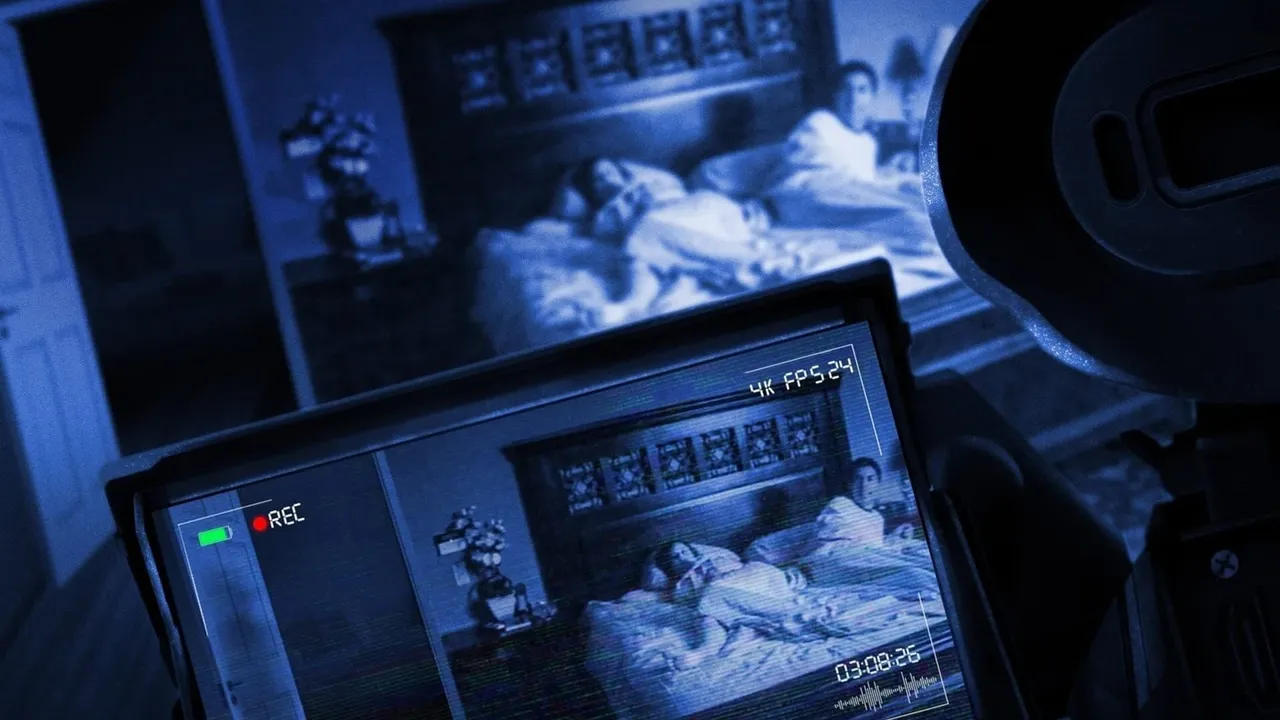
With success, of course, comes a demand for more, at which point other producers and writers, responsible for the franchise's increasing emphasis on lore and continuity, come into play. Particular favorites of these talking heads are superstar producer Jason Blum (hilariously framed with an Emmy next to him and a poster for Get Out over his shoulder) and Christopher Landon, an honest, passionate writer whose attempts to weave a cohesive narrative enabled the franchise to limp along for as long as it did. These interviews are often frank and deeply informative about every step of the creative process. We see directors pitching their ideas and venting their creative limitations, producers discussing the advantages of working with low budgets, and actors earnestly discussing the roles that would serve as a springboard for most of them. (Katie Featherston is rightfully given praise for being the franchise's glue, both in terms of showing up in most of them and also for her great physical performance as a possessed Katie.) As the franchise hits its heyday, making wild profits and inspiring a deluge of imitators, you can see a real enthusiasm for the project, from Landon's intervention to ensure 2 is a stronger project to the inspired hiring of the directors of Catfish to helm the third entry. It's even full of fun "how did they do that?" moments, like Henry Joost and Ariel Schulman showcasing a camera attached to an oscillating fan and how they expertly used it to create tension. There's a creativity and apparently genuine passion to ensure these succeed, and that energy is strangely infectious.

Of course, all good things must come to an end, and this franchise is no different. Like any great disaster, the retrospective takes a harsher tone after the third film as our various talking heads begin furiously pointing fingers. With zero hesitation, Jason Blum says 4 and Ghost Dimension are easily the worst of the franchise, while Christopher Landon mournfully admits to handing the finale's director an impossible job with a wistfulness that made me laugh so hard my roommates had to pause the movie. With the franchise dead and (at the time of production) buried, it allows for much-appreciated honesty from the interviewees. Jost and Schulman, in particular, have some great excerpts about the production of 4, discussing how their creative pitch for a road trip was quickly tossed aside in favor of a product where they had little autonomy. Laughs and smiles are had by all, of course, but the bitter undertone of it all adds a lot of bite. Even an effort by Landon in the director's chair (the very fun Marked Ones) can't quite reverse the woes, even if, hilariously, he breaks the supposed cardinal rule of the franchise by not making a haunted house movie.

The ultimate conclusion of Unknown Dimension is an interesting one. For all the finger-pointing and discussion of the sequel's shortcomings, you get the sense that everyone realized that the found footage fad had run its course. The ultimate surrender comes in the form of Landon and Peli, who admit to fighting tooth and nail against making the franchise 3D, only to throw their hands up for Ghost Dimension, a clunker that puts the final nail in the coffin. Even Featherston, whose presence makes for a fun treat throughout the series, didn't bother to appear. Blum, sagely, admits that he considers the film the series lowest point and subsequently washes his hands of the franchise, but subsequently uses the style of production when he founded Blumhouse. It's a surprisingly glum ending, but even in this moment, you can't help but feel fulfilled by the experience.

Unknown Dimension is a refreshingly honest take on the "making of" documentary, willing to dissect its parent series shortcomings while still treating it with a degree of fondness and reverence. It's everything you would want a movie like this to be: full of interesting filmmaking tidbits and a genuine emotional arc. And, like any good horror movie, it ends with the killer lurching to life with a hilariously foreboding tease for Next of Kin, a film that I'm certain will be the shot in the arm this series needs. Now, time to take a big drink of coffee and check out the reception... 

Monday, May 27, 2024

Film of the Week: The Batman

"What is the price for your blind eye?" is one of the questions asked by the Riddler (Paul Dano) in his mindgame, part a test of skill, part a ruthless war against the city's corrupt element, with Batman (Robert Pattinson). In context, it's an attempt by the Riddler, a product of the city's failed public works program, to shine a light on one of the many people who have exploited the system, but from an outside perspective, it's one of the many ways in which the film plays with perception and the way we see the world. The Batman, Matt Reeves's take on the decades-old character, isn't perfect, but when this central idea clicks, there's very few entries in the superhero genre like it.

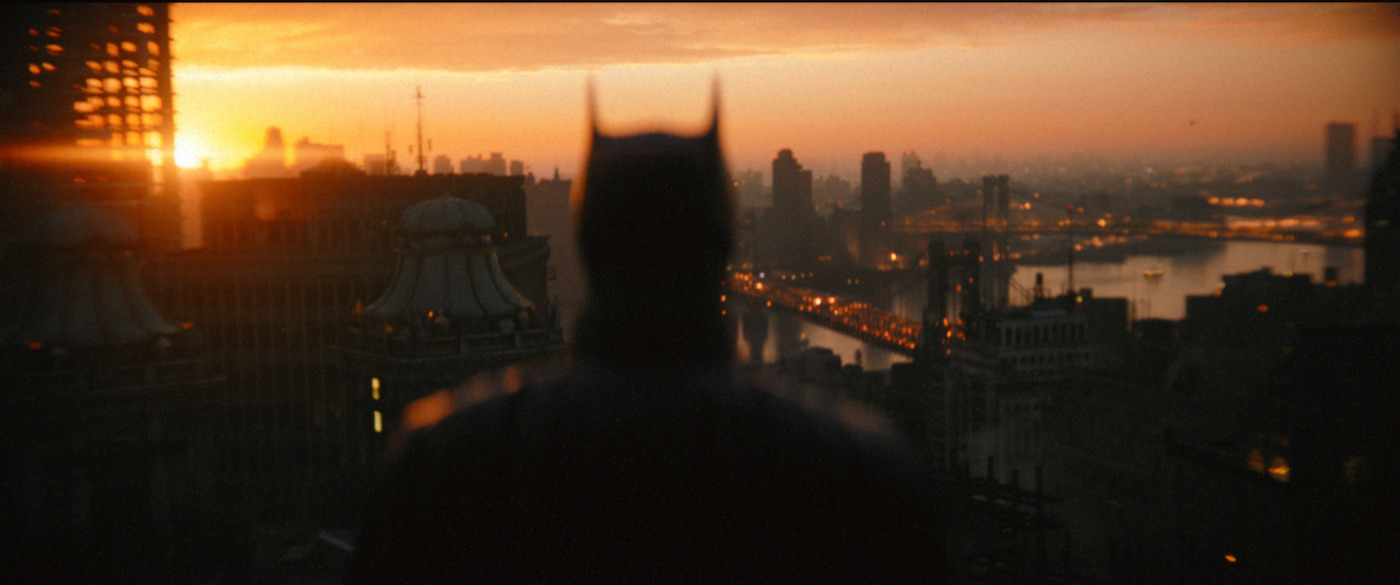
Reeves's visual eye, the same that made his entries in the Planet of the Apes franchise so stunning, is unsurprisingly the film's strongest element. Alongside cinematographer Greig Fraser, Reeves plays with light and shadows to create a sense of creeping paranoia, a feeling that either Batman or the Riddler could be anywhere at any given moment. Even as it climbs inside their heads, the film portrays the two closer to that of a villain in a slasher movie, ever-looming. The Riddler simply...appears in his first scene, standing behind Gotham's embattled, corrupt mayor without a sound, while the excellent introduction of Batman is criminals jumping at shadows, staring into the darkness, and wondering if he's waiting for them. Despite the film's more grounded take, not quite to the militarized level of Nolan's nor the mythology-infused scale of Snyder's, it gives it a larger-than-life feel. Reeves's Gotham feels like a world just different enough from ours, operating within the realm of plausibility but still feeling very much it's own.

The duality in imagery is no accident. The connection between Batman and Riddler, two orphans forged in a life of trauma and pain, is represented by the similarity of their points of view. The Riddler is introduced watching the mayor with binoculars, peeking through his windows, while Batman later watches Selina Kyle (a gorgeous Zoe Kravitz) in much the same way. Both scenes create a sense of unease as the Riddler takes interest in the mayor's family while Bruce briefly watches Selina change, the purpose being safety or attraction to the aloof femme fatale left unclear. Later, the two both slink through the shadows of the Iceberg Lounge, with Riddler watching from afar while (in one of the film's surprisingly sparse action sequences) Batman tears through Carmine Falcone's (a delightfully unnerving John Tuturro) men, the gunfire of the panicked criminals the only source of light. Both have weaponized their pain to become monsters luring in the darkness, leaving the question of whether Batman will follow Riddler down that path.

This combination of visual and emotional connection may be why the film begins to lose steam a tad in its last third. With its two antagonists brought down, it shifts to a larger-scale climax as Batman battles Riddler's followers amidst a flooding Gotham. It's a fun setpiece, tense and creative, and while the sun rising over Gotham as Bruce realizes he can't just be a symbol of fear makes for a fitting capper, you can't help but feel as though the detective story had been traded for something less interesting.

Even a weaker third act, hardly an anomaly for superhero fare, can't really weigh down The Batman. When the film works, it really is something special: a creator-driven superhero project, bursting with visual creativity and confidence. From its opening to its final shot, a fittingly haunting end of Bruce watching Selina drive away as he ponders the life he could've had, it establishes itself as a real winner for a genre that risks growing stale.

Sunday, May 19, 2024

Film of the Week: Kingdom of the Planet of the Apes

Early in Kingdom of the Planet of the Apes, Wes Ball's sequel/soft reboot of the Planet of the Apes franchise, protagonist Noa (Owen Teague) speaks to his father Koro (Neil Sandilands), the chieftain of his tribe. The conversation is terse, full of the classic "first act conversation between doomed parent and protagonist child" tropes, but in the end, Koro softens somewhat. Smiling sadly, he looks to his son and simply says, "Much to learn." After a hesitation, he adds, "Much to teach." This conversation, strangely, is an indicator of the film as a whole. Like Noa, Kingdom is a scrappy thing, living in the shadow of predecessors, but the potential for greatness is unquestionably there. 

The smartest move for the franchise was, unsurprisingly, the decision to timeskip 300 years into the future. This allows the audience to explore the overgrown ruins of the old world, giving it a far more fantastical, mythic feel as our protagonists explore crumbled cities and ponder what came before. The film's script, penned by upcoming Avatar 3 scribe Josh Friedman, delves into this as well, deliberately keeping details of the previous films vague, allowing them to fade into an almost mythic reverence, while its story resembles epic fantasy stories like Conan the Barbarian rather than the grim-faced war thrillers of War and Dawn or the sci-fi spectacle of Rise. For much of the film's runtime, it's similarly content to go for more simplistic ideas; at its heart, it's a road movie that slowly reintroduces us to the world. While this does make some of the film's bigger ideas feel undercooked, I suspect it may stand stronger once it's part of a completed trilogy. 

The direction, similarly, veers into a different direction, using the unsurprisingly excellent visual effects for some very confident direction. Ball wears his influences on his sleeve, and you can see everything from Avatar to the aforementioned Conan to the Last of Us in the various setpieces and the general visual tone of the world. While it's not as striking as Reeves's entries in the series, going for a brighter palette, there's some truly stunning stuff here. Ball expertly shoots things like a fiery attack on Noa's village by slavers or a tense climb through a flooding facility, ratcheting up tension and keeping focus throughout the increasing chaos. Kingdom is a big, bombastic adventure movie, and there's a lot of fun to be had there. 

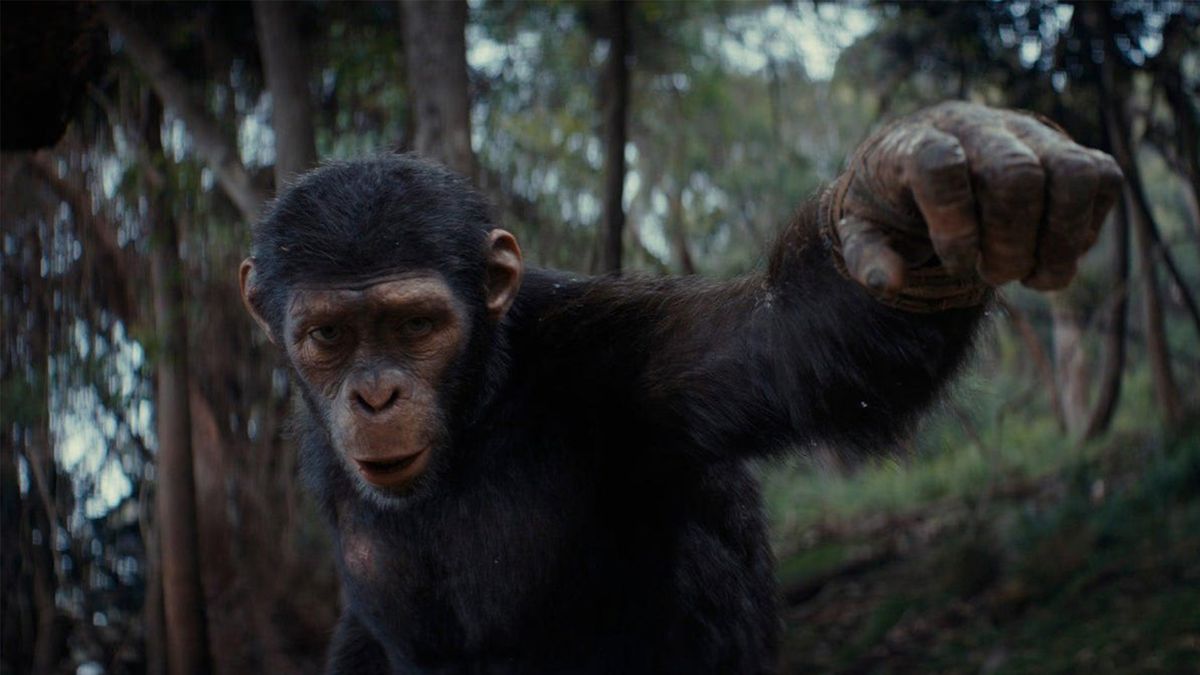
No one understands that assignment quite like Kevin Durand, a genuine show-stealer as wannabe king Proximus Caesar. A swaggering tyrant who, in probably the film's most insightful commentary, takes the late Caesar's name and ideals, twisting them for his own use, Proximus is a dominant, genuinely charismatic figure. Durand plays him with confidence, using his body language to always feel like the largest person in the room as he preaches his gospel. With every word, you can see him try to plant the seed of doubt in Noa's mind—his mistrust of humans not without a grain of truth. The cast, given the difficult role of motion capture, all do a great job, but Proximus especially feels like a living, breathing character, intimidating and giving just enough depth to feel like a proper villain.

While Kingdom isn't perfect, suffering from some late-game twists that feel a tad jarring and could potentially feel like a retread if misused, it's hard to deny it's magic. The Apes movies are truly special as blockbusters, emotionally rich, and visually striking in their own unique fashion, and I'm happy to see that this is a worthy successor. In the first of three, the potential is there. They only have to grow it properly.

Saturday, May 11, 2024

Film of the Week: Death Becomes Her

Do you all remember the era when Robert Zemeckis used to make good-hell, even great-movies? Making Forrest Gump, Who Framed Roger Rabbit?, and Back to the Future is an all-time run of hits, and even things like Contact and Flight are solid, mature movies made by a talented journeyman director who has since given himself up for CGI dreck, making his downfall frustrating in a very unique way. So imagine my delight as I watched Death Becomes Her, a charming 1992 black comedy-fantasy-horror mash-up, and was reminded of the often charming, genuinely innovative spark that Zemeckis once had.

Death Becomes Her's central conflict, beyond the idea of man vs. element in the two leads battle with aging, is between Helen Sharp (Goldie Hawn) and Madeline Menville (Meryl Streep), an aspiring writer and fading actress, respectively, and their decades-long rivalry hitting its peak. Hawn and Streep, who had not worked together, suit their roles perfectly: snippy, catty, and often vicious in the way only two people who have been "friends" for decades can be. One of the film's standout moments is a duel to the "death" between the two, a pouring of grievances and old wounds that slowly melts away as they realize the pettiness of it all. It's perfectly symbolized in the film's mystical element (and source of it's, par the course for Zemeckis, excellent VFX work) of a magic potion capable of making one immortal but doing little to protect their bodies as the ravages of time wear on them. In this potion, the characters find eternal outer beauty, but the festering nastiness of their personalities ultimately wins out.

It's this nastiness that often gives Death Become Her such a bite, lacking much of the earnest attitude of it's director's usual fare. At its best, the film feels like a garish Looney Tune, doling out slapstick violence to its protagonists, putting them through the wringer with a cruelty that works in its favor. The effects work, full of prosthetics, genuinely grotesque make-up, and (for the time) impressive usage of CG superimposing, add to this. While the scene of Helen, hole blown through her with a shotgun, is a famous standout, the way the film uses immortal bodies for comedy pretty consistently gets a laugh. A personal favorite is Madeline, deprived of a chunk of her spine, having to awkwardly keep her head from sinking beneath her shoulder, a funnier take on the surprisingly tense moment of her, now freshly immortal, rising up after being shoved down the stairs, her broken body snapping and creaking as she pays no mind to the fatal wounds on her body.

Of course, the true MVP is Bruce Willis, giving a wildly out of his element turn as Ernest, a squirrely mortician/plastic surgeon and object (heavy emphasis on this) of conflict between Helen and Madeline. Effectively trapped as a straight man between the two, Willis is nothing like the macho everyman persona he had cultivated to that point. As Ernest, he's cowardly, easily manipulated, and as quietly cruel as his manipulators, shrinking under their gaze and hiding his frustrations behind a tired, bitter gaze. It makes his arc, a rejection of an immortality spent afraid of everything regardless, fun to watch, a spineless (figuratively) man learning to stand up for himself. His increasingly frantic reactions as the film veers more into the supernatural give it a grounding presence, while Willis's performance does a master class in not just making Ernest a boring source of conflict.

In retrospectives, Robert Zemeckis has mentioned that he wishes that the film's tone could've been more decisive, closer to its origins as a Tales from the Crypt movie than the bigger Hollywood production it ended up being. While, in a way, you can see that in its ending, I found this to be a perfectly nasty treat. Sure, there's a pulled punch or two, but there's so much to enjoy that I'm hardly going to fault the movie for it.

Saturday, May 4, 2024

Film of the Week: Challengers

Very rarely does a film so succinctly establish exactly what it's about quite like Challengers does in one of its opening scenes. As Patrick Zweig (Josh O'Connor) and Art Donaldson (Mike Faist), Junior Doubles champions and lifelong friendly rivals, watch Tashi Duncan (Zendaya) play for the first time, the film, at this point established by the whip-smart, often funny banter of its protagonists, chooses to focus on expression. Luca Guadagnino expertly cuts between the game—Tashi's domination of an ill-tempered opponent—and the boys reactions—a mixture of slack-jawed awe and barely-hidden attraction—with the camera locked on them as they struggle to take their eyes off her, falling out of rhythm with the rest of the crowd. When Tashi hits the winning serve, her roar of victory and Pat's hand gripping Art's knee in a moment of impulse tell us everything we need to know: sport and sex are an intimate experience unlike any other, and the pursuit of that feeling of connection will drive these three forward for the rest of their lives.

"For about fifteen seconds there, we were actually playing tennis," explains Tashi as she describes the match later. "We understood each other completely. So did everyone watching. It's like we were in love." Tennis, in the film's eyes, demands intimacy, commitment that only another can help you find, and without it, it's, as Pat ignobly puts it, just hitting a ball with a racquet. Throughout the film's flashbacks, a showcase of how the trio came together and fell apart that breaks up Pat and Art's rematch at a Challenger event, we see the character's endless hunt for this connection and the often poor choices made to chase this high. It's a credit to the film's script, written by the potion seller himself Justin Kuritzkes, to sell this subject matter so beautifully, and each of the characters is written so confidently that everything feels like a natural conclusion to their clashing personalities.

Of course, the cast, dripping with sexual tension and easy chemistry, is fantastic as well. Zendaya, unsurprisingly, is a standout, shifting from the siren-esque allure and blunt attitude of young Tashi to the ferocious, quietly embittered Tashi of the modern day, forced by injury to live out a career vicariously through Art. A modern Helen of Troy, you instantly understand why both of these men have lived a life obsessed with her. Faist and O'Connor, like any great sports movie, settle into the role of eternal face and heel, their dynamic shifting into a toxicity and rivalry that was evident from their first scenes together. Faist's Art grows from a quiet, insightful sidekick to a weary champion, while O'Connor's Pat reeks of a bully all grown up and left chasing his glory days. Full of familiarity and resnetment that can only be bred with time, the trio's conversations often make for as exciting a back and forth as any of the movie's actual matches.

This is no slight against the matches, of course. Guadagnino, editor Marco Costa, and cinematographer Sayombu Mukdeeprom play each match as a visceral experience, focusing on individual hits and movements over sets as a whole. It creates the feeling of us along for the ride, feeling every moment like an enraptured audience. When Art swears in a moment of frustration, we feel it. As an enraged Pat smashes his racquet, we feel it. When Tashi suffers a career-ending knee injury, good god, do we feel it. This kinetic filmmaking ties around the intimate nature of the film, the audience effectively living inside the characters heads, their flashbacks allow us a viewing of exactly what plagues them as the tournament moves to its final match, a nearly silent showdown between Art and Pat that leaves you enraptured and chasing that high until the credits roll. "We've barely spoken two words to each other," bemoans Pat during a tense reunion in a sauna. An attempt to get inside his opponent's head, it also underscores what is obvious, from the homoerotic scenes of them as young men to the familiar back and forth of their match: Art and Pat don't need to talk when the intimate connection is already there. The real conversation is had without saying a word.