Thursday, May 10, 2018

The Surprising Inspiration for Infinity War


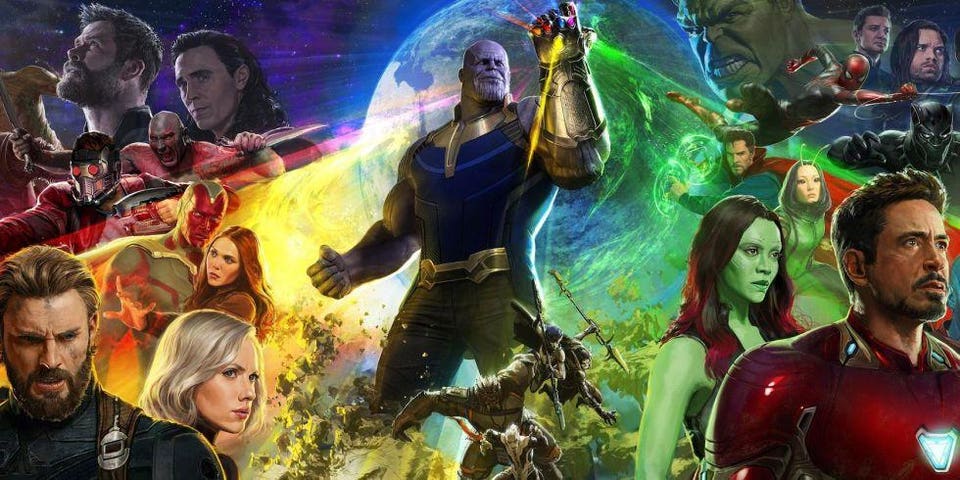
Like most Marvel films, Avengers: Infinity War takes inspiration from a wide variety of sources, most notable Jim Starlin and George Perez's The Infinity Gauntlet and Jonathan Hickman, Jim Cheung, Jerome Opena, and Dustin Weaver's Infinity. But what if I told you that there's a secret third inspiration that very few people are talking about? That's right, folks, I'm talking about 1997's Mortal Kombat: Annihilation, which is one of the worst videogame films ever made. 

Don't lie, the theme is already playing in your head. 

"But Ryan", you say, confused, "Annihilation was a critically panned flop. How could the directors of one of the biggest movies of all time take inspiration from it?" Let's run down the plot of these two films. 

Both Infinity War and Annihilation take place immediately after the end of a previous film in the franchise, both of which ended with the villain arriving ominously. (For Infinity War, it's Thor: Ragnarok, and for Annihilation, it's the first Mortal Kombat.) For extra points, they even cast shadows over the celebrating heroes. 

Both films open with a losing battle and the death of a beloved major character at the hands of the villain, with Thanos killing Loki and Shao Kahn killing Johnny Cage. This defeat kickstarts the plot to make clear that things are dire and the scattered heroes are going to need to come together if they want to prevail. 

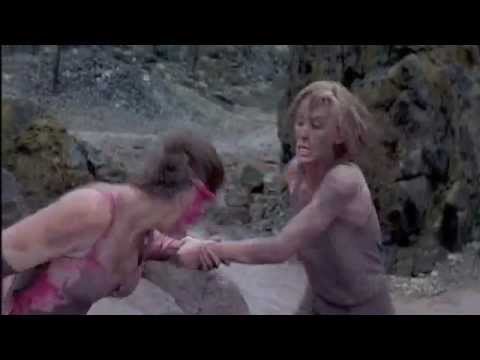
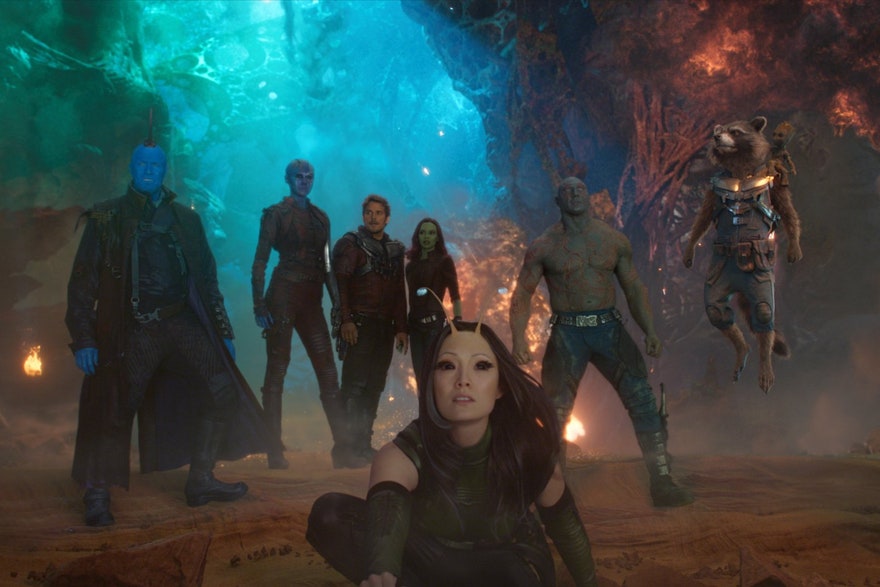
Both films then split into three subplots: a thunder god soulsearches to find true power (Thor/Raiden), a franchise icon (Iron Man/Liu Kang, Spider-Man/Kitana) teams up with a mystic weirdo (Dr. Strange/Nightwolf), a new guy they were unaware of (the Guardians of the Galaxy/Sub-Zero), and an untrustworthy femme fatale (Nebula/Jade), while a combat veteran (Steve Rogers/Sonya Blade) puts together their own team, including a cybernetic black soldier (Rhodey/Jax), to fight several of the big bad's minions, including a weirdo telepath (Ebony Maw/Ermac), a lightning quick cyborg (Corvus Glaive/Cyrax), and an evil daughter of the big bad brought down after an intense duel in a pit (Proxima Midnight/Mileena). 

And I mean intense. 

Both films also have a small subplot about the adopted daughter of the villains, who are taken captive by their "fathers" early on in the story after their loved one failed to save them. (Gamora/Kitana, with the respective loved ones being Star-Lord and Liu Kang.) For even more extra points: in their final moments, the mystic weirdo gives cryptic advice to the hero before vanishing from the story. ("It's the endgame now."/"Feel your Animality!") 

Both films ultimately end with these ragtag heroes coming back together for a final battle in a ruined city (Titan/The Elder Gods temple), in which one team prevails over the generals (the Battle of Wakanda/Sonya and crew versus Sindel, Ermac, and Motaro) while the franchise hero battles the villain in single combat. (Thanos vs Tony/Shao Kahn vs Liu Kang) In both these cases, these heroes prove ineffective, leaving a mere cut, and all seems lost. 

That is, until divine intervention truly brings the villain down. (Thor attacking Thanos with Stormbreaker/The Elder Gods declaring that the conflict must be settled with Mortal Kombat) And this, of course, is where it diverges. In Infinity War, Thanos survives the final fight and uses his power to kill half the universe, while Shao Kahn is ultimately defeated by Liu Kang in Annihilation. 

The real divergence is the performance of both films. Infinity War was a critical success and a commercial smash, while Annihilation was...neither of those things. But ultimately, we shouldn't ignore the clear influences that Annihilation has had upon the culmination of the MCU, and we can even use it to predict the future of the franchise. If Marvel movies go the way of Mortal Kombat, we should expect Avengers 4 to get cancelled (uh oh), leading to a series of increasingly mediocre entries in the franchise (uh oh), culminating with the bankruptcy of Marvel Studios (triple uh) and the rights going to...
UH OH.

Friday, April 27, 2018

Review: Thanos Annual


As we all know by this point, I adore Donny Cates's Thanos run, so I naturally sprung to get the Annual when I discovered we'd be getting a variety of stories from various writers familiar with the character, much like Action Comics #1000, except each story was focused on Thanos's cruelty rather than Superman's kindness. So, once more, I dove into the stories, gave individual takes, and ranked each one.


"Titan's Greatest Dad" 
Written by: Donny Cates 
Art by: Geoff Shaw, Antonio Fabela 

"Titan's Greatest Dad" is narrated by Cosmic Ghost Rider, the overall host of the annual, and focuses on the upbringing of Gamora, something that Cates's never really touched upon in his run. On top of very pretty art by Shaw, it's incredibly dark, with an excellent twist that showcases the depths of Thanos's cruelty and commitment to said cruelty. It's a strong start, if somewhat brief. 


"What To Get From The Man Who Has Everything" 
Written by: Christopher Hastings 
Art by: Flaviano, Fedrico Blee

Hasting's contribution to the anthology was an incredibly dark comedy focused on David, a young man who is tormented by Thanos on his birthday. Flaviano's art is cartoonish enough to sell the comedy, on top of pulling off an intimidating, if exaggerated, Thanos. I'm beginning to suspect all of these will be brief, but this one uses the lack of space most effectively to pull off some really great gags. 


"Exhibition"
Written by: Kieron Gillen
Art by: Andre Araujo, Chris O'Hallorahan 

Each of these stories feels like a different aspect of Thanos's villainy, and Exhibition is all about his unshakable love for Lady Death. Araujo's art is the real stand-out, capturing a lot of what I liked about classic Frank Quitely while also coming off as more colorful and larger in scale. Gillen's Thanos is every bit as cruel as Cates's, but comes off as more emotional, with a surprise appearance by the wicked Mephisto balancing him out. 


"My Little Hands" 
Written by: Katie Cook
Art by: Heather Breckle 

"Little Hands" reminded me a lot of I Hate Fairyland, largely because of the dissonance between the cutesy art and the incredibly brutal tone. It involves Thanos being trapped on a world of adorable puffballs that worship a heart at the center of the Earth, and takes a real drastic turn. This one is arguably the only story where Thanos isn't entirely at fault, making it all the funnier. Of course, the real stand-out is Breckle's art, which infuses the story with a Sunday paper comic strip feel a la Calvin and Hobbes. Short, but immensely sweet. 


"That Time Thanos Helped An Old Lady Cross the Street"
Written by: Ryan North
Art by: Will Robson and Rachelle Rosenberg 

For someone who ]traditionally portrays Thanos as a punching bag in his run on Squirrel Girl, Ryan North perfectly nails the more deceptive and tactical aspect of Thanos. The entire story is merely a polite and jovial Thanos helping a friendly old woman cross the street, but the reveal of his motives makes it one of the petty and evil things he's ever done. To quote North's Galactus, "What a tool."


"The Comfort of the Good" 
Written by: Al Ewing 
Art by: Frazier Irving

Probably the least comedic of the stories, "Comfort of the Good" is all about Thanos's cruelty and the effect it has on others. It's helped by Irving's art, which is expressive but also alien, truly feeling like an entirely hostile story to the readers. It also ends with a typical Ewing contemplation of the afterlife and how our behavior is sculpted by it, and how the mere presence of a rival god can throw your entire belief system into question. 

Ultimately, I really dug this annual, and I don't think there's a single weak story in the bunch. It's a strong ending to an excellent run, and it even ends with an exciting cliffhanger for the upcoming Cosmic Ghost Rider miniseries. If you've loved this run, or even just want some great Thanos stories, grab this. 

Ranking: 
*That Time Thanos Helped An Old Lady Cross the Street
*My Little Hands
*What To Get From The Man Who Has Everything
*Exhibition
*The Comfort of the Good
*Titan's Greatest Dad

Wednesday, April 25, 2018

Why Guardians of the Galaxy 2 Is Underrated


When Guardians of the Galaxy Vol. 2 came out, it did very well financially, but got a sort of mixed response critically. They liked it, generally, but there was lots of complaint about how the film wasn't as fresh as it's predecessor and how it had too much going on visually. While I think there are merits to these arguments, I feel like it's led to the film being ignored in favor of Spider-Man: Homecoming and Thor: Ragnarok, both of which came out the same year to much more praise. In my mind, Guardians 2 is a bold, moving film, and a recent rewatch confirmed a lot of those feelings for me. 

The biggest factor for me, which was a general turn-off for audiences, was that it's truly James Gunn's films. Every line, every character beat, every scene feels exactly like what he wanted it to be, creating a sense of unity that a lot of the more "by committee" Marvel films tend to have. It feels personal in a way no MCU film ever really is, investing the audience in the characters more. 

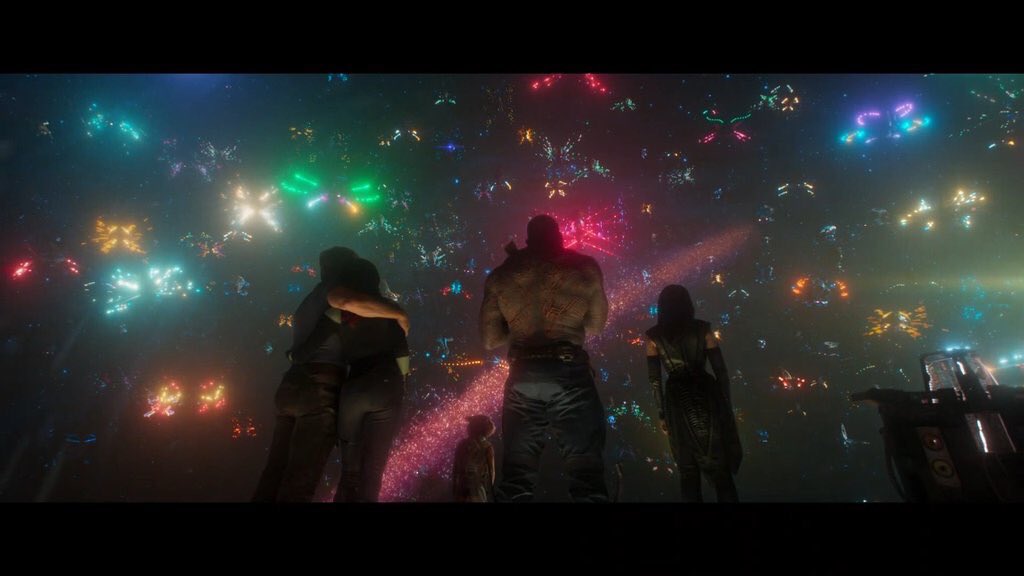
In terms of emotional investment, I think this one's hard to top. Traditionally, MCU films always up the stakes, leaving little room for the characters to grow emotionally, but Guardians 2 focuses really heavily on the team as a whole. Sure, Peter's father issues comes first, but there's also Gamora's relationship with Nebula, Drax mourning his wife and child, and Rocket trying to drive everyone away. By the end of the film, these issues are dealt with in a satisfying fashion, and we're left feeling like the Guardians have truly become the family none of them ever got to have. Fittingly, it ends with the funeral of Yondu, who established himself as a surrogate father and lovable antihero just in time to die, leaving a solid chunk of the audience in tears as Cat Stevens plays us out. 

And I know/that I have to go away...

And the death of Yondu flies in the face of a frequent criticism of Marvel films: they don't take risks. By the end of this film, a major supporting character has given his life to save his adopted son, and it has real impact in a way the rest of the MCU didn't. This is on top of not one, but three, entertaining villains and a legitimately important lesson of "No matter how you are, there are always people who will love you." 

At the end of the day, Guardians 2 isn't the best MCU film, but it's arguably the bravest and most uncompromising we've seen from the franchise thus far, meaning it definitely deserves a second look from a lot of skeptics. 

Thursday, April 19, 2018

Review: Action Comics #1000


Anyone who knows me knows that I love Superman. He's pretty much my favorite DC character, and he's often a character that writers botch. So when DC decides to celebrate his 80th birthday by putting out a special 80-page 1000th issue of Action Comics, I knew I had to jump at the chance and buy it, just to see who would be telling the stories within. So, 2 hours later, here's my review (and ranking) of each story.m


"From The City That Has Everything" 
Writer: Dan Jurgens 
Artist: Norm Rampund 

#1000 starts with a story by the current writer of Action, Dan Jurgens, and it's probably the most standard fare of any of the books. The basic gist of the story is that the city of Metropolis decides to honor Superman by throwing an event where people can speak about what Superman means to them. Clark's reluctant to attend, but he does stay to witness all the people who's lives he's changed, Rampund's art does an effective job at drawing Clark and his family, with one really excellent splash panel at the end showcasing wider talent with a variety of characters, but the real stand-out is Jurgens. As the man whose been writing Superman for the better part of 30 years, he totally nails the voice of the character and what he means to a people as a whole, even if some dialogue is a bit clunky from time-to-time. 


"Neverending Battle" 
Writer: Peter Tomasi 
Artist: Patrick Gleason 

Of all the stories, this one easily feels the most like a love letter, so naturally it's written by the regular writer of the Superman comics, Peter Tomasi. This story involves Superman trapped by Vandal Savage and flung through time, so we get to see the various eras of Superman, from the Golden Age to the gritty future of Kingdom Come. Tomasi plays up Clark's inability to give up and uses the different eras to showcase how important that is to him as a trait, with Gleason's absolutely stunning art portraying the various eras. So far, two for two. 


"An Enemy Within" 
Writer: Marv Wolfman (Based off a story by Cindy Goff)
Artist: Curt Swan

The next story was an apparent remake or retelling of a Silver Age Superman story drawn by the late, great Curt Swan, whose famously regarded as the Silver Age Superman artist. It's fairly brief, focusing on a hostage situation in Metropolis which Superman is too busy to deal with. If every story is a celebration of a different part of Superman, "Enemy Within" is an ode to his faith in humanity to do what's right. That above all steers Superman's role as a hero, and to see it play out in a fairly brief story was touching. 


"The Game" 
Writers: Neal Adams, Paul Levitz
Artist: Paul Levitz

"The Game" is a story about a game of chess between Superman and Lex Luthor, and while Adams and Levitz do a good job with their voices, it feels fairly rushed. In a matter of panels, the game is over and Luthor springs a largely ineffective trap, then the story is over. While it's a strong showcase of the characters, I feel like this one would've worked better if it was longer, and perhaps drawn by a slightly less messy artist. 


"The Car" 
Writer: Geoff Johns and Richard Donner
Artist: Oliver Coipel

"The Car" is all about the driver of the car that Superman destroyed in the iconic cover of his first appearance in Action Comics, and like most things written by Geoff Johns, it's not very subtle, but it's still got that perfect Christopher Reeves-era voice that Johns (with the help of Superman I/II director  Richard Donner) tends to give him. Coipel's art evokes the Golden Age without ever straight-up aping it, coming off as extra expressive and easy to follow. This story plays into the Siegel/Shiuster era of Superman's faith in all men and more rebellious stances. Golden Age Superman was a champion of the downtrodden, and his conversation with Butch, the driver of the car, hints towards that. 


"The Fifth Season"
Writer: Scott Snyder
Artist: Rafael Albuquerque

Between this and "The Game", this one was easily the stronger Superman/Lex Luthor story. Dealing with Superman tracking down Lex Luthor to the Smallville Planetarium, it reads most like a bittersweet take on their rivalry. These men were friends once, and to some degree, that affection is still there. Albuquerque's art doesn't always nail the expressions of the character, but there's still some very pretty moments throughout the comic, especially whenever the characters witness their local planetarium. It's about the same length of "The Game", but it tells so much more. 


"Of Tomorrow" 
Writer: Tom King
Artist: Clay Mann

"Of Tomorrow" is clearly a Tom King story, because it's easily the saddest, but it's also a showcase of King's strength of applying deeply personal themes to larger-than-life characters. In this case, it's dealing with the death of your parents, and how to move on from that. Of course, the Kents have been dead for centuries at the point of this story, but it's clear that Superman still loves and cherishes them from the fact that he still visits their grave every year. In a lot of ways, the Kents are one of the most important parts of Superman's backstory, giving him the ideals he lives by and fights for, and it's a sweet send-off to characters that many writers tend to ignore. 


"Five Minutes" 
Writer: Louise Simonson
Artist: Jerry Ordway 

"Five Minutes" is written by Louise Simonson with art by Ordway, whose up there with Jurgens or Johns as an iconic writer of the character, and it details Superman stopping a series of accidents with five minutes until he has a deadline on story. As the era of Superman I'm mostly familiar with, it was a blast of nostalgia to see Clark interacting with characters like Perry White or Bibbo Bibbowski. Of all the stories, this one benefits the most from a lack of length, and I almost expected it to end with the classic "wink at the camera" many Superman stories like this do. 


"Actionland" 
Writer: Paul Dini
Artist: Jose-Luis Garcia Lopez

"Actionland" has all the trademarks of a Paul Dini story: fun visuals, beautifully drawn people (thanks Lopez), and a total encapsulation of Superman's history, rogues, and the role he plays in his villians's lives. As a story about the apparent final battle of Superman and reality-warper Mr. Mxyzptlk, a villain whose a particular favorite of Dini's, it's sweet, simple, and like all of Dini's contributions to DC: fun. 


"Faster Than A Speeding Bullet"
Writer: Brad Meltzer
Artist: John Cassady 

"Speeding Bullet" is a Superman ending a hostage crisis in a matter of seconds, and while there's a few good moments in it, it felt a bit like a retread, while Cassady's art felt somewhat stiff. Which is a shame, because I adore his work on things like Planetary, where he was given a chance to flex some creative muscles. Here? It's mostly just Superman. 


"The Truth" 
Writer: Brian Micheal Bendis 
Artist: Jim Lee

Of all the stories in this collection, it's this one that's probably the most important, as Brian Micheal Bendis will be taking over as the writer of Superman. You can tell DC wanted this to be a big deal, because a) it's at the very end and b) is drawn by superstar Jim Lee, who does good, if not super compelling, work here. Ultimately, this story struggled because it feels like a regular Superman comic got pushed into the middle of this celebration of the character. Bendis doesn't play Superman as quippy. but ultimately I'm worried that his run will be playing to Bendis's weaknesses, namely his love of bombastic, cosmic-level threats to established characters. 

As a fan of Alias and Daredevil, I can tell you that Bendis works best when he's telling deeply personal stories about established villains like the Kingpin or the Purple Man, while his more traditional works often shoehorn in boring villains to fit the larger scales of the stories. Rogol Zaar, the new villain, has an interesting design but unclear motives. Maybe I'll be wrong, but Bendis's track record suggests that his run may be off to a bumpy start. 

Conclusion
Ultimately, #1000 is a solid variety of stories all about the various elements of what make Superman such an icon, and even though it dips from time-to-time and lacks well-known voices like Grant Morrison, it's still a really good read for any fans of the character.

Rankings
Neverending Battle
The Fifth Season
The Car
Five Minutes
Of Tomorrow
Actionland
An Enemy Within
From the City That Has Everything
The Game
Faster Than A Speeding Bullet
The Truth

Tuesday, April 17, 2018

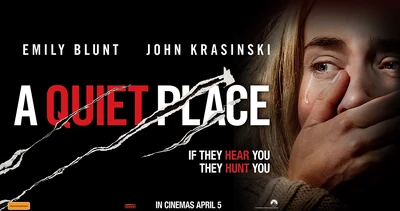
Review: "A Quiet Place" Is A Solid Horror Debut


A Quiet Place is the third film from John Krasinski, and easily his most ambitious. A sci-fi horror film largely devoid of dialogue and reliant on natural sounds and tension, it had every chance to fail, but instead lands as a mostly solid horror flick with a strong emphasis on family and survival.

The film's cast is largely minimal, consisting of only four major characters: Lee (John Krasinski), Evelyn (Emily Blunt), Marcus (Christopher Jupe), and Regan (Millicent Simmonds). As such, the film would likely fail if any one of these performances was weak, making it a nice surprise that each member of the cast is fairly strong.

Krasinski and Blunt, as a real-life couple, have a natural chemistry, really selling themselves as both a couple and as parents. Krasinki carries himself with a gruff exterior, with his usage of ASL coming off as to the point, while Blunt is much loving and affectionate in her delivery. Simmonds handles a role that could've been irritating with aplomb, selling adolescent frustration and guilt with a sensitivity. Jupe is probably the weakest link, but it's largely because his character is rarely anything other than frightened in his scenes. Of the four, Krasinski is easily the strongest, using the lack of dialogue to convey so much emotion through body language and facial expressions. Desperate, angry, joyful, he pulls it all off without really trying.
The film handles it's setting, a world ravaged following an invasion by creatures that prey on sound, fairly well, focusing largely on allowing the audience to learn details through things like newspaper clippings or writing in notebooks. The film is fairly tightly-plotted, with set-up elements paying off throughout the film and building towards a satisfying climax, but it struggles like many horror films do with characters making dumb decisions. The biggest victim of this is Lee, the supposedly grizzled survivor, who, in the film's third act, makes a series of inexplicably dumb decisions in rapid succession with no real explanation as to why beyond that the plot needed to progress in this fashion.
Where the film truly surprises is selling the relationships between the various family members. These characters feel like a real family, and you want them to survive this tense situation. Several interactions carried real emotional weight, and I actually found myself with a lump in my throat at a few points.
The film never really pushes the limit in terms of shot designs or framing, but it never feels overly chaotic either. There are several moments where I wished Krasinski had pushed the envelope more, largely in terms of the film's reliance on jump scares in the first half over the long sequences of creeping tension where it really excelled. The scares felt especially forced, especially since the film used silence so well that pretty much any noise came as a jolt.
Another point of annoyance was the lack of originality behind the monster's designs. The monsters looked like a larger, slimier mix of the Demigorgon from Stranger Things and the monster from Cloverfield (which plays into the possible Cloverfield connection that was nearly forced on us). This was more of a personal gripe, but in an era where directors like Guillermo Del Toro can create visually stunning monsters for the same amount of money, it's something of a letdown.
Ultimately, A Quiet Place has it's flaws, but it's short runtime and excellent cast really prevent the film from ever overstaying it's welcome. It's inventive, scary, and leaves you with just enough questions that you'll find yourself thinking about long after the credits have rolled.