Sunday, October 27, 2024

Film of the Week: Cuckoo


There's few things in cinema quite as satisfying as a good creature feature. When done well, it gives particularly confident, creative filmmakers a chance to shine and introduce all manner of unique horrors on the audience. Cuckoo, the sophomore effort of Tilman Singer, is an excellent example of a good creature feature. While it hardly attempts to reinvent the wheel, one can see the blending of influences to create something unique, an eerie and disturbingly intriguing mystery box that unravels piece by piece, but never kills it's mystique by overexplaining itself. It's also a lot of fun! Hunter Schafer is endlessly battered on a quest for answers, the monsters are cool, and the GOAT Dan Stevens plays an endlessly slimy quasi-Nazi. What's not to love? 

Cuckoo's central idea is all about the idea of the "other", the outsider trapped in a situation they simply don't belong in. On the one hand, this represents Gretchen (Hunter Schafer), a queer teenager reeling from the death of her mother and forced to live in a remote German resort with her father's family, but it speaks just as much for the monsters of the film: a brood parasite-esque offshoot of humans that place their females amongst humans to raise until they come of age. Much of Cuckoo is as much about Gretchen's struggle in this environment as it her uncovering the central mystery of the resort. She is isolated, bitter, and looking desperately for a connection of any kind to anchor her through the terrifying circumstances in display, be it through a (potentially ill-advised) relationship with aloof French musician Ed (Astrid Berges-Frisbey) or her tenuous alliance with undercover cop Henry (Jan Bluthardt). This fumbling for connection in the face of deeply painful loss makes up the true heart of the film, anchoring it for very real, very earned emotional beats as the film heads into it's climax. 

Schafer, unsurprisingly, is very good at selling this struggle and desperation. She mixes both the idea of the scream queen with that of a very real, grieving person with aplomb, her expressive eyes and agonized physicality as she finds herself beaten and battered again and again. You don't just want her to succeed, you feel every single hit for yourself. Opposite her is the always delightful Dan Stevens as Herr Konig, resort owner/mad scientist, who contrasts Gretchen's scrappy, aloof reality with a restrained sense of menace and cruelty. He's quiet, polite, but dripping with condescension, carrying himself as someone who feels in power at all times. It's all in how he carries himself, imposing himself in the space of others while remaining upbeat, just as likely to smile while describing a hotel clerk job as he is while witnessing one of the creatures attempt to force itself on Gretchen. It's affable cruelty, an uncaring face on a violence that brims with both social and psychosexual commentary. Every scene between the two feels increasingly like a game of cat and mouse, Konig hoping to crush Gretchen under his boot without a second thought while Gretchen to survive. 

And like I mentioned prior, Cuckoo, despite it's grim subject matter, never presents itself as a downer. It's a lot of creepy fun, full of spooks and tense moments, slowly uncovering the central mystery of the resort, and Singer has a really excellent visual eye, framing the gorgeous locale of the German countryside as something deeply menacing and isolated while playing with the shadows to create an endless feeling of paranoia. In one particularly fun sequence, Gretchen's bike ride home from work is interrupted by an attack by the creature, it's shadow growing closer and closer behind her while she rides along, completely unaware. The creatures themselves benefit from a similarly impeccable presentation, their largely humanoid features but animalistic, snarling body language pushing them into the uncanny valley. Their screeches, used as form of hypnosis and communication, are piercing and ethereal, and the depiction of the hypnosis, a time loop the victims recognize but are agonizingly unable to escape from, is a unique presentation that plays well into the ongoing mystery, while the death of the "mother" is quietly sad, a gurgling, undignified end of a creature that simply didn't know any better. 

It's the quiet moments of emotion like that which make Cuckoo such a strong film. There's an undeniable, quiet heart to the film's quieter moments, be it Gretchen listening to half-sister Alma's (Mila Lieu) message to her deceased mom or her outpouring of grief with the similarly mourning Henry, and the film's climax is ultimately settled not with an outburst of violence, but of love and ingenuity, as Gretchen finally accepts Alma as family and works with her to escape. It's a cathartic, unexpectedly sweet finish, and it makes the ending feel like the exhale of a breath you didn't know you were holding. Tense and scary without being grim and overbearing, this tonal balance makes Cuckoo one of the strongest of this year's considerable bounty of horror efforts. 

Sunday, October 13, 2024

Film of the Week: Terrifier 3


What a fascinating indie success story the Terrifier franchise is. Damian Leone's ultra-gory slasher franchise, anchored by the now iconic Art the Clown (David Howard Thornton in the role of a lifetime), once struggled to find a distributor and had to resort to indie crowdfunding campaigns to get made, and now it's outgrossing the sequel to Joker at the box office. The screening I went to (the only one within about 100 miles, if you're curious about the state of film in Maine) was completely packed with a mixed crowd of people of all ages, including a distressing amount of young people. It's truly been the little indie franchise that could, and what makes it's success even more fascinating is that hasn't come at the cost of Leone's creativity. The latest in the franchise, Terrifier 3 is, for the most part, the movie Leone set out to make, a largely uncompromised, delightfully nasty thriller that shows a clear growth in the craft from it's creator. 

Terrifier 3 manages to walk an effective tight-rope between the lean and mean structure of the first film and the more long-form, story-focused structure of the second. The film has neither the paper-thin characters of the first, nor does it suffer as much from the sluggish exposition and set-up of the second, allowing it to hit the ground running very effectively. The film's opening scene, a perfectly grindhouse-style short film in and of itself, sets the tone very effectively as we witness a family befall the unfortunate fate of catching Art's attention. As a disguised Art takes his time working through the house, Leone wields tension like a knife, taking care to ensure we never see the clown's face until the terror has already started, and the violence is surprisingly restrained until it fully erupts in an explosion of non-stop carnage. Limbs are severed, chests are caved in with an axe, and blood flies like a sprinkler before we even get the opening title. It's shocking and mean-spirited, but the message: Art is back, baby, and not a soul is safe. 

This sense of tension hangs over every scene with the clown, and Thornton continues to be fantastic in the role. Never so much as making a sound, Art looms over everything, his childish, excitable demeanor contrasting his endless cruelty, Thornton exaggerating his motions to make everything feel like he's simply playing a game as he haplessly slaughters his way through the film's runtime. In one of the film's best moments, he listens in on a conversation between a couple, blissfully unaware of the monster looming around the corner, and goes through a rollercoaster of intrigue to joy to genuine anger, the gears turning in his head as he plots his next step, while the biggest laugh in the movie is his overjoyed reaction to seeing a mall Santa sitting in a bar. The insistence on silence feeds into the ambiguity of the character. Is Art truly childlike, a monster playing with the world like toys? Is he playing us for fools as he lures his targets into a false sense of security? It's a fascinatingly physical performance, one that immediately helps one understand the character's explosion in popularity. 

Of course, one of the strong points of Terrifier 2 is giving the franchise a proper protagonist in the form of Sienna (Lauren LaVera), and this film does the character justice once more. Freshly out of a mental hospital after Art's previous rampage, Sienna is a ball of barely contained trauma and rage, trying her best to keep things together as she finds herself settling in with her aunt's family. LaVera, a near immediate Scream Queen after her work in the last film, is very good, playing Sienna's emotional state very genuinely without losing the ferocious spark that makes the character worth fighting for, and the film does well to examine her trauma before she's forced into conflict with Art without just making it feel like padding in between the kills. Like the second film, Terrifier 3 also leans into the greater idea of a deeper mythology behind Art, set up largely by the presence of the demonic presence responsible for his resurrection. Rather than it simply being an implied force, the demon takes on a voice of it's own through Victoria (Samantha Scaffidi), the sole survivor of the first film. Scaffidi has a lot of fun playing into the demonic presence, a cruel, boisterous force in contrast to the silent Art, and they make for a fun pairing in the times where the movie lets them play together. 

The peeks into the mythology, hints of some sort of cosmic war between good and evil with Sienna and Art as the respective pieces, are fascinating, and one of the film's most striking moments is Sienna witnessing the apparent forging of the magic blade that can kill Art seemingly for good. An Uruk-Hai-like demon, hunched over an anvil while a living statue of the Virgin Mary clutches a chain around it's neck, works away at the forge, and Sienna snaps back to the present before we can learn anymore. This, combined with the suitably grim ending, sets the stage for an epic conclusion in the franchise's fourth entry, and the set-up never feels like a forced pitch for a sequel. It intrigues the audience rather than demands their attention. 

Unfortunately, the ending is where the "for the most part" from the start of this review rears it's head. Leone has admitted to cutting about 20-30 minutes of the film to make it an easier theatrical experience, with the film's climax showing the most obvious sign of this. The climactic, terrifying reunion of Sienna and Art simply happens with little build-up, while two prominent characters suffer gruesome deaths entirely off-screen, a drastic departure from the series style. Another plot thread, a Christmas party attended by Sienna's brother Jonathan (Elliot Fullam), is set up with no pay-off, while Sienna digging up the sword is handled off-screen. It creates an uneven experience, a feeling that decisions were reluctantly made behind the scenes for the sake of pacing, and while it doesn't drag the film down massively, it still feels disorienting, feeling as though we're seeing an incomplete story. 

Even with it's minor pacing bumps, Terrifier 3 is a blast, standing among the strongest horror offerings in a strong year for horror already. It's kills are suitably nasty, it's inspired visuals evoke the sleazy slashers of the 70s and 80s, and while this sort of thing is obviously of an acquired taste, I'm all on board the Art train. Make way for the real Clown Prince of Crime. 

Sunday, October 6, 2024

Film of the Week: Ghostwatch


Found footage is, despite being fairly cheap and relatively easy for anyone to create, a fairly difficult style to pull off effectively. On top of needing actors that are convincing (and often obscure) enough to pass as seemingly real people, it requires an often very precise control over tone and pacing. If you introduce the scares too soon, it can become comical to watch our protagonists (still inexplicably carrying the camera) flee from whatever off-budget horror they've caught the eye of. Introduce it too late, you leave the audience feeling creatively blue-balled. The best found footage films are ones that effectively use a concept that can give them a better handle on their own pacing, allowing the horror to bleed into the mundane until it becomes an invasive, overwhelming force. If you can't tell from the title of this review, I think the very cream of the crop when it comes to using this concept is none other than Ghostwatch.

One of the most notorious horror films ever made (it has never been re-broadcast in it's entirety and can be directly attributed for the suicide of a teenager shortly after airing), Ghostwatch fully commits to it's premise, a special Halloween episode of a British broadcast attempting to investigate the apparent haunting of a struggling family on Foxhill Drive. The program uses exclusively real broadcasters, such as Sarah Greene as the reporter on the ground and Michael Parkinson as the show's skeptical host, and save for the initial opening titles, presents itself as a very real piece of reporting, shooting on a real BBC studio while providing a phone number for fans to call in and provide stories or report sightings. While it can be debated as to how ethical this approach was to a public very unused to the idea (I personally deeply miss the era where a thing like this could have been possible), Ghostwatch handles this with a near masterful sense of aplomb, taking it's time to let us meet the various news crew members and their subjects and get a feel for their personality. It's a varied collection of characters, full of skeptics and believers, and as someone who works in broadcast news, there's a sense of realness in how they operate. Characters bicker and prank each other, personalities clash, and Sarah especially finds herself growing friendly with her subjects: exasperated, often frightened single mother Pamela Early and her daughters Suzanne and Kim. 

The hauntings of the Early family showcase the film's "slow drip" style, giving us long stretches of the family simply hanging out with Sarah and her crew as they wait for evidence of supernatural happenings to happen while the hosts in the studio discuss the history of the paranormal with a respected researcher and a noted skeptic. They bob for apples, they play board games, we get peeks into the strained relationships at play while strange things seem to occur out of the corner of our eye. A strange face in a window, a brief silhouette behind a paranormal researcher, phone calls that seem to go dead just as they try to share crucial information. Even the supposed ghost, Pipes, is vague, never seen directly while their backstory hints initially at the origins of the disturbing entity taking root before swerving into something far older and more sinister without ever giving us the real answer. The film feels like peeling away at something newly rotten, getting worse and worse as the film careens into it's climax. 

What truly puts Ghostwatch into terrifyingly special heights is the way in which it chooses to play with it's medium. As Pipes finally forces themselves into the forefront, outright terrorizing the Early family and seemingly driving them from the house, the broadcast itself falls under their sway. "Jesus, Mike," bemoans paranormal expert Lin Pascoe as the studio itself begins to break apart in a whirlwind of electrical failures and crashing monitors, "-We've created a national seance." The reveal that the entire film is effectively an entity, older than anyone could've anticipated, staging a coup on our very screens, effectively ripping through the fourth wall, escalates the events of it well past a simple haunting, dragging us as viewers into the story against our will. For a brief moment, Pipes stares us in the face, as if to brag of how thoroughly we've been gotten. 

From beginning to end, Ghoswatch is a masterclass in pacing, creating tension and letting us spot the scares without ever forcing on them. There's no cheap jump scares, no surprise outburst of gore, and no true reveal of what's really going on. It's a film that leaves the audience to draw their own conclusions, drawing them closer and closer until they realize too late that they're part of the show too. 

Sunday, September 29, 2024

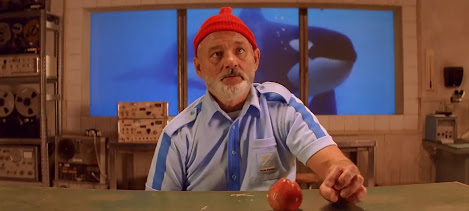
Film of the Week: The Life Aquatic with Steve Zissou


If there's one recurring idea that permeates throughout the work of Wes Anderson, it's grief and the endless struggle of learning to live with it. There's always a sense of bittersweetness to his best work, which is consistently very good, and in how it approaches this struggle. More than any filmmaker, I think, Anderson's filmography is fun to go through because you watch his view on this idea grow and mature, becoming more nuanced but no less heartfelt in his unique, subtle ways. It's also fun to watch through because as he grows in maturity, he also grows in confidence and ambition, his work becoming bigger, more elaborate and with an increasingly talented ensemble in tow. The Life Aquatic with Steve Zissou, his fourth film and the last work of his to be distributed by Disney until their buy-out of 20th Century Fox, represents Anderson's growth into one of Hollywood's most visually fascinating directors without losing the quietly sentimental spark that made him so unique. 

A send-up of both the late oceanographer Jacques Costeau and of pulpy adventure stories like 20,000 Leagues Under the Seas and Moby Dick, Life Aquatic is often incredibly pleasing to look at. The film's primary setting, the Belafonte, is an elaborately designed set masquerading as the ship of the titular Steve Zissou (Bill Murray, who has honed his talent for playing morose sad sacks with a heart of gold to science at this point), and Anderson expertly introduces us to it with a loving pan through the cramped confines of the ship. We see every room, every detail, from the side, giving us an immediate sense of scale and where, exactly, everything and everyone is. Many of the film's fantastical creatures, witnessed in Steve's expeditions, are rendered through claymation, which contributes to the fantastical feel of the film. It's quickly clear that this is something bigger, a more heightened reality than Anderson's prior work, which makes the very real emotions at play hit that much harder. 

At it's heart, Life Aquatic is a story about loss and learning to live with it, and that no amount of control or micro-management can do a thing about the random cruelties that life can dish out. Steve, an eccentric if charismatic oceanographer, begins the film on a quest for vengeance, hunting the rare jaguar shark that, by Steve's own words, "devoured" his lifelong best friend Esteban. While nowhere near Captain Ahab's level of fanaticism, it becomes clear that Steve's obsession with hunting the creature, potentially the only one of it's kind, is a greater attempt to lash out at the world for taking his friend from him, as he crudely announces his intention to blow up the shark with dynamite. Much like Ahab, however, Zissou drags along a crew heavily devoted to him, from the affection-starved, childishly petty first mate Klaus (Willem Dafoe) to the quiet, musically talented safety expert Pele (Seu Jeorge, who provides a series of beautiful David Bowie covers) to snarky, rarely clothed script supervisor Anne-Marie Sakowitz (Robyn Cohen), and several newcomers, like Steve's apparent son Ned Plimpton (Owen Wilson, very quietly reminding me of his underrated talents as a leading man) and hard-hitting, pregnant reporter Jane Winslett-Richardsson (Cate Blanchett), who quickly becomes an object of mutual affection for the coarse Steve and the more gentle Ned. 

The film is a proper adventure romp, if a more subversive one than the traditional fare, depicting the struggles of it's eccentric, deeply dysfunctional crew in a series of mishaps. A clash with pirates is portrayed as less a tense hostage situation and more of an exasperating road bump as two equally incompetent crews run afoul of each other, while Steve's recurring rivalry with the wealthier, more suave Alistair Hennessey (Jeff Goldblum, because who else?) serves as host to a series of great set-pieces (the impromptu heist of a Hennessey laboratory got a good laugh out of me with the spiteful bluntness of it while the crew's rescue of Hennessey from the pirates makes for a surprisingly tense action sequence) with a strong emotional pay-off as the two bond over a shared experience. The cast, a mix of Anderson's usual actors and newer players who would become bigger figures down the line, have a very lived-in chemistry. They bicker, they grow closer, and the various personalities clash in both expected and unexpected ways, feeling like a very genuine found family by the film's end. 

Of course, the good times can never last, and it's not a Wes Anderson film without a suitably brutal gut punch. In this case, it's Steve's pursuit of revenge for his best friend claiming the life of another loved one, as his reckless attitude and poor care for equipment causes an accident that kills Ned. It's a devastating moment, and the film's decision to first raise our hopes (Steve finds Ned floating amidst the wreckage) before crushing them (Anderson brilliantly bobbing the camera above and below the water as it gets more and more red) and then ultimately letting us sit in our grief speaks to the very real feelings that we've found ourselves developing for this larger than life characters. The message is clear: Esteban is gone, and Steve's refusal to admit that he can't bring him back has claimed Ned as well. It's in this moment that Steve, like many of Anderson's best protagonists, lets go of his grief, letting those he's lost live in heart by choosing to embrace life. 

This is represented by the quietly profound encounter with the jaguar shark itself, a beautifully designed creature that swims around the submersible the crew is packed into. Face to face with the beast he's hated, Steve half-heartedly admits to being out of dynamite, and simply washes it circle them before vanishing into the depths. Eyes brimming with tears, he whispers, "I wonder if it remembers me?" While we get no answer, the point is clear: change is impersonal, uncaring as to whether or not you're "important", and while tragedy is destined to strike everyone, what matters is how you choose to live in the aftermath of it. 

Sunday, September 8, 2024

Film of the Week: Milk and Serial


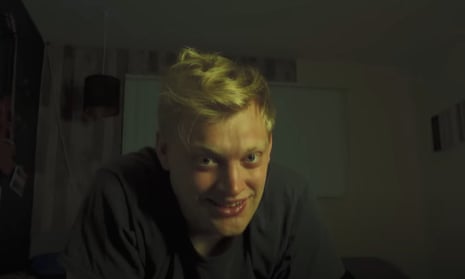
It's hard to remember the last time I watched something as agonizingly mean-spirited and skin-crawling as Milk and Serial, the hour-long, $800 found footage horror movie from director Curry Barker, who also plays the titular "Milk". Playing out over the course of a few days and amidst the rapidly crumbling relationship of two prank Youtubers, Milk and Seven (Cooper Tomlinson), the film excellently uses it's format, often implicating it's audience in the film's horrific occurrences and using dramatic irony to hang tension over our heads like a guillotine about to drop. It's a film that looks you deep in the eye and shows you a portrait of a deeply unwell person lashing out at others for increasingly petty reasons, sticking with you long after it's done. 

It's hard to talk about Milk and Serial without giving away a lot of what the film is trying to keep hidden, so for the interest of writing a review, I'll ask that those who haven't seen it stop about here and experience it for themselves. (Long story short: it's good! I recommend it.) The film, initially depicting a loud house party prank that seemingly catches the attention of a frightening, clearly mentally ill stranger (Jonathan Cripple), starts as something cliched, a group of hapless friends meddling with someone they shouldn't, all the while recording for no clear reason beyond Milk's insistence that they do so. It feels trite, predictable, and it isn't until Seven is forced to kill the stranger in self-defense after he drags the two to the desert that it takes a turn. Milk, claiming that the kidnapping was a prank but that Seven's killing was an accident, suddenly turns to the camera, saying it's time to explain how "the real prank" worked. The turn is jarring, working in the film's favor as we see Milk, revealed to be a psychotic serial killer who has claimed at least six victims, retraces his steps, showing us the secret steps that occurred in the background of the film's first third. 

Barker is very good as Milk, his boyish grin dripping with cruelty and self-referential smugness, a perpetual "I know something you don't" as he gaslights and terrorizes a guilt-ridden Seven. There's a casualness to his cruelty, from the way he makes casual conversation with a helpless victim to the ease with which he spins unnecessary lies just to wear down his hapless partner. Unlike American Psycho or Dexter, which gives their serial killers something of a charm, Milk is just nasty for nastiness sake. His explanation, a boiled over resentment of the more creative Seven, feels petty, more of an excuse for his behavior, while there's a clumsiness to his plans that both sews tension and robs of catharsis. His manipulation of Seven is simply abuse, his hastily-slapped together lies to lure in both the stranger (revealed to be a struggling actor looking for a gig) and his son clumsy and holding up just long enough for him to get away, and the moments where his mask slips showcase the bitter manchild underneath it all. 

Even the film's usage of found footage feels very justified, effectively operating as a video diary of every step of Milk's plan to wear down Seven and convince him to kill himself, an effort that will supposedly make him the greatest serial killer of all time. While the film does stray from this, cutting to their other roommates in an effort to move the rest of the story along, it makes the rest feel intimate. We're effectively Milk's accomplice, stuck with him and helpless to do anything for Seven as the situation devolves. The film's ending even plays to this idea, as the movie is over the moment Milk and Seven's situation hits it's end. We're finally free, but any real resolution is simply out of our grasp. 

The ending similarly plays to the film's nasty spirit, as Seven overhears Milk talking into the camera of his true agenda and finally snaps, killing his abuser and then himself. There's no dramatic reveal, no bold last word or secret extra step, just a quiet, "Oh," and then both men are dead. Roll credits. It robs us of both resolution and satisfaction, as Milk dies largely vindicated but is completely unable to celebrate the fame he desperately wanted. We don't even know if he becomes the celebrity he so badly wanted to be. It simply...ends. It's a bold ending, but one that suits the story being told here. We, like Seven and his hapless friends, saw what Milk wanted to be seen. Anything else just weighs down the content.